by Richard William Nelson | Sep 12, 2011
 The Australopithecus sediba saga intensified last week with a new series of reports published in the journal of Science. The journal is the official weekly publication of the American Association for the Advancement of Science, AAAS.
Last week’s edition (cover pictured left) featured eight articles and news reports specifically on A. sediba, inflaming a flurry of speculations on the human “missing link.”
This last week was the second Science edition to focus on human evolution findings in South Africa.
Continue Reading
by Richard William Nelson | Jan 2, 2011
Leslie Stahl, long-time CBS journalist, interviewed on 60 Minutes with Mary Schweitzer in December, marking a new paleontology arena – the field of dinosaur soft tissue.
Schweitzer, an American paleontologist at North Carolina State University, unexpectedly discovered soft tissues from a Tyrannosaurus rex bone sent from the Museum of the Rockies in Montana.
Schweitzer’s controversial report, “Gender-Specific Reproductive Tissue in Ratites and Tyrannosaurus rex,” published in the journal Science in 2005, revolutionized our understanding of fossil preservation.
Continue Reading
by Richard William Nelson | Aug 22, 2010
The October 2009 special edition of the journal Science (cover pictured right below) entitled Ardipithecus ramidus, kindly known as “Ardi,” featured a series of 11 papers by 47 authors from 10 countries – launching the Ardipithecus ramidus (pictured left) saga.
With an estimated age of 4.4 million years, Ardi is considered the oldest hominid skeleton ever discovered, predating Lucy and casting unexpected clues into the increasingly complex human evolution jigsaw puzzle.
The unexplainable saga, however, actually began nearly 15 years ago.
Continue Reading
by Richard William Nelson | Jul 11, 2010
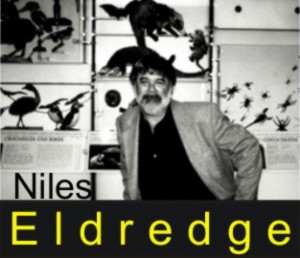
Natural selection is a simple scientific theory, according to the American Museum of Natural History, New York. For the museum’s Darwin Exhibit, the museum curator, Niles Eldredge, explains:
“A century and a half ago, Charles Darwin offered the world a single, simple scientific explanation for the diversity of life on Earth: evolution by natural selection.”
“Natural selection.” Eldredge explains, “is a simple mechanism that causes populations of living things to change over time.”
Continue Reading
by Richard William Nelson | Jun 6, 2010
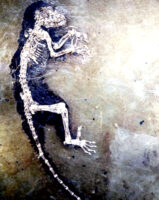
This is the story of the Ida Fossil Fiasco. “This little creature is going to show us our connection with the rest of all the mammals, with cows and sheep, and elephants and anteaters,” said Sir David Attenborough, who narrated the BBC documentary in May 2009.
“The more you look at Ida, the more you can see, as it were, the primate in embryo.”
Really? According to Jørn Hurum, the paleontologist from Oslo University’s Natural History Museum, who assembled the scientific team –
“It tells a part of our evolution that’s been hidden so far. It’s been hidden because the only [other] specimens are so incomplete and so broken there’s almost nothing to study.”,
Continue Reading

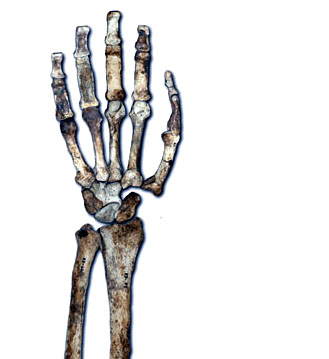 The Australopithecus sediba saga intensified last week with a new series of reports published in the journal of Science. The journal is the official weekly publication of the American Association for the Advancement of Science, AAAS.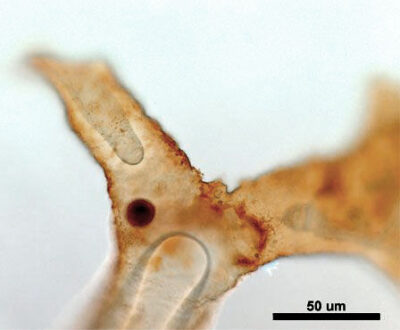
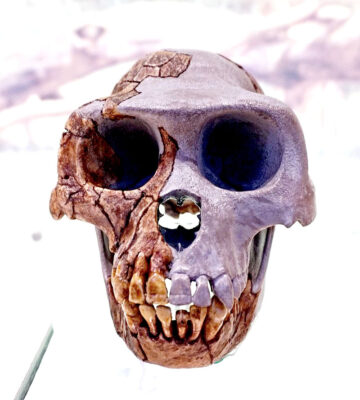 The October 2009
  Natural selection
 This is the story of the Ida Fossil Fiasco. “This little creature is going to show us our connection with the rest of all the mammals, with cows and sheep, and elephants and anteaters,” said