by Richard William Nelson | Mar 5, 2015
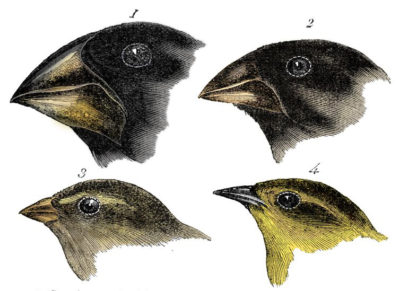
 The finches Charles Darwin encountered on the Galapagos Islands have served as one of the most enduring examples of evolution throughout the twentieth century.
As Darwin explains in The Origin of Species, “one [finch] species had been taken and modified [changed] for different ends” – the essence of natural selection.
However, in the nineteenth century. The technology to scientifically validate these changes in the genetics of Darwin’s finches was inconceivable.
Continue Reading
by Richard William Nelson | Jan 9, 2015
The genetic code is the universal language of life, from the first microbe to man. Searching for the origins of the first genetic code mystery, however, is akin to deciphering the evolution of life.
Over the past two years, the research team of Bojan Žagrović (pictured) at the Max F. Perutz Laboratories of the University of Vienna has been searching for a natural mechanism driving the genesis of the original genetic code − a longstanding challenge of the evolution industry.
Since the interactions between genetic material (nucleobases, DNA, and mRNA) and amino acids produce the workhorse molecules of life–proteins, Žagrović’s research team has been focusing on understanding what might have been the initial natural physicochemical mechanisms producing the original genetic code.
Continue Reading
by Richard William Nelson | Oct 8, 2014
The genetic mutation plus natural selection equation emerged as the most popular theory of biological evolution during the twentieth century.
However, with advances in biotechnology, evolutionary scientists have since increasingly challenged the credibility of this theory, popularly known as neo-Darwinism or the Modern Synthesis theory.
A recent study published in the journal Science by a Harvard research group undermines the theory that genetic mutations plus natural selection equals evolution in an experimental evolution model using the yeast microbe Saccharomyces cerevisiae.
The model demonstrates stasis – not evolution.
Continue Reading
by Richard William Nelson | Mar 6, 2014
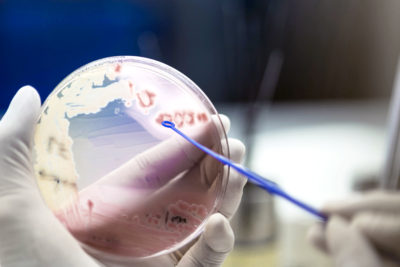
A new study challenges the time-honored validity of microbial resistance as an example of biological evolution.
Christina Warinner of Harvard University led an international research team that investigated ancient microbes extracted from fossilized human teeth. The team included thirty-two investigators from twelve institutions in seven countries.
By comparing the microbes on fossilized human teeth, the research team found ancient microbial resistance using the exact molecular mechanisms of microbial resistance, as seen in today’s microbes.
Continue Reading
by Richard William Nelson | Jan 23, 2014
Charles Darwin‘s first reference to a “gene” appears in the 4th Edition of The Origin of Species in 1866. Since then, the gene has emerged as the essential molecular mechanism driving Darwin’s theory.
This intersection of natural selection with Gregor Mendel‘s theory of genetic inheritance was later known as the Modern Evolutionary Synthesis, also referred to as The Modern Synthesis, primarily based on Julian Huxley’s 1942 book, Evolution: The Modern Synthesis.
A gene mutation-driven evolution theory gained increasing popularity. However, by the 1960s, the model began encountering challenges as it was being applied using emerging genomic technologies.
Continue Reading

 The finches Charles Darwin encountered on the Galapagos Islands have served as one of the most enduring examples of evolution throughout the twentieth century.

 A new study challenges the time-honored validity of