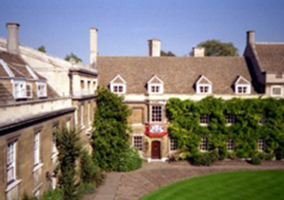
In 1825, at the age of sixteen, Charles Darwin was sent to Edinburgh University to study medicine. Soon, however, he found the study of medicine “intolerably dull” and “hated the sight of blood.” Fearing that his eighteen-year-old son would “ne’er do well,” his father transferred him to Christ’s College (pictured left), University of Cambridge.
His father, Robert Darwin, thought that a generalist Bachelor of Arts degree would qualify him to be a government clergyman. The Church of England offered a low-cost, high-status career pathway, a position socially comparable to medicine, law, or politics.
At the time, an understanding of creation was expected to be within the scope of a clergyman’s expertise. The prospect of studying nature aligned with Darwin’s emerging interest in understanding the natural history of Earth’s biosphere.
Darwin recalled his years at Cambridge “were the most joyful in my happy life.” However, perhaps not surprisingly, he eventually came to view the Bible as a “damnable doctrine.”
Free-Thinking Legacy
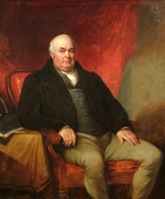
As a child, Darwin regularly attended a Unitarian church with his family, but rarely with his father [pictured right], Robert Waring Darwin. Darwin’s mother, Emma (Wedgwood), was the catalyst for the family’s interest in the Bible, often referring to it. However, the Darwins and the Wedgwoods were free-thinkers, not regular churchgoers.
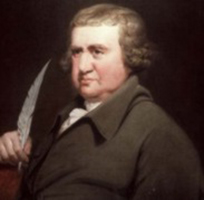 Edinburgh’s curriculum, nicknamed the “Athens of the North,” advanced the teaching of evolution. Darwin’s grandfather, Erasmus (pictured on the left), an advocate in the Midlands Enlightenment movement, advanced evolutionary concepts in his widely read book, Zoonomia, or the Laws of Organic Life.
Both father and grandfather had studied medicine at Edinburgh University. 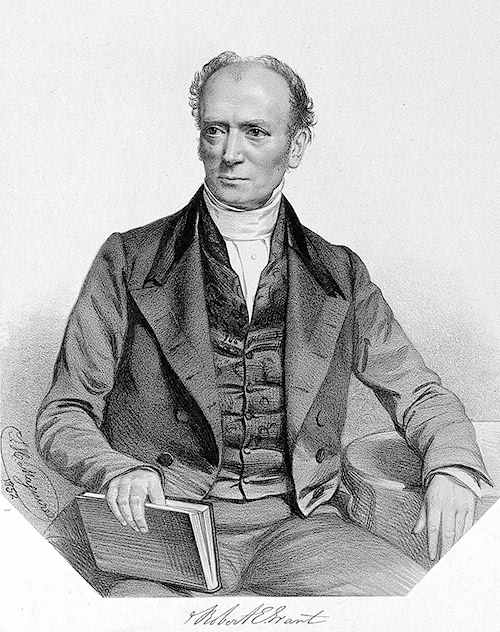 Robert Edmund Grant (pictured right), one of Darwin’s professors in Edinburgh, quoted from Zoonomia in his doctoral thesis.
Since enrollment at Christ’s College required acceptance of the Thirty-nine Articles of the Church of England, the thought of attending Christ’s College required a measure of reflection. Darwin wrote in his Autobiography –
“I asked for some time to consider, as from what little I had heard or thought on the subject, I had scruples about declaring my belief in all the dogmas of the Church of England; though otherwise, I liked the thought of being a country clergyman.”
On finally signing acceptance of the articles to enter Christ’s College in 1828 at the age of nineteen, Darwin recalls:
“I did not then in the least doubt the strict and literal truth of every word in the Bible; I soon persuaded myself that our Creed must be fully accepted.”
Darwin’s prospect of aligning with the Church of England conflicted with philosophical branches of his family tree.
Day-Dream Delights
At Christ’s College, Charles Darwin [pictured right] found the Bible inspiring. In the characteristic free-spirit legacy, Darwin recalls –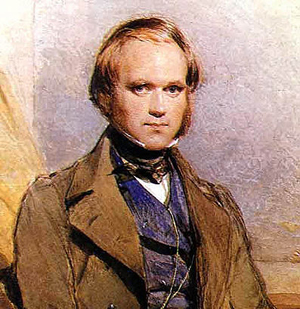
“Inventing day-dreams of old letters between distinguished Romans and manuscripts being discovered at Pompeii or elsewhere, which confirmed in the most striking manner of all that was written in the Gospels.”
Theology, however, was upstaged by the call of nature –
“No pursuit at Cambridge was followed with nearly so much eagerness or gave me so much pleasure as collecting beetles.”
At Cambridge, Darwin’s interest in Euclid’s mathematics and geometry equaled his interest in William Paley’s book entitled the Evidences of Christianity. Darwin aligned with Paley’s classic design perspective. As Darwin explains –
“I am convinced that I could have written out the whole of the Evidences with perfect correctness… The logic of this book, as I may add of his Natural Theology, gave me as much delight as did Euclid.”
“Most Joyful”
Life at Christ’s College was good; his room is pictured right. As Darwin later noted in his Autobiography –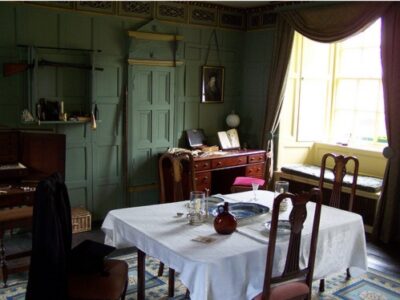
“Upon the whole, the three years which I spent at Cambridge were the most joyful in my happy life, for I was then in excellent health and almost always in high spirits.”
“High spirits,” eventually eroded through complex blend of reasoning and popular unveriified presumptions.
“Damnable Doctrine”
Drawing on a lifetime of observations, analogies, and assumptions, Darwin proposed a theory to account for the origin of life. While not the first, Darwin’s proposed mechanism, natural selection, offered a scientifically testable theory.
However, any natural mechanism accounting for Earth’s biosphere upends the intentional creation Moses presented in his Genesis account of creation. Upending concepts of Darwin explains –
“I will here give the vague conclusions to which I have been driven. The old argument of design in nature, as given by Paley, which formerly seemed to me so conclusive, fails now that the law of natural selection has been discovered.… There seems to be no more design in the variability of organic beings and in the action of natural selection than in the course which the wind blows. Everything in nature is the result of fixed laws.”
The process to upend the Gensis account of creation proved to be personally costly. Darwin explains –
“Thus disbelief crept over me at a very slow rate, but was at last complete…. I can indeed hardly see how anyone ought to wish Christianity to be true… this is a damnable doctrine.”
Darwin later reflected in his Autobiography –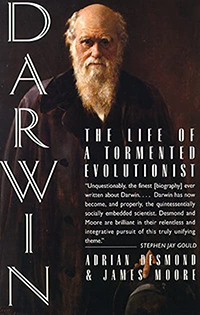
“I did not think much about the existence of a personal God until a considerably later period of my life.”
Written by Adrian Desmond, an Honorary Research Fellow in the Biology Department at University College London, and James R Moore, the title of their book “Darwin: The Life of a Tormented Evolutionist” [pictured right] details the personal price Darwin paid for his self-inflicted dilemma.
While reports circulated otherwise, primarily by Lady Hope, Darwin’s family denied observabling and change to his “damnable” Bible views.
Genesis
 Genesis, the first book in the Bible, is foundation for understanding the Bible’s other sixty-five books.
Written over more than 1,500 years, twenty-six of the Bible’s sixty-six books directly reference the Genesis account – a biblical cornerstone. The vast majority of the scientists of the Scientific Revolution ascribed to the devine origins of the Bible.written by more than forty writers.
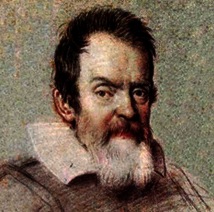
Galileo Galilei [pictured left], Italian astronomer, physicist, engineer, philosopher, and mathematician played a significant role in the scientific revolution, Known as the “father of modern physics,” Galileo declared –
“God is known by nature in his works, and by doctrine in his revealed word.”
Darwin is known as the “father of evolution.” Howsever, the role of “natural selection” acting as a natural law driving the “origin of species” has yet to be validated scientifically.
Christ’s College to “Damnable Doctrine” is a Biographical Sketch of Charles Darwin article.
Darwin Then and Now is an educational resource on the intersection of evolution and science and the challenges facing the theory of evolution.
Move On
Explore how to understand twenty-first-century concepts of evolution further using the following links –
-
- The Understanding Evolution category showcases how varying historical study approaches to evolution have led to varying conclusions. Subcategories include –
- Studying Evolution explains how key evolution terms and concepts have changed since the 1958 publication of The Origin of Species.
- What is Science explains Charles Darwin’s approach to science and how modern science approaches can be applied for different investigative purposes.
- Evolution and Science feature study articles on how scientific evidence influences the current understanding of evolution.
- Theory and Consensus feature articles on the historical timelines of the theory and Natural Selection.
- The Biography of Charles Darwin category showcases relevant aspects of his life.
- The Glossary defines terms used in studying the theory of biological evolution.
- The Understanding Evolution category showcases how varying historical study approaches to evolution have led to varying conclusions. Subcategories include –