 RNA World, a natural explanation for the origin of life, has a Catch-22 dilemma. Stanley-Urey’s experiments in the early 1950s laid the foundation for the RNA hypothesis.
Their experiments demonstrated that essential biological molecules, specifically amino acids, could have naturally emerged in Earth’s presumed early environment. However, amino acids alone, while essential for life, since they cannot reproduce, cannot account for abiogenesis – the origin of life.
The natural process of abiogenesis, as hypothesized, requires molecules capable of reproducing, like DNA– or RNA-forming nucleic acids. In the late 1950’s, Spanish biochemist Joan Oró was the first to synthesize a nucleic acid from Earth’s presumed early environment.
From hydrogen cyanide, one of these presumed molecules, and using Miller–Urey’s method, Oró demonstrated that nucleic acids could have emerged naturally, too. Amino acid and nucleic acid molecules are together indispensable physical entities for the existence of life. Life cannot exist without both.
Amino and Nucleic Acids
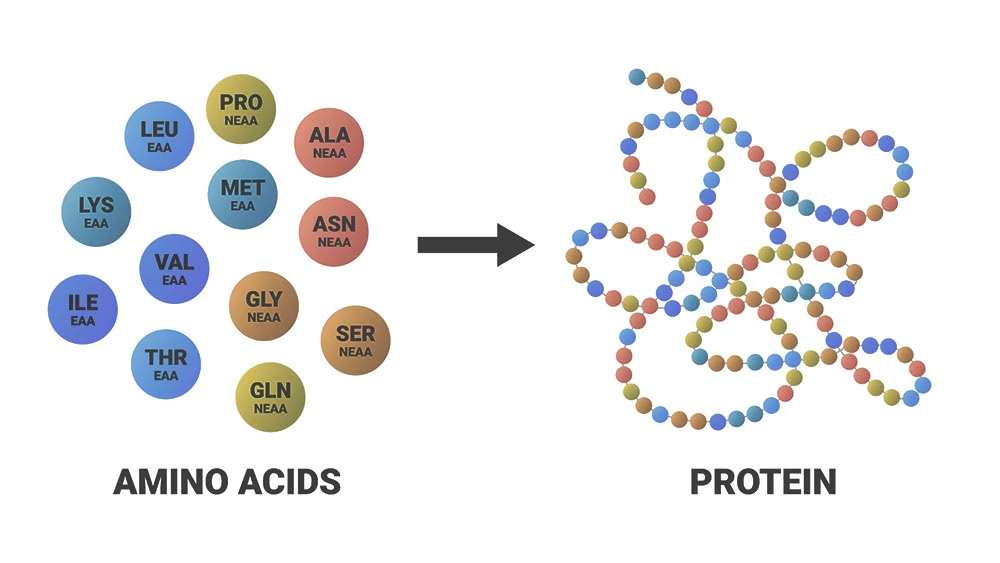 The discovery of mechanisms underlying the emergence of essential molecules opened the prospect of scientifically testing hypothetical explanations of abiogenesis. While amino acids (pictured right) form the functional framework of proteins, only nucleic acids form the reproduction frameworks carried by RNA.
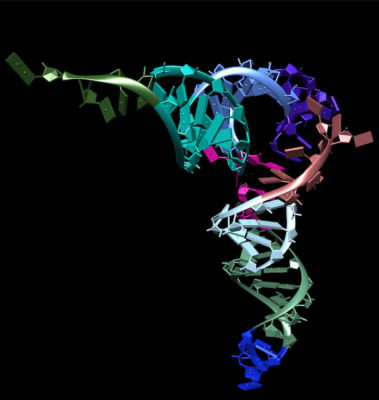
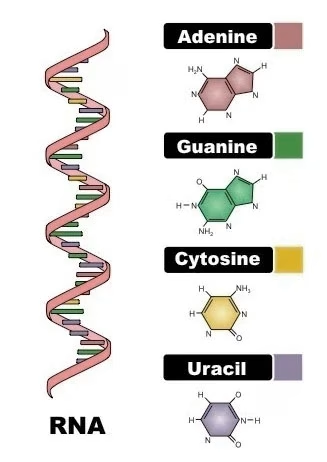 Given the plausibility of essential molecules forming naturally, identifying a natural process for the formation of RNA-like compounds seemed inevitable. However, how did amino acids and nucleic acids (pictured left) begin working together? And which came first?
Since only nucleic acids can encode genetic information, biophysicist Alexander Rich proposed in 1962 that RNA-forming nucleic acids emerged first. Like DNA, RNA processes genetic information, which is essential for sustaining life.
RNA is molecularly similar to DNA but simpler. Rich, an MIT professor, proposed that the origin of life was driven by RNA. Walter Gilbert is credited with coining “RNA World” for Rich’s RNA concept in 1986. Rich’s RNA World concept soon emerged as the central mechanism studied and tested in abiogenesis research.
Dawkin’s RNA World Catch-22 Pass
However, a Catch-22 issue soon emerged with the RNA World concept – RNA requires protein enzymes to physically replicate. Yet those enzymes require RNA to function. But what came first – amino acids or nucleic acids?
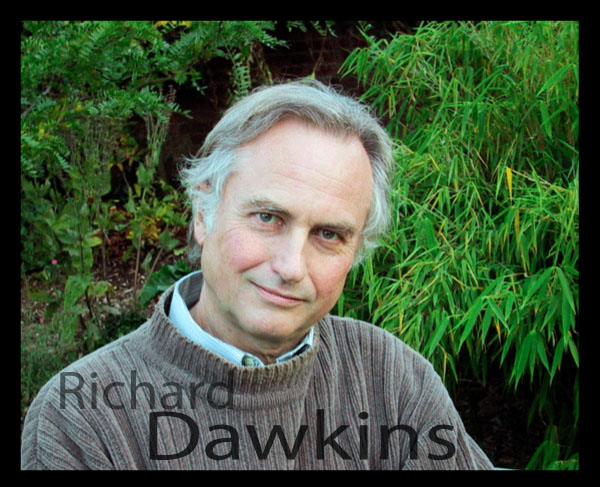 In 2004, Richard Dawkins (pictured right), in The Ancestor’s Tale: A Pilgrimage to the Dawn of Evolution, granted the Catch-22 dilemma a pass, writing –
“This is the RNA World. To see how plausible it is, we need to look at why proteins are good at being enzymes but bad at being replicators; at why DNA is good at replicating but bad at being an enzyme; and finally why RNA might just be good enough at both roles to break out of the Catch-22.”
By the twenty-first century, a consortium of findings lent epistemic support, along with Dawkins’s pass, to Rich’s RNA World concept.
The Catch-22
The RNA World concept has a Catch-22 – “what comes first” – dilemma. Did the proteins or nucleic acids come first? Building proteins requires genetic information encoded by nucleic acids, yet that genetic information requires specific proteins encoded by nucleic acids.
With mutual dependence, neither protein nor nucleic acids can start life on their own. Neither can life emerge with both together, since their interdependence requires a pre‑existing system. Therefore, neither one alone nor together can plausibly be “first” in a naturalistic origin‑of‑life scenario.
This interdependence dilemma poses a scientific challenge to origin‑of‑life research. Progress is blocked by mutually dependent constraints. Proteins cannot be built without nucleic acids, yet nucleic acids cannot be replicated without proteins. Previously, it was understood in biology that enzymatic functions were reserved for proteins.
Ribosomes & Ribozymes
Since the 1950’s, different forms of RNA have been identified, specifically ribosomes and ribozymes. While ribosomes are huge complexes with protein, ribozymes are small RNA molecules without any protein.
Ribosomes
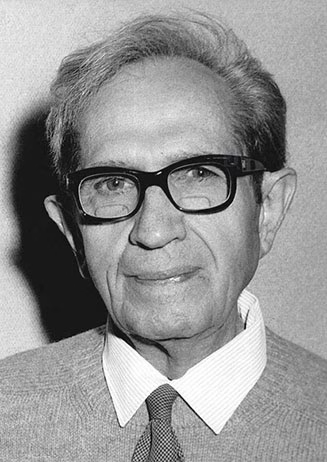 The first step toward identifying ribosomes was taken in the 1930s and 1940s by cell biologist Albert Claude (pictured left). At the Rockefeller Institute, Claude was the first to isolate ribosome‑containing particles using a differential centrifugation technique.
 In 1955, George E. Palade (pictured right), a colleague of Claude’s at the Rockefeller Institute, was the first to visualize ribosomes using advanced electron microscopy. At this level of visualization, ribosomes were established as distinct organelles.
By the early 1960’s, further purification and electrophoretic analysis demonstrated that ribosomes also contain numerous proteins, establishing ribosomes as ribonucleoprotein complexes.
With ribosomes acting as enzymes, it was thought they might break the origin-of-life Catch-22 paradox. However, further studies found that ribosomes cannot replicate RNA, synthesize their own ribosomal proteins, nor participate in replication.
While ribosomes are relatively large, the only other known RNA-like compound, the ribozyme, is not only small but fundamentally different.
Ribozymes
Ribozymes, however, are structurally and functionally different from ribosomes. While ribosomes are enormous, with 50 to 80 proteins, ribozymes are a single 3‑D structure without any proteins. Notably, ribozymes can catalyze chemical reactions without any protein component yet act similarly to proteins.
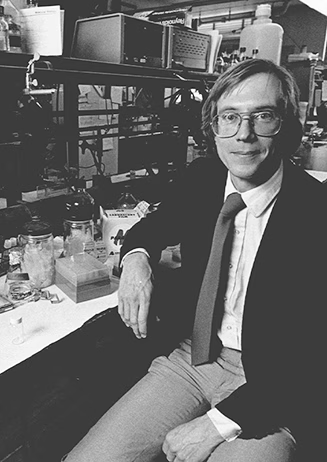 In 1982, this ribozyme concept was first introduced by the Thomas Cech (pictured left) laboratory team at the University of Colorado. Their paper, published in the journal Cell, demonstrated that with distinct nucleotide sequences, they function similarly to proteolytic enzymes.
Cech’s findings upended molecular conceptions of enzymes and seemingly circumvented the origin-of-life Catch-22 dilemma. In 1989, Thomas Cech and Sidney Altman shared the Nobel Prize in Chemistry for their “discovery of enzymatic properties of RNA”.
Initially, self‑replicating ribozymes seemed plausible due to RNA’s dual genetic and enzymatic nature, solving the origin‑of‑life catch‑22. However, scientific evidence for this plausibility has yet to be observed in the twenty-first century.
RNA World Critics
1980”s
1981 – Francis Crick 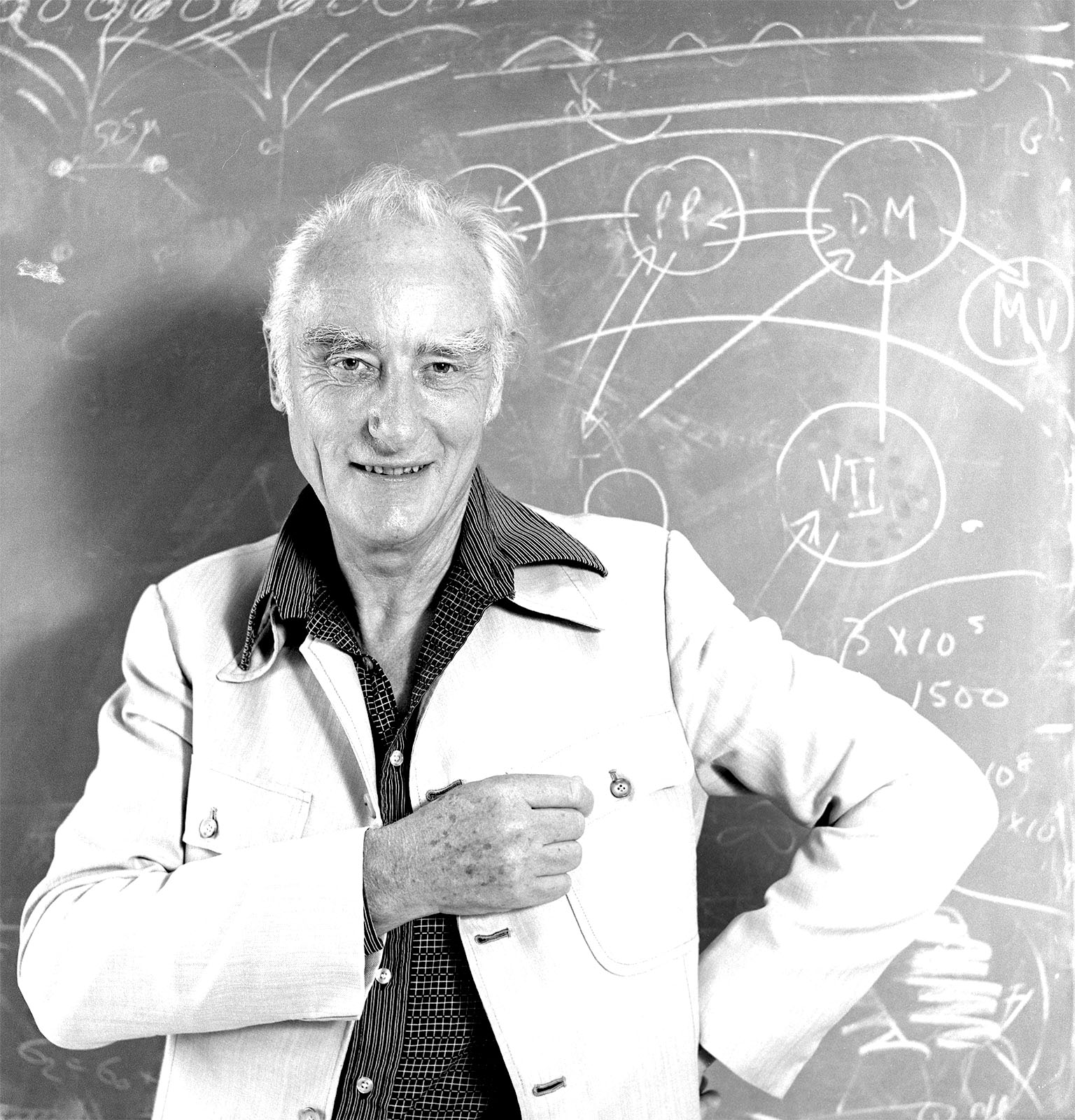 (pictured right) published Life Itself, a book critical of the RNA World theory.
“It may turn out that we will eventually be able to see how this RNA world got started.”
However, Crick later wrote in 1993 —
“At present, the gap from the primal ‘soup’ to the first RNA system capable of natural selection looks forbiddingly wide.”
1990’s
1994 – Leslie Orgel of the Salk Institute for Biological Studies, in “The Origin of Life on Earth” paper published in Scientific American, noted –
“Because synthesizing nucleotides and achieving replication of RNA under plausible prebiotic conditions have proved so challenging, chemists are increasingly considering the possibility that RNA was not the first self-replicating molecule…”.
1996 – NASA‘s Astrobiology Workshop Final Report concluded –
“It has been postulated that there was a time in protobiological evolution when RNA played a dual role as both genetic material and a catalytic molecule (“the RNA world”). However, this appealing concept encounters significant difficulties. RNA is chemically fragile and difficult to synthesize abiotically. The known range of its catalytic activities is rather narrow, and the origin of an RNA synthetic apparatus is unclear.”
1998 –  Stanley Miller (pictured right) published “The stability of the RNA bases” in the Proceedings of the National Academy of Sciences, noting Oro’s temperatures were too high for nucleobases —
“A high-temperature origin of life involving these compounds [the RNA bases, therefore], is unlikely.”
The presumption that “bases, adenine, cytosine, guanine, and uracil was readily available on the early earth, is not supported by existing knowledge of the basic chemistry of these substances.”
1999 – Robert Shapiro from New York University, in his peer‑reviewed paper “Prebiotic cytosine synthesis” published in the Proceedings of the National Academy of Sciences, wrote —
“No nucleotides of any kind have been reported as products of spark-discharge experiments or in the studies of meteorites.”
2000’s
 2007 – Eugene V. Koonin pictured right), Senior Investigator at the National Center for Biotechnology Information, in the paper “An RNA-making reactor for the origin of life,” published in the Proceedings of the National Academy of Sciences, noted —
“[RNA World] still is a hypothetical entity… the evolutionary path to the translation systems remains essentially uncharted.”
Origin of Life Races
Harvard University announced the formation of a new interdisciplinary project, the Origins of Life Initiative, in 2005. The goal was to identify plausible pathways from simple chemistry to life on Earth and in the universe.
 By 2012, despite advances in the study of origin-of-life theory, a cohesive theory remained elusive. To consolidate efforts, Harvard refocused on studying RNA models. Origin-of-life research was shifting from theoretical models to experimentally testable chemistry, with RNA at the center.
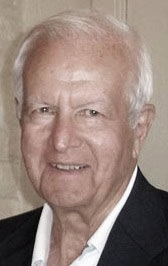
One year earlier, Harry Lonsdale (pictured left), a chemist and entrepreneur, privately funded an Origin of Life Challenge. Competitors’ research proposals for the challenge were not limited. The Challenge collaborated with the Origins Project at Arizona State University.
Privately, however, Lonsdale told news reporters that the winning papers should be “based on the RNA World” model. The race for an origin-of-life theory was launched, with a focus on the RNA World hypothesis.
A Beginning + Biological Interdependence = Catch-22
Biological interdependence on all levels of biology is what makes the origin‑of‑life problem a Catch‑22 and intensifies Darwin’s Dilemma. Life requires mutually dependent systems — replication, catalysis, metabolism — none of which can function alone.
The emergence of life, therefore, requires the simultaneous emergence of cooperative networks of macromolecules. Simultaneous emergence — a beginning at a specific moment in time — is one of science’s most widely recognized conclusions.
Across cosmology, geology, physics, and biology, empirical evidence consistently reveals that finite origins make “a beginning” a foundational scientific inference.
Genesis
 The RNA World Catch-22 points to “a beginning” to account for the origin of life. Charles Darwin (pictured right) uses “Creator” nine times in The Origin of Species. For his closing sentence, Darwin concluded —
“There is grandeur in this view of life, with its several powers, having been originally breathed by the Creator.”
Genesis, written by Moses, a modern scientific abstract of the ancient creation account, opens declaring —
“In the beginning God created the heaven and the earth.”
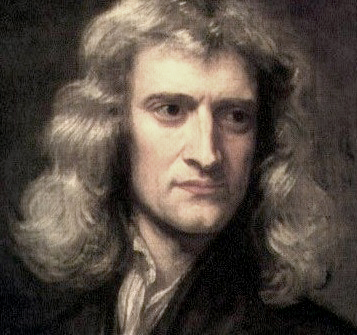 A beginning in science is not a philosophical preference but an empirically compelled conclusion. Sir Isaac Newton (pictured left), English physicist and mathematician and now recognized as one of the most influential scientists of all time, declared in his Principia—
“Absolute time exists only because God created the universe; therefore, time has a beginning.”
Studies on the RNA World hypothesis underscore why the theory of evolution remains speculative and still awaits scientific validation.
RNA World Updates
The RNA World field of science is a subcategory of origin-of-life research. For RNA World updates, click on Origin of Life Race.
RNA World is an Origin of Life article.

Darwin Then and Now is an educational resource on the intersection of evolution and science, highlighting the ongoing challenges to the theory of evolution.
Move On
Explore how to understand twenty-first-century concepts of evolution further using the following links –
-
- The Understanding Evolution category showcases how varying historical study approaches to evolution have led to varying conclusions. Subcategories include –
- Studying Evolution explains how key evolution terms and concepts have changed since the 1958 publication of The Origin of Species.
- What is Science explains Charles Darwin’s approach to science and how modern science approaches can be applied for different investigative purposes.
- Evolution and Science feature study articles on how scientific evidence influences the current understanding of evolution.
- Theory and Consensus feature articles on the historical timelines of the theory and Natural Selection.
- The Biography of Charles Darwin category showcases relevant aspects of his life.
- The Glossary defines terms used in studying the theory of biological evolution.
- The Understanding Evolution category showcases how varying historical study approaches to evolution have led to varying conclusions. Subcategories include –