 Molecular clocks played a significant role in the search for evidence of biological evolution over the past seventy-five years. Driven by biotechnological advances, the integration of molecules with morphology reflects the shift from Darwinism to the Modern Synthesis theory of evolution.
Early formulations of the molecular-clock concept assumed that biological molecules—DNA, RNA, and proteins—accumulated sequence changes at consistant rates. These changes were envisioned to as chronological signatures within a lineage, similar to growth rings in a tree trunk. By tracing the order and magnitude of these changes, researchers expected to reconstruct the evolutionary history of each species.
However, molecular clocks exemplify why integrating scientific evidence to support biological evolution remains challenging. Michael Ruse, author of the book Defining Darwin: Essays on the History and Philosophy of Evolutionary Biology, concluded –
“Indeed, the truth is that there is virtually nothing today in evolutionary studies that corresponds exactly to the facts of the Origin.”
In the mid-nineteenth century, the idea of molecular clocks was not even remotely considered, let alone cellular biology or DNA. The scientific revolution had yet to reach the realm of molecular biology. Case in point, Darwin thought “gemmules” learned by parents were passed on to the next generation through a process of “blending inheritance.”
Today, we know that “gemmules,” whatever they were thought to be, do not learn; it was a fabricated idea. And ironically, blending inheritance was soon recognized as an argument against Darwin’s theory. Without a mechanism of inheritance, interest in Darwin’s theory by the end of the nineteenth century nearly vanished.
Gregor Mendel
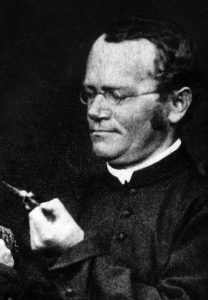
In 1865, Gregor Mendel (pictured right), an Austrian monk, discovered the laws of inheritance. Studying the biblical account of Jacob’s selective breeding program of “speckled and spotted sheep… the brown ones among the lambs, and the spotted and speckled among the goats” in Genesis may have influenced Mendel.
While decimating Darwin’s theory of “blending inheritance,” Mendelian genetics, also known as Mendelian inheritance, in turn, saved Darwin’s theory, it seemed. But it took time.
Not until decades later were Mendel’s laws of inheritance rediscovered by Hugo de Vries and Carl Correns in 1900. Mendel’s theory was presented as Darwin’s new mechanism of inheritance. Evolution’s missing key was at last found, it seemed.
Molecular biology quickly gained center stage in the race to trace and validate the steps of Darwin’s theory of natural selection. Still, nearly fifty years elapsed until the molecule of inheritance, DNA, was scientifically validated.
The Pace of Evolution
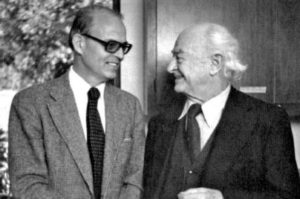
In 1962, to estimate the pace of evolution, molecular biologist Emile Zuckerkandl and Nobel Prize winner Linus Pauling proposed developing a new field of investigation at the California Institute of Technology, which they called “molecular anthropology.” More definitively, the term was subsequently changed to “molecular clocks.”
Zuckerkandl and Pauling (pictured right) proposed that molecular changes would occur at a consistent rate during the evolutionary process of speciation. The pace of these molecular changes, it was thought, held the secret keys to the rate of evolution.
Initial problems were thought to be biotechnical rather than theoretical. As evidence continued to accumulate through the early 1990s, however, it became increasingly apparent that the theory was intrinsically problematic.
But that is not all. While the essence of Darwinian evolution is characterized by “slight, successive” changes, even identifying these changes between closely related species has proven to be a tricky business.
Inconsitent Rates
Naoyuki Takahata
The first emerging issue was the consistent rate problem. Not only were rates found to be unstable, but different molecular clocks often ran even within the same species. In 2007, Naoyuki Takahata, of The Graduate University for Advanced Studies in Japan, published in the journal Genetics, addressed the problem in the article Molecular Clock: An Anti-neo-Darwinian Legacy, stating –
“It is now clear that any kind of molecular clock ticks erratically.”
Thomas Cavalier-Smith
Since Zuckerkandl and Pauling’s simple postulate seemed more complicated than expected, it raises the question: Are molecular clocks real? Professor of evolutionary biology Thomas Cavalier-Smith of the University of Oxford in England, cut to the chase. In the article published in the Philosophical Transactions of the Royal Society entitled Cell Evolution and Earth History: stasis and revolution (2006), he said –
“Evolution is not evenly paced, and there are no real molecular clocks.”
Michael S. Y. Lee
Within the evolution industry, the idea of molecular clocks has created chaos rather than consensus. For Michael S. Y. Lee, in the article Molecular Clock Calibrations and Metazoan Divergence Dates (1999) published in the Journal of Molecular Evolution –
“Unfortunately, molecular clock studies have yet to provide a set of rigorous criteria for justifying which fossil dates are to be used in calibrations and which are to be treated with skepticism.”
Giuseppe Sermonti
Italian geneticist Giuseppe Sermonti (pictured right) noted in his book entitled Why a Horse Is Not a Fly (2005).
“Once the universal ‘molecular clock’ was shelved, biochemists ceased to question (in any case dubious) datings proposed by paleontologists.”
Eugene V. Koonin
Eugene V. Koonin (pictured left), Senior Investigator for the National Center for Biotechnology Information (NCBI), argues in his book The Logic of Chance, the Nature, and Origin of Biological Evolution (2011) –

“Subsequent tests of the molecular clock hypothesis on the growing sequence collections showed that, for most genes, the clock does not click at a consistent rate; instead, the clock is significantly over-dispersed − that is, the variance of the evolutionary rates substantially exceeds the random variation predicted for a Poisson process.”
“Perhaps a ‘molecular clock’ approach might work…,” argued British journalist John Archibald in his book One Plus One Equals One (2014), published by Oxford University Press, “[but] the results were problematic, to say the least.”
Implications
Zuckerkandl and Pauling understood Darwin’s theory of evolution as the result of “slight, successive” changes over long periods of time. They assumed that molecular biology would reflect these changes over time at a consistent and predicatble rate.
The biotechnological advances in the late twentieth century, finally gave scientists the tools to test Zuckerkandl and Pauling’s theory. The evidence, however, has since invalidated their theory.
Contrary to expectations, molecular biology has yet to validate Darwin’s theory of evolution. In the words of Darwin in the Origin of Species –
“If it could be demonstrated that any complex organ exists which could not possibly have been formed by numerous, successive, slight modifications, my theory would absolutely break down.”
Darwin’s Origin Of Species theory continues only on philosophical grounds, not scientific fact. In applying Darwin’s criteria, his theory has “absolutely broken down.”
Genesis
The publication of The Origin of Species in 1859, following more than a century of investigations, valid scientific explanations for the origin of life remain compatible with the Genesis account written by Moses.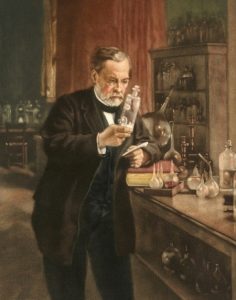
Louis Pasteur (pictured right), a French chemist and microbiologist renowned for his discoveries of the principles of vaccination, microbial fermentation, and pasteurization, also credited for disproving Darwin’s once-popular theory of spontaneous generation, realized during the Scientific Revolution that –
“The more I study nature, the more I stand amazed at the work of the Creator.”
Evidence from molecular biology to validate the theory of evolution scientifically remains speculative.
Evolution of Molecular Clocks is a Molecular Biology article.
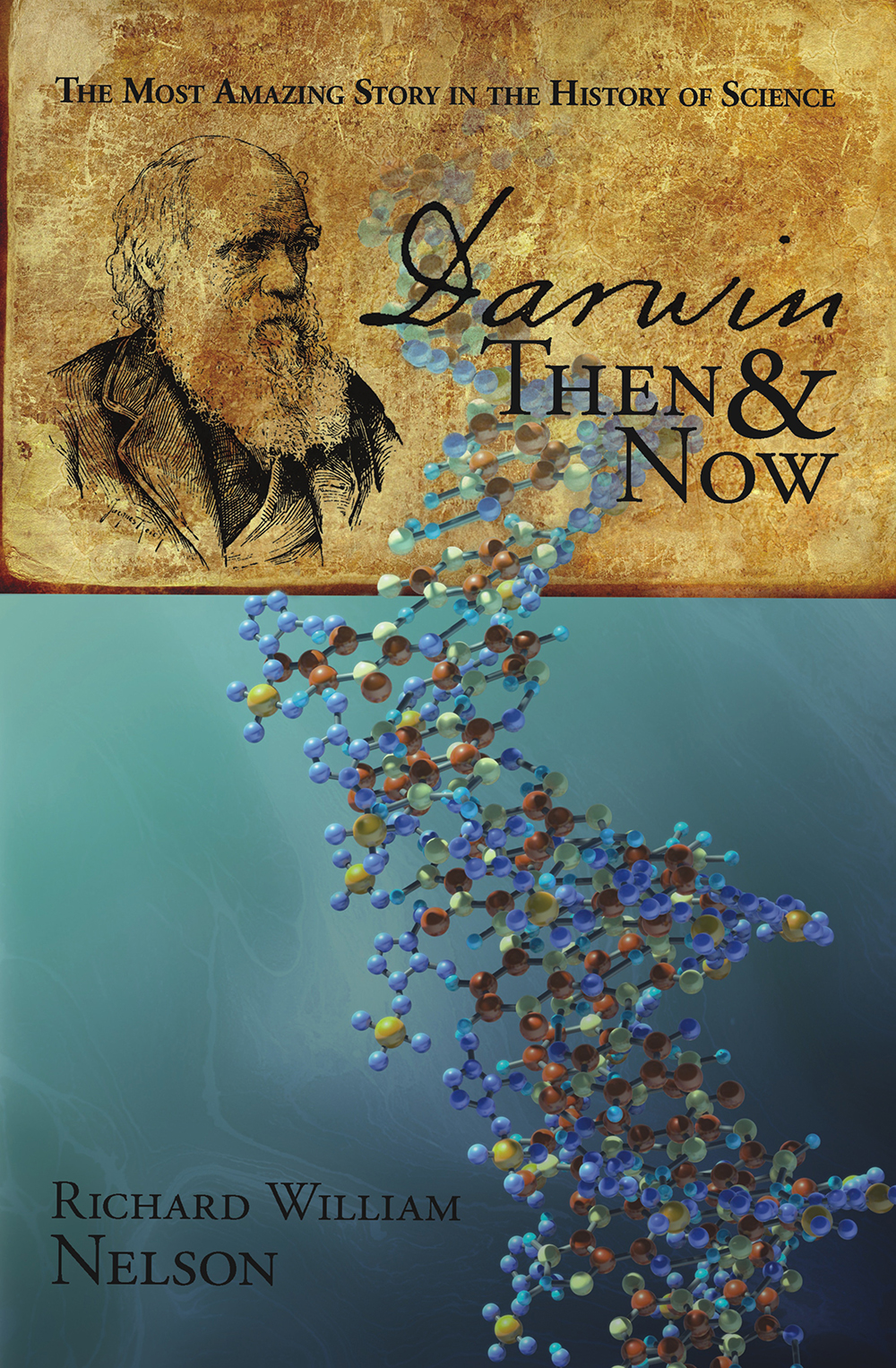
Darwin Then and Now is an educational resource on the intersection of evolution and science, highlighting the ongoing challenges to the theory of evolution.
Move On
Explore how to understand twenty-first-century concepts of evolution further using the following links –
-
- The Understanding Evolution category showcases how varying historical study approaches to evolution have led to varying conclusions. Subcategories include –
- Studying Evolution explains how key evolution terms and concepts have changed since the 1958 publication of The Origin of Species.
- What is Science explains Charles Darwin’s approach to science and how modern science approaches can be applied for different investigative purposes.
- Evolution and Science feature study articles on how scientific evidence influences the current understanding of evolution.
- Theory and Consensus feature articles on the historical timelines of the theory and Natural Selection.
- The Biography of Charles Darwin category showcases relevant aspects of his life.
- The Glossary defines terms used in studying the theory of biological evolution.
- The Understanding Evolution category showcases how varying historical study approaches to evolution have led to varying conclusions. Subcategories include –