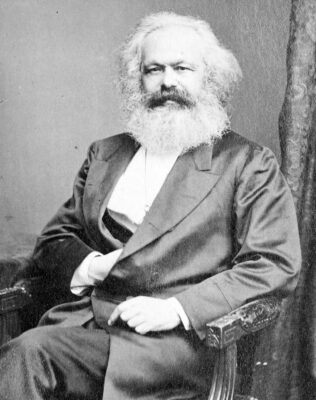
 Karl Heinrich Marx (pictured left) was intellectually aligned with Charles Darwin’s theory of natural selection. In 1848, Marx published The Communist Manifesto two decades before The Origin of Species. However, what Marx lacked, Darwin had: specifically, objective, observable, and measurable cause-and-effect explanations for change.
Both theories center on struggle, but Darwin’s struggle is biological and mechanistic, while Marx’s is social and dialectical. However, Darwin had what Marx didn’t: a popular, logical, and seemingly scientific causal mechanism for change – natural selection.
On the Origin of Species by Means of Natural Selection and the Survival of the Fittest in the Preservation of Favoured Races is Darwin’s complete title. The book argues that Earth’s vast biosphere emerged naturally through natural selection mechanisms to survive.
Marx’s premise of class struggle intellectually parallels Darwin’s survival-of-the-fittest premise. Marx’s abstract of The Communist Manifesto in the first line of Chapter One –
“The history of all hitherto existing society is the history of class struggles.”
Karl Heinrich Marx’s view of history as driven by class struggle parallels Darwin’s idea that species evolve through natural selection. Both emphasize change driven by struggle rather than divine intervention.
Karl Heinrich Marx
Karl Heinrich Marx was born in Germany on May 5, 1818. In 1843. Marx moved to France, but under Prussian pressure, French authorities exiled Marx. The problem was Marx’s published comments on the assassination attempt on Frederick William IV, King of Prussia. Marx and Engels relocated to Belgium.
Then, after being forced out of Belgium for revolutionary agitation, Marx and his comrade Friedrich Engels (pictured right) finally settled in London, England, in 1849. Ironically, Engels supported Marx for decades, using investment income from a Manchester textile business. 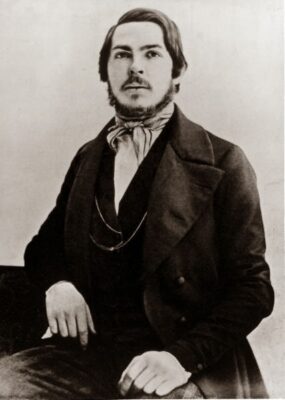
By the time Marx had moved to London, Darwin had already moved his family from London to the town of Downe seven years earlier. While Downe is just 16 miles from London, they never met since they ran in different personal and professional circles. However, within weeks of the publication of The Origin of Species, Engels wrote to Marx –
“Darwin, by the way, whom I’m reading just now, is absolutely splendid. There was one aspect of teleology that had yet to be demolished, and that has now been done…. One does, of course, have to put up with the crude English method.”
Engels viewed The Origin of Species as demolishing biblical teleology, the intellectual roadblock to advancing their theory. In replying to Engels, Marx agreed –
“This is the book which contains the basis in natural history for our view.”
Engels’s letter highlights a teleological alliance between Darwin’s natural selection and Marx’s socialist theory—both reject divine purpose and explain development through struggle, emphasizing their shared anti-teleological stance that challenges traditional religious explanations.
Natural selection provided a material, causal, non‑teleological mechanism for natural change. The alliance between Darwin and Marx is therefore anti‑teleological: both systems reject divine purpose and explain development through struggle, but neither proposes a goal‑directed mechanism.
On The Origin of Species
On The Origin of Species emerged as Marx’s pseudo-scientific justification for his emerging class-struggle movement.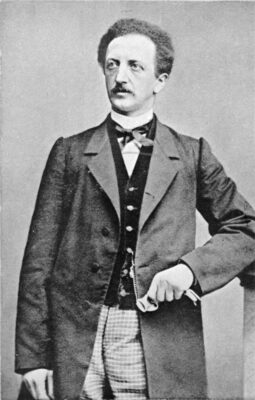 In a letter to comrade Ferdinand Lassalle (pictured left), on January 16, 1861, Marx wrote –
“Darwin’s book is very important and serves me as a basis in natural science for the class struggle in history.”
Marx inscribed “sincere admirer” in the first volume of Das Kapital, which he sent to Darwin in 1867. Darwin’s theory of natural selection played a crucial role in the institutionalization of Communism. In Das Kapital, Marx wrote –
“Darwin has interested us in the history of Nature’s Technology, i.e., in the formation of the organs of plants and animals, which organs serve as instruments of production for sustaining life. Does not the history of the productive organs of man, of organs that are the material basis of all social organization, deserve equal attention?”
Marx embraced Darwin because The Origin of Species provided a material, causal, non‑teleological mechanism for natural change — concepts Marx found crucial, highlighting Darwin’s influence on his ideas.
In Honor of Darwin
To acknowledge Darwin’s influence, Marx asked to dedicate Das Kapital (pictured right) in honor of Darwin. However, even though Darwin never read Marx’s book, diplomatically replied in 1873 to Marx –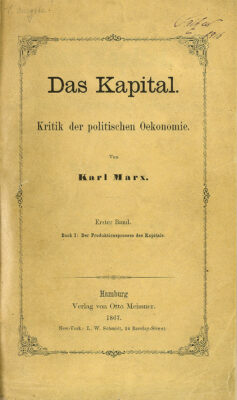
“Dear sir, I thank you for the honor that you have done me by sending me your great work on Capital, and I heartily wish that I were more worthy to receive it, but understanding more of the deep and important subject of political economy. Though our studies have been so different, I believe that we both earnestly desire the extension of knowledge and that this, in the long run, is sure to add to the happiness of Mankind. I remain, Dear Sir, Yours faithfully, Charles Darwin.”
At Karl Marx’s funeral in Highgate Cemetery in London, Engels spoke at Marx’s graveside in March 1883 –
“Just as Darwin discovered the law of evolution in organic nature, so Marx discovered the law of evolution in human history.”
The connection between Marx and Darwin did not produce a scientific synthesis but an ideological reinterpretation — a materialist, anti‑teleological framework that inspired revolutionary thinking in nature and society.
While Darwin demolished teleology in nature and Marx demolished teleology in history, Engels envisioned the two as part of the same intellectual revolution. Marx used Darwin to legitimize his worldview, not to construct it.
Communism
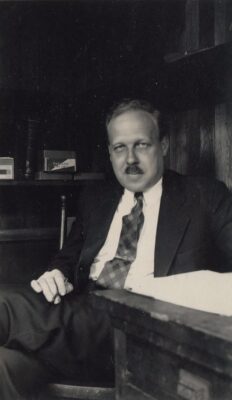 American researcher Conway Zirkle (pictured left) explains why the founders of Communism immediately accepted Darwin’s theory –
“Marx and Engels accepted evolution almost immediately after Darwin published The Origin of Species. Evolution, of course, was just what the founders of Communism needed to explain how Mankind could have come into being without the intervention of any supernatural force. Consequently, it could be used to bolster the foundations of their materialistic philosophy.”
Marx interpreted Darwin’s theory as a scientific justification for his emerging “struggle for life” theory of socialism. According to Zirkle –
“Evolution… was just what the founders of Communism needed to explain how Mankind could have come into being without the intervention of any supernatural force.”
However, since then, the endless “struggles” to implement Marx’s theory have yet to result in any long-lasting utopian society.
“Dammable Doctrine”
Once a student of the Bible at Christ’s College, Darwin sought to undermine the Bible by attacking its cornerstone, Genesis. As explained in his Autobiography –
“Thus disbelief crept over me at a very slow rate, but at least it was complete. The rate was so slow that I felt no distress and have never since doubted even for a single second that my conclusion was correct. I can hardly see how anyone ought to wish Christianity to be true, for if so, the plain language of the text seems to show that the men who do not believe, and this would include my Father, Brother, and almost all my best friends, will be everlasting punishment. This is a damnable doctrine.”
Darwin concluded that if the creation account in Genesis, as written by Moses, is scientifically wrong, the Bible “is a damnable doctrine.” Only three books of the Bible do not clearly reference Genesis characters or events: Esther, Obadiah, Philemon, and 3 John.
Modern biotechnology continues to crystallize Darwin’s long-standing dilemma.
Genesis
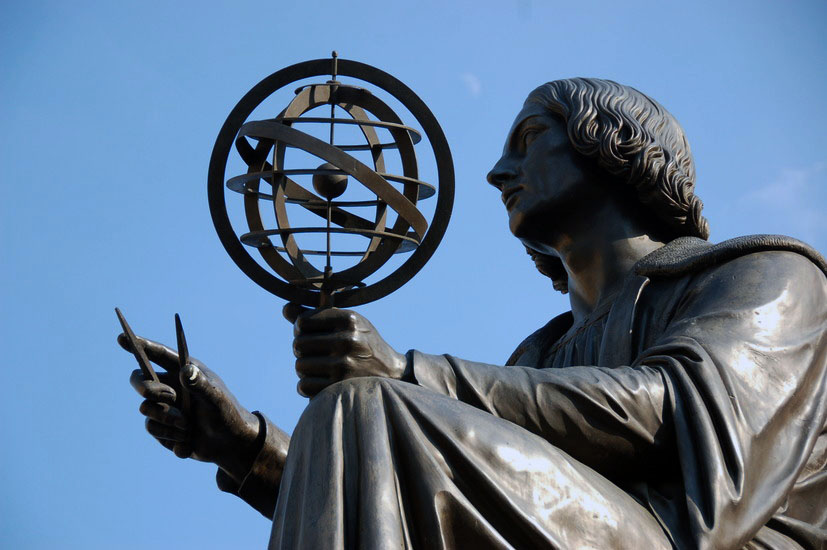 Nicholas Copernicus (1473-1543) (pictured left) upended Aristotle’s geocentric model of the universe with a heliocentric model. As co-founderof the Scientific Revolution, Copernicus declared –
“To know the mighty works of God, to comprehend His wisdom and majesty and power; to appreciate, in degree, the wonderful workings of His laws, surely all this must be a pleasing and acceptable mode of worship to the Most High, to whom ignorance cannot be more grateful than knowledge.”
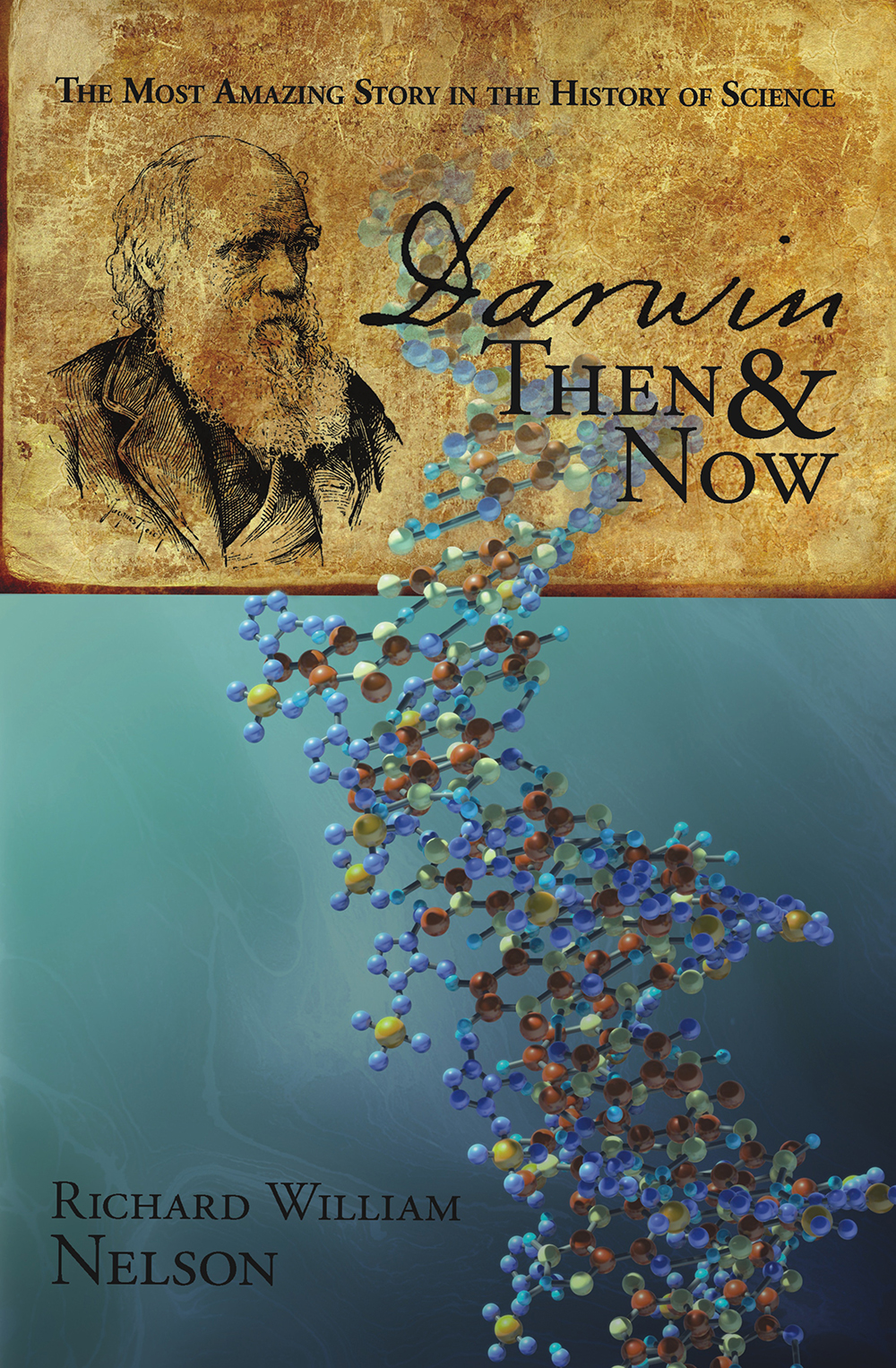
” Darwin on Marx” is a Biographical Sketch of Charles Darwin.
Darwin Then and Now is an educational resource on the intersection of evolution and science, highlighting the ongoing challenges to the theory of evolution.
Move On
Explore how to understand twenty-first-century concepts of evolution further using the following links –
-
- The Understanding Evolution category showcases how varying historical study approaches to evolution have led to varying conclusions. Subcategories include –
- Studying Evolution explains how key evolution terms and concepts have changed since the 1958 publication of The Origin of Species.
- What is Science explains Charles Darwin’s approach to science and how modern science approaches can be applied for different investigative purposes.
- Evolution and Science feature study articles on how scientific evidence influences the current understanding of evolution.
- Theory and Consensus feature articles on the historical timelines of the theory and Natural Selection.
- The Biography of Charles Darwin category showcases relevant aspects of his life.
- The Glossary defines terms used in studying the theory of biological evolution.
- The Understanding Evolution category showcases how varying historical study approaches to evolution have led to varying conclusions. Subcategories include –