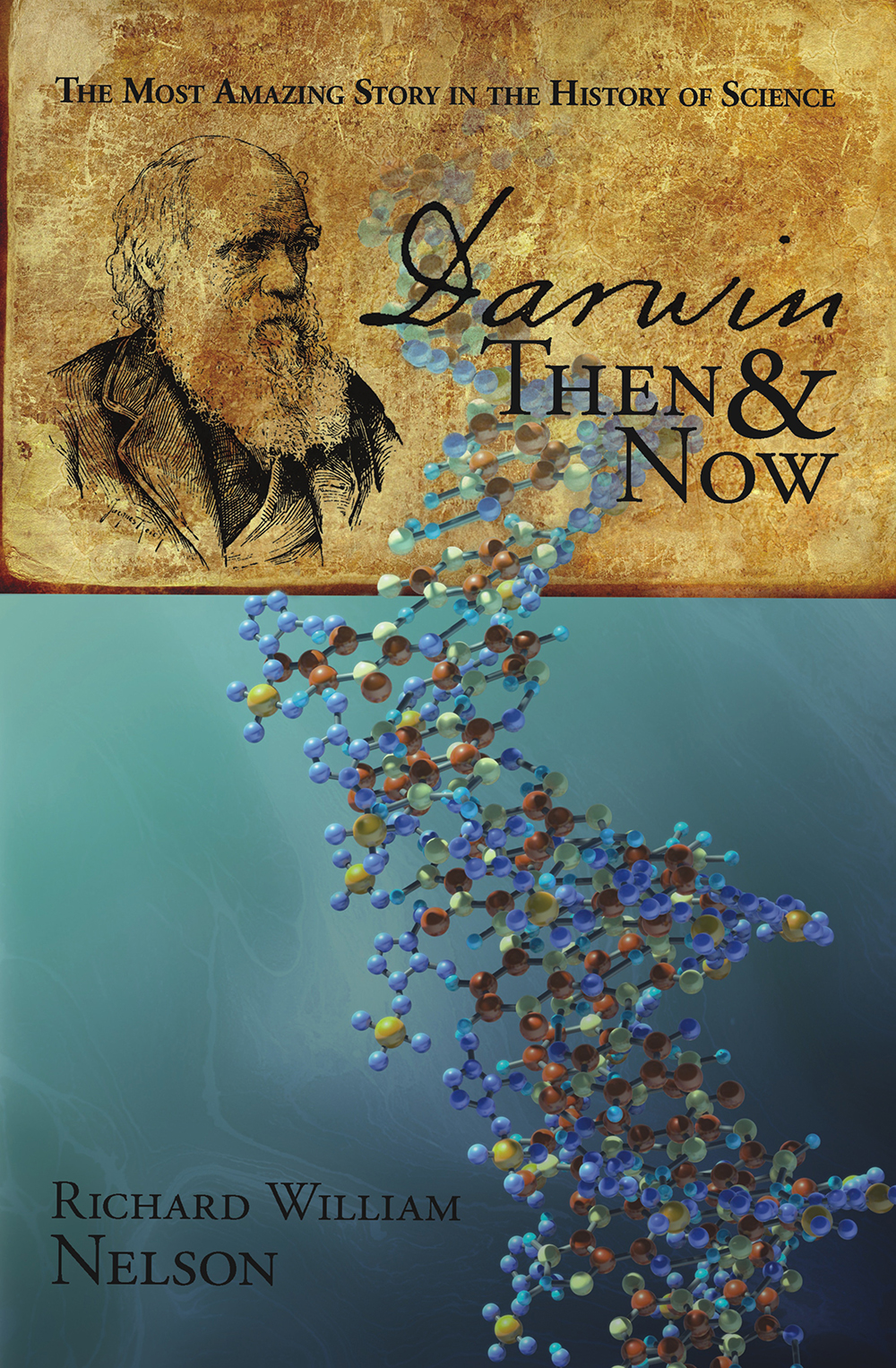
 A consensus understanding of Charles Darwin’s theory of natural selection varies even among evolutionary scientists. Richard Dawkins (pictured left), in his “Illusion of Design” paper originally published in the Natural History Magazine, envisioned natural selection as –
“Non-random survival of randomly varying hereditary instructions.”
While Dawkins’ explanation of natural selection is widely held, developing a consensus among evolutionary scientists remains contentious. In reference to an understanding of natural selection, Darwin conceded –
“No one definition has satisfied all naturalists.”
Evolution Scientists
Jerry Fodor and Massimo Piattelli-Palmarini
In What Darwin Got Wrong, Jerry Fodor and Massimo Piattelli-Palmarini deliver an exposé on Dawkins’s assertion that natural selection is a scientific non-random process. Seasoned by decades of scientific investigation, Fodor and Piattelli-Palmarini begin by demonstrating that even “Darwin’s theory of natural selection is fatally flawed.” Not only flawed, but they also view the concept as simply an “intentional fallacy.”
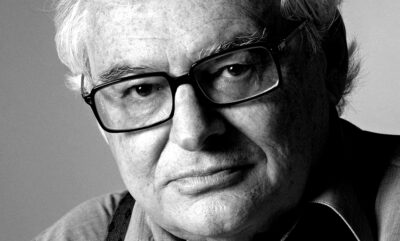 Fodor (pictured right) and Piattelli-Palmarini are not lone critics. With over 20 pages of references, the authors demonstrate that the theory of natural selection is no more than circular reasoning: a tautology. Fodor and Piattelli-Palmarini explain –
“There is at the heart of adaptations theories of evolution, a confusion between (1) the claim that evolution is a process in which creatures with adaptive traits are selected and (2) the claim that evolution is a process in which creatures are selected for their adaptive traits… Darwinism is committed to inferring (2) from (1).”
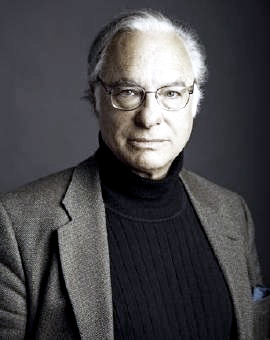 Fodor and Piattelli-Palmarini (pictured left) conclude, “We think this argument, although ubiquitous in the literature, is fallacious.”
Fodor and Piattelli-Palmarini also address Dawkins’ issue of “non-random survival” by pointing out that non-random processes require a mechanism to overcome entropy—randomness. The obvious question is – what is the mechanism that natural selection uses to overcome nature’s tendency toward randomness?
Gabriel Dover
To answer this question, Fodor and Piattelli-Palmarini quote Gabriel Dover (2006), the British geneticist who coined the term “molecular drive”: “Selection is not a process as such with predictable outcomes based on fixed, selective ‘powers’ of individual genes controlling aspects of phenotype.”
The evidence demonstrates that natural selection does not deliver “predictable outcomes.” Lack of evidence for a predictable outcome highlights that selection does not have an operational mechanism to overcome randomness and increase biological complexity—the essence of evolution.
Despite over 150 years since the publication of The Origin of Species, a natural law governing natural selection as a non-random driver of speciation has yet to be validated scientifically. Darwin’s dilemma intensifies.
Contrary to Dawkins’ assertion, natural selection is a driver of extinction, not evolution. What is the role of natural selection, then? For Fodor and Piattelli-Palmarini –
“We think of natural selection as tuning the piano, not composing the melody.”
While they may disagree on natural selection, they share the same worldview. As Fodor and Piattelli-Palmarini explain –
“[We are] out-right, card-carrying, sign-up, dye-in-the-wool, no-holds-barred atheists.”
Charles Darwin
The problems with natural selection explain, in part, why there continues to be no twenty-first-century scientific consensus on evolution. Natural selection, ironically, was Darwin’s biggest problem. In his own words –
“Natural selection… is by far the most serious special difficulty which my theory has encountered.”
Since 1859, evolutionary scientists have increasingly appreciated Darwin’s angst over Darwin’s central thesis – natural selection.
 Giuseppe Sermonti
 Giuseppe Sermonti
The theory of evolution remains a minefield of competing ideas; not one is scientifically valid. In the words of Italian geneticist Giuseppe Sermonti (pictured right) –
“Science has taken on the great wager… and lost.”
Emerging from a dilemma, Darwin’s theory developed global phenomena.
Genesis
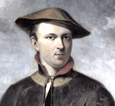 Scientific evidence, however, is compatible with the Genesis account. As Carolus Linnaeus (pictured left), the Swedish botanist who formalized the modern system of naming organisms, during the Scientific Revolution, explains –
“I saw the infinite, all-knowing, and all-powerful God from behind.… I followed His footsteps over nature’s fields and saw everywhere an eternal wisdom and power, an inscrutable perfection.”
A consensus on the mechanisms of natural selection to account for The Origin of Species remains an undefined speculative process – not a scientifically valid law of nature.
Natural Selection Consensus Development is a Theory and Consensus article.
Darwin Then and Now is an educational resource on the intersection of evolution and science, highlighting the ongoing challenges to the theory of evolution.
Move On
Explore how to understand twenty-first-century concepts of evolution further using the following links –
-
- The Understanding Evolution category showcases how varying historical study approaches to evolution have led to varying conclusions. Subcategories include –
- Studying Evolution explains how key evolution terms and concepts have changed since the 1958 publication of The Origin of Species.
- What is Science explains Charles Darwin’s approach to science and how modern science approaches can be applied for different investigative purposes.
- Evolution and Science feature study articles on how scientific evidence influences the current understanding of evolution.
- Theory and Consensus feature articles on the historical timelines of the theory and Natural Selection.
- The Biography of Charles Darwin category showcases relevant aspects of his life.
- The Glossary defines terms used in studying the theory of biological evolution.
- The Understanding Evolution category showcases how varying historical study approaches to evolution have led to varying conclusions. Subcategories include –