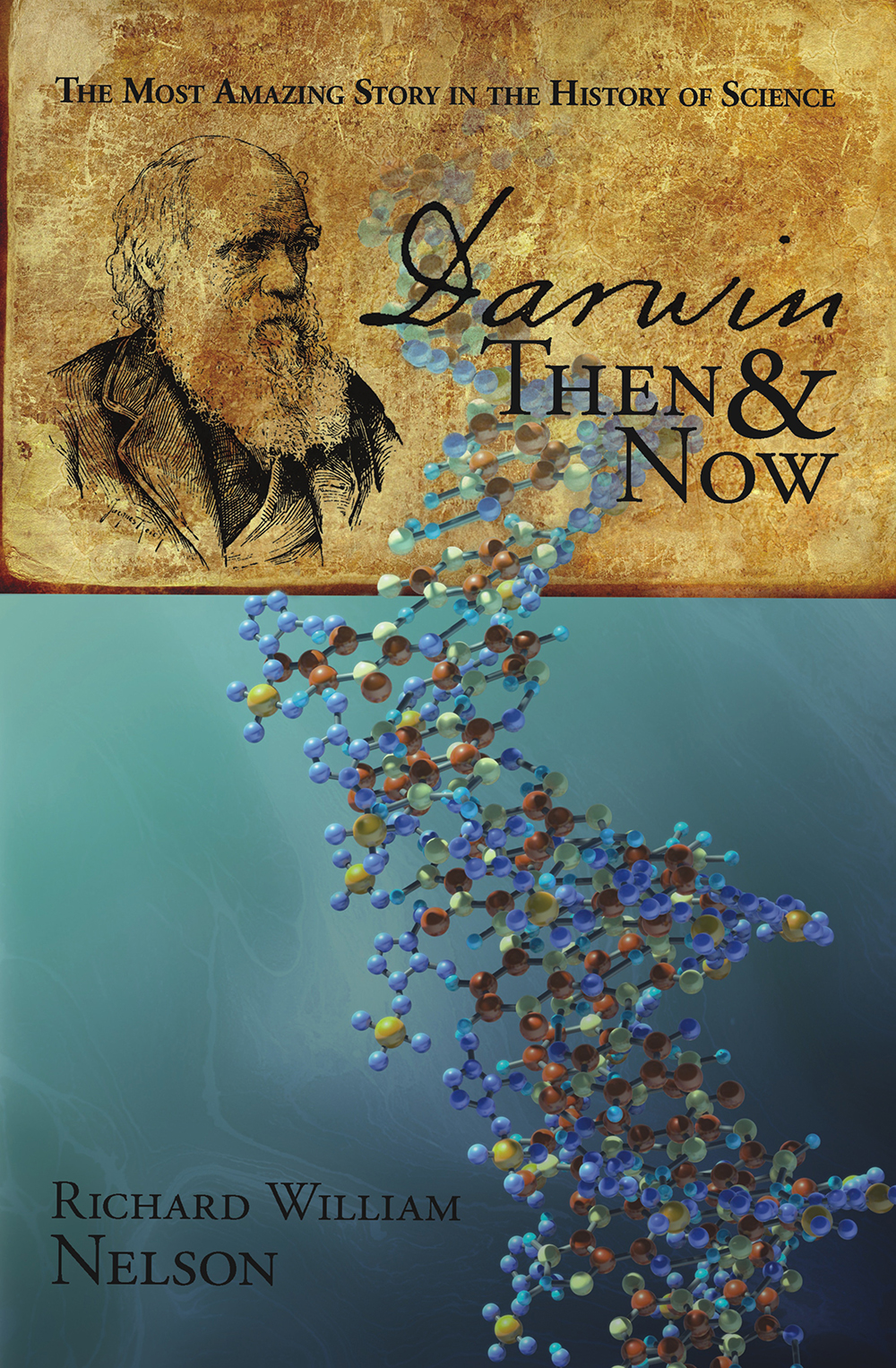
 Before the publication of The Origin of Species, speculating on the possibility of life originating naturally had long been a fascination. However, neither Charles Darwin nor the Modern Synthesis theory of evolution nor the Miller–Urey experiment provides any probable clues.
In the letter to J.D. Hooker in March 1863, Darwin privately expressed his disdain for addressing the topic, declaring —
“It is mere rubbish thinking at present of the origin of life.”
 However, a natural explanation for the “origin of species” should logically follow a natural “origin of life” explanation, since natural selection can only act on what is alive. But Darwin did not have an explanation for the origin of life.
In addressing the logical gap, Darwin turned to the then-popular Victorian “Creator” concept. In his last edition of The Origin of Species, he applied the term “Creator” nine times. For the last sentence, Darwin (pictured right) wrote –
“There is grandeur in this view of life, with its several powers, having been originally breathed by the Creator into a few forms or into one.”
In his Autobiography, Darwin lamented that the “mystery of the beginning of all things is insoluble by us.” However, an evolutionary theory without a natural explanation for the “origin of life undermines any natural explanation for Earth’s biosphere.
Earliest Natural Explanations
 Thales of Miletus is credited with developing one of the earliest natural explanations for the origin of life. As a Greek philosopher in the early 6th century BC, Thales of Miletus proposed that all things originated from water.
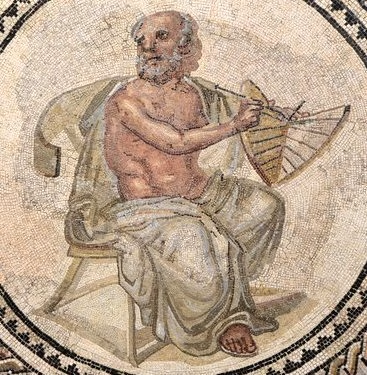
Anaximander (pictured left), the second master of Thales’ Milesian school, was a proponent of two principles: empirical evidence and logic. He reasoned that explanations for the laws governing nature must be grounded in these two principles. However, with this method, he concluded only that life must have originated under yet-unknown conditions.
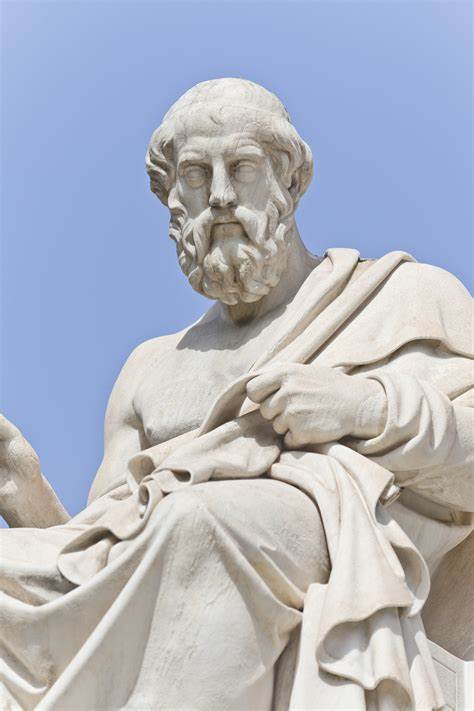 In the 4th century BC, Aristotle (pictuted right) integrated Anaximander’s principles with metaphysics, ethics, and natural philosophy. He emphasized the necessity of empirical observation and inductive reasoning. Aristotle’s proto‑scientific framework dominated Western thought for centuries.
Scientific Method Framework
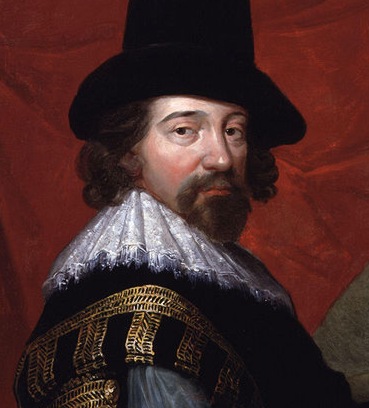 However, by the early 17th century, English scientist Francis Bacon (pictured left) argued that Aristotle’s framework drew too heavily on untested assumptions. Specifically, drawing too heavily on abstract principles rather than defined and systematic empirical observation without testing.
In his book Novum Organum (pictured right), Bacon proposed a method based on defined measurable empirical observations, inductive reasoning, and repeated testing. Conclusions about natural laws must be based on inductive reasoning grounded strictly in empirical observations and repeatedly tested through experimentation.
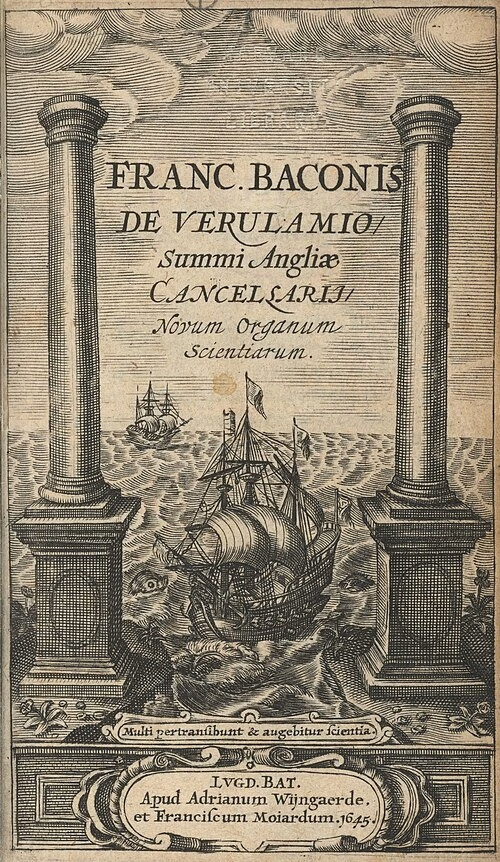 The Latin tag across the bottom of Novum Organum’s graphic – Multi pertransibunt & augebitur scientia – is taken from the Old Testament. The English translation of the Latin quote from Daniel 12:4 is “Many will travel and knowledge will be increased.”
Bacon’s method became known as the Scientific Method, which would emerge as the foundational framework of the Scientific Revolution.
Charles Darwin
In the preface to The Origin of Species, Darwin quotes from three intellectuals, one of whom is Francis Bacon. In his Autobiography, Darwin describes how he started his pursuit to study nature, writing –
“My first note-book was opened in July 1837. I worked on true Baconian principles, and without any theory collected facts on a wholesale scale.”
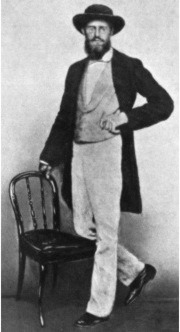 However, between 1837 and the publication of The Origin of Species in 1859, Darwin had sidelined Bacon’s principles. In a private 1857 letter to his colleague, Alfred Wallace (pictured left), Darwin wrote –
“I am a firm believer that without speculation there is no good and original observation.”
However, empirical observation of any aspect of the origin of life in the nineteenth century remained beyond science’s reach. Empirically observing the origin of life was even beyond the reach of twentieth-century science.
Harvard University
2005 Launch
In 2005, Harvard University announced the formation of a new interdisciplinary project known as the Origins of Life Initiative. This origin-of-life project was established with an annual research fund of $1 million. The goal was to identify plausible pathways from simple chemistry to life on Earth and in the universe.
 The initiative was a cross-disciplinary project involving chemistry, molecular biology, planetary science, evolutionary biology, and astronomy. David R Liu (pictured right), professor of chemistry and chemical biology at Harvard, speculated on the initiative’s prospects –
“My expectation is that we will be able to reduce this to a very simple series of logical events that could have taken place with no divine intervention.”
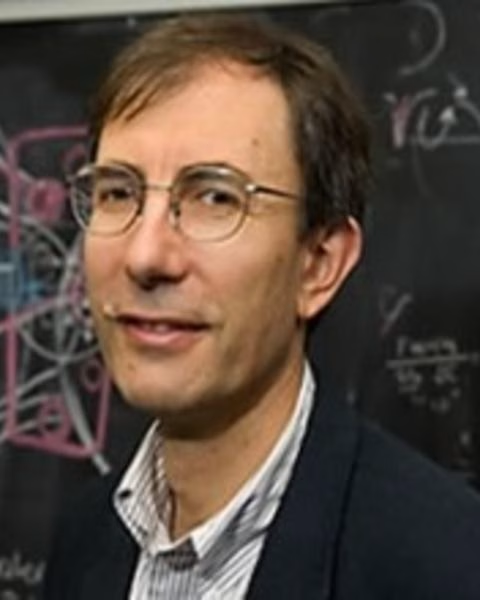 By 2006, Harvard launched the initiative, with Dimitar D. Sasselov (pictured left), professor of astronomy, as director. Sasselov coordinated biologists, chemists, and astronomers to search for the origins of life on Earth. This initiative was a direct successor to the 2005 project and continued until 2010.
2010 Update
Sasselov strategized Harvard research into three study groups. Research on protocells, prebiotic chemistry, early Earth geobiology, RNA, planetary habitability, and exoplanet chemistry was divided between the study groups.
 However, by 2012, despite advances in the study of origin-of-life theory, a cohesive theory remained elusive. Mathematical biology professor Martin Nowak (pictured right) commented on the primary hurdle the research team had encountered –
“Many events need to occur for molecules to become more sustainable.”
To consolidate efforts, research focused on studying various RNA models to explain the origin of life. Origin-of-life research was shifting from theoretical models to experimentally testable chemistry, with RNA at the center. The race to develop an RNA origin-of-life theory was on.
The “RNA World” Race
Harry Lonsdale
 The theory became known as the “RNA World” concept. The concept emerged as Earth’s hypothetical early stage, performing both genetic and catalytic functions before DNA and proteins emerged.
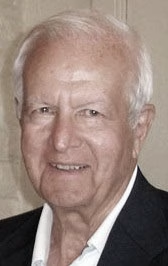
On the West Coast, a new player emerged by introducing the Origin of Life Challenge: How did life begin? competition. Once an environmental philanthropist, Harry Lonsdale (pictured left) sponsored the competition, expecting to find new thinkers and bypass traditional grants with private funding.
Lonsdale offered a $50,000 award to three with the best proposal, with the potential for an additional $2 million. Applicants were charged with specific guidelines –
“The proposal should take into account the conditions, materials, and energy sources believed to have existed on the prebiotic Earth. Submission should provide a cogent hypothesis for how life first arose, including its plausible chemistry, and for how primitive life could have evolved to modern biological cells, including the present genetic material and metabolism.”
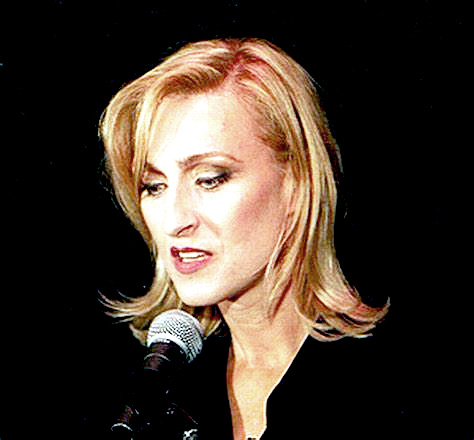 A final application deadline, December 31, 2011, was set. When questioned by journalist Suzan Mazur (pictured right), Lonsdale inferred that the winning papers should be “based on the RNA world” model.
Primary Intention
The primary intention of the competition was to accelerate life research by rewarding bold, unconventional ideas. However, once into the project, when questioned further about the quality of proposals, Lonsdale replied –
“I must say I was very much underwhelmed by the breadth of their proposals. Even the experts I gathered in San Diego a month or so ago don’t have a single clear model of how life began. There’s no universal agreement.”
Of the 76 proposals submitted to his Origin of Life Challenge, Lonsdale and his team of experts selected three. The winners were guaranteed funding for at least a year, with the potential for continued financial support.
The race was on to develop a scientific explanation for an origin-of-life theory at a new level of plausibility and with new technologies. However, for decades the coalition of RNA World advocates faced critics.
RNA World Critics
 For decades, critics of the RNA World published clearly detailed arguments against any such concept in peer‑reviewed papers. The five top scientific objections to the concept include –
-
- RNA is too chemically fragile to be life’s first genetic system
- Prebiotic synthesis of RNA is implausibly more difficult than protein assimilation
- RNA self‑replication had never been demonstrated
- RNA World concept never had an explanation for the origin of translation
- Early Earth environmental assumptions made an RNA World concept highly improbable
A short list of notable origin of life researchers with published criticisms of an RNA World concept is notable, including –
Stanley Miller, University of California, Berkeley – RNA World would be “unlikely.”
Stuart Kauffman, University of Vermont.
Freeman Dyson, Institute for Advanced Studies in Princeton.
David Deamer, University of California, Santa Cruz.
Robert Shapiro, San Francisco State University.
Dean Kenyon, San Francisco State University.
Gordon C Mills, University of Texas.
Hubert Yockey, University of California, Berkeley.
Gerald F. Joyce, Research Institute of Scripps Clinic.
Leslie Orgel, Oxford University.
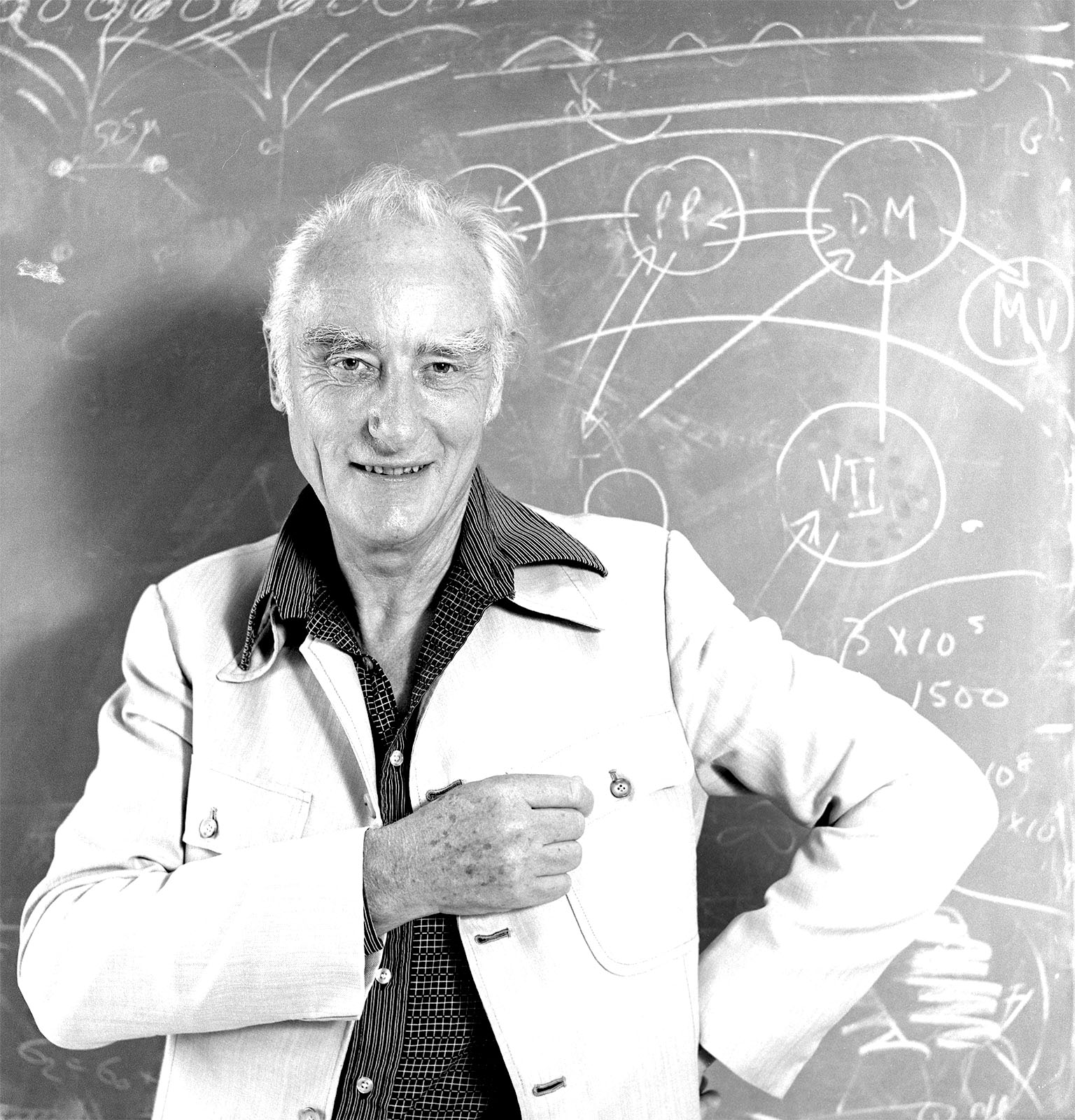 Francis Crick, the discoverer of the DNA structure, commented on any natural origin of life model in 1980, writing –
“An honest man, armed with all the knowledge available to us now, could only state that in some sense, the origin of life appears at the moment to be almost a miracle, so many are the conditions which would have had to be satisfied to get it going.”
The risks of the RNA World were extreme; however, they parallel the risks of having a theory of evolution without an origin-of-life theory. A theory of evolution without a natural origin-of-life theory is pointless.
A natural explanation for the origin of life was a dilemma for Darwin and the industries supporting the theory of evolution, then and now.
Genesis
 One hundred and fifty years since the publication of The Origin of Species, a comprehensive theory of evolution is more problematic now than ever. The empirical evidence of life on early Earth remains more aligned with the Genesis account, written by Moses, than any natural theory.
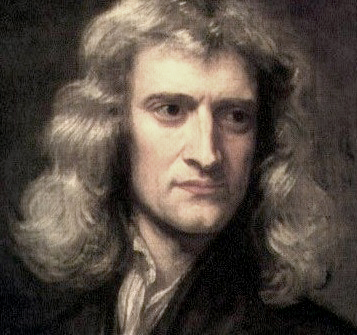
Isaac Newton (pictured right), noted as one of the most influential scientists of all time, commented on the origin of life –
“How came the Bodies of Animals to be contrived with so much Art, and for what ends were their several parts? Was the Eye contrived without Skill in Opticks, and the Ear without Knowledge of Sounds? … And these things being rightly dispatch’d, does it not appear from Phaenomena that there is a Being incorporeal, living, intelligent omnipresent…”
Without a natural origin of life explanation, a natural explanation accounting for the origin of Earth’s biosphere is logically irrelevant.
2026 Update
Harvard’s Initiative Update
Harvard’s Origins of Life initiatives remain robust and well‑funded, producing cutting‑edge experimental work. The latest results were published in the Proceedings of the National Academy of Sciences on May 27, 2025. The paper was entitled –
“Self-reproduction as an autonomous process of growth and reorganization in fully abiotic, artificial and synthetic cells.”
Juan Pérez-Mercader, a senior research fellow in the Origins of Life Initiative and senior author of the initiative, said –
“I am super, super excited about this.”
Understanding how life naturally originated, however, has remained beyond the reach of science, as the paper’s conclusion infers –
“The results presented here have significant implications for chemistry-based abiotic life-like synthetic artificial life and offer a path for developing a broad class of abiotic, life-like systems.”
In the article “A step toward solving central mystery of life on Earth,” The Harvard Gazette summarizes the Initiative’s importance –
“Experiment with synthetic self-assembling materials suggests how it all might have begun.”
“How it all might have begun” aligns with Crick’s earlier conclusion –
“… the origin of life appears at the moment to be almost a miracle.”
After a decade of research, Harvard’s Initiative has failed to develop a natural mechanism to explain the origin of life.
Lonsdale’s Team Update
Lonsdale’s team announced in the journal Phys.org on June 20, 2012, the three winners of the Origin of Life Challenge. The winners’ aims focused on the prebiotic synthesis of RNA building blocks, the assembly of self‑replicating RNA systems, and laboratory simulations of primordial RNA pools.
For the competition, Lonsdale collaborated with the Origins Project at Arizona State University. The competition was directed by Lawrence Krauss, a Canadian-American theoretical physicist and cosmologist. Soon afterward, Lonsdale passed away in 2014.
In March 2018, the ASU department Dean placed Krauss on paid administrative leave due to a variety of sexual misconduct claims. Krauss had close ties to Jeffrey Epstein. At the end of the 2018–2019 academic year, Krauss resigned from ASU, ending the Origin of Life Challenge.
On November 12, 2025, the House Committee on Oversight and Government Reform published evidence that Epstein had exchanged more than 60 emails with Krauss.
Challenge Publications
All three winning teams eventually published research that aligns with the projects funded by Lonsdale’s Origin of Life Challenge. However, the resulting publications came from the research groups, not from the Challenge as a formal output.
The Challenge-seeded publications appeared only as part of each team’s scientific work, not as a unified “Challenge consensus report.”
Like the Harvard Initiative, Lonsdale’s Challenge failed to develop a natural mechanism to explain the origin of life.
Overview
NASA astrobiologist Chris McKay, one of Harvard’s Initiative referees, stated —
“There’s not even a consensus on how to approach the problem.”
At the end of the Origin of Life race, there is still no winner. To date, an international scientific consensus on the origin of life has yet to be developed.
Origin of Life Race is an Origin of Life article.

Darwin Then and Now is an educational resource on the intersection of evolution and science, highlighting the ongoing challenges to the theory of evolution.
Move On
Explore how to understand twenty-first-century concepts of evolution further using the following links –
-
- The Understanding Evolution category showcases how varying historical study approaches to evolution have led to varying conclusions. Subcategories include –
- Studying Evolution explains how key evolution terms and concepts have changed since the 1958 publication of The Origin of Species.
- What is Science explains Charles Darwin’s approach to science and how modern science approaches can be applied for different investigative purposes.
- Evolution and Science feature study articles on how scientific evidence influences the current understanding of evolution.
- Theory and Consensus feature articles on the historical timelines of the theory and Natural Selection.
- The Biography of Charles Darwin category showcases relevant aspects of his life.
- The Glossary defines terms used in studying the theory of biological evolution.
- The Understanding Evolution category showcases how varying historical study approaches to evolution have led to varying conclusions. Subcategories include –