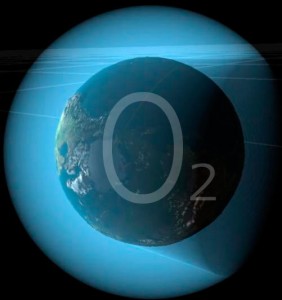
 One of the most consequential molecules for life on Earth is oxygen. Oxygen (O₂) is the molecular basis of water and essential for biological functions. Life on Earth is not possible without molecular oxygen.
Paradoxically, concepts of an oxygen-free early-Earth atmosphere first emerged in the 1920s. The concept was independently introduced by Aleksandr Oparin and J. B. S. Haldane, a Russian biochemist and a British-born scientist.
Aleksandr Oparin
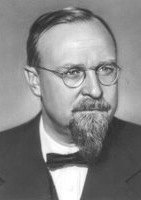 Oparin (1894-1980) laid the groundwork for an understanding of how life could have emerged through the forces of nature. His work was widely popular, especially in Russia. Oparin (pictured right) was honored as Hero of Socialist Labour, and awarded the Lenin Prize and the Lomonosov Gold Medal. Oparin was a five-times recipient of the Order of Lenin.
With the recent discovery of methane (CH4) in Jupiter‘s atmosphere, Oparin suggested that early Earth also possessed a strongly reducing atmosphere. Oparin speculated that Earth and its chemistry resulted from the broader natural and cosmological history of matter. Earth’s strongly reducing atmosphere would then also principally contain ammonia (NH₃). hydrogen (H₂), and water (H₂O).
Oparin reasoned that life is simply a continuum of the organization of matter. However, Oparin never conducted any testing to validate his speculations.
J. B. S. Haldane
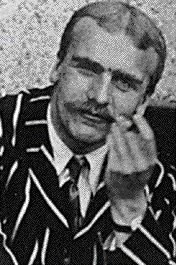 Haldane (1892-1964) worked in the fields of physiology, genetics, evolutionary biology, and mathematics. With innovative use of statistics in biology, he was one of the founders of neo-Darwinism. In a paper entitled The Origin of Life, Haldane reintroduced Charles Darwin’s “primordial soup” concept in 1929, writing –
“In spite of Pasteur, that at some point in time in the remote past life had originated on Earth from dead matter as the result of natural processes.”
Haldane set the foundation for the Modern Synthesis theory of evolution, linking Mendelian genetics and Darwinian evolution by natural selection. By advancing the emerging field of population genetics, Haldane eventually established a framework for mapping the human genome.
Oparin-Haldane Oxygen-Free Concept
Oparin-Haldane, however, never experimentally validated their central “primordial soup” hypothesis. Only later in the 1950’s did the Miller-Urey experiment test Oparin and Haldane’s oxygen-free concepts.
Independently, they concurred that inorganic molecules in a reducing, oxygen-free early atmosphere could produce the organic molecules necessary for life. The natural formation of biomolecular compounds is hindered by the presence of oxygen (O2).
A reducing atmosphere is one in which chemical conditions favor relatively electron-rich, low-oxidation-state compounds such as methane (CH4). Whereas an oxidizing atmosphere favors higher oxidation states, such as carbon dioxide (CO2). Oxidation is the loss of electrons, while reduction is the gain of electrons or a decrease in the oxidation state.
Therefore, the more C–H bonds a molecule has, the more reduced the carbon is. Conversely, the more C–O bonds a molecule has, the more oxidized and less reduced the carbon is. For this reason, the phrase “oxygen-free” is a misnomer. More accurately, reducing environments are better described as “oxygen-poor” – not “oxygen-free.”
Oparin was an early advocate for the view that hydrogen-rich planetary atmospheres are likely indicative of early Earth’s chemistry. Logically, early Earth’s environment began with a methane, ammonia (NH3), hydrogen [1H, 2H, and 3H], and water H2O vapor atmosphere.
However, the evidence for an “oxygen-poor” reducing Earth atmosphere abiogenetically has a checkered history.
Harold Urey
 American physical chemist Harold Urey (1893-1982), a 1934 Nobel Prize in Chemistry winner, found Oparin-Haldane’s “primordial soup” concepts fascinating. Perhaps best known for his WW II Manhattan Project contributions, wanted to test Oparin-Haldane’s reducing atmosphere-driven origin-of-life concept.
However, Oparin-Haldane’s concept did not identify a specific energy source for Darwin’s “warm little pond.” In his infamous letter to J.D. Hooker in 1871, Darwin wrote –
“But if (& oh what a big if) we could conceive in some warm little pond with all sorts of ammonia & phosphoric salts,—light, heat, electricity &c present, that a protein compound was chemically formed, ready to undergo still more complex changes.”
In the nineteenth century, Darwin recognized that the formation of biogenic molecules was essential, even for early forms of life. At the time, “protoplasm” was his closest understanding of biogenic molecules. However, modern concepts of “proteins” were not developed until the beginning of the twentieth century.
What Darwin did know is that even “protoplasm” would require a natural cause. Vague notions of “light, heat, electricity” were his natural cause-and-effect explanation.
Miller-Urey Experiment
 By the early 1950s, scientists had begun investigating whether energy acting on Earth’s inorganic constituents could generate relevant organic molecules. In his University of Chicago laboratory, Urey agreed to work with graduate student Stanley Miller (1930-2007).
Miller persuaded Urey to perform pre-biotic synthesis experiments using electric discharges in molecularly reducing environments. Since previous pre-biotic synthesis experiments had not been successful, Urey was not immediately enthusiastic about Miller’s proposal.
Despite Urey’s initial reluctance, Miller designed a glass circulating system. The system circulated water, methane, ammonia, and hydrogen, which were subjected to electrical discharges. By the mid-twentieth century, proteins were recognized as major functional constituents of living cells.
Urey was personally “astonished” when the amino acids appeared.
Amino Acids
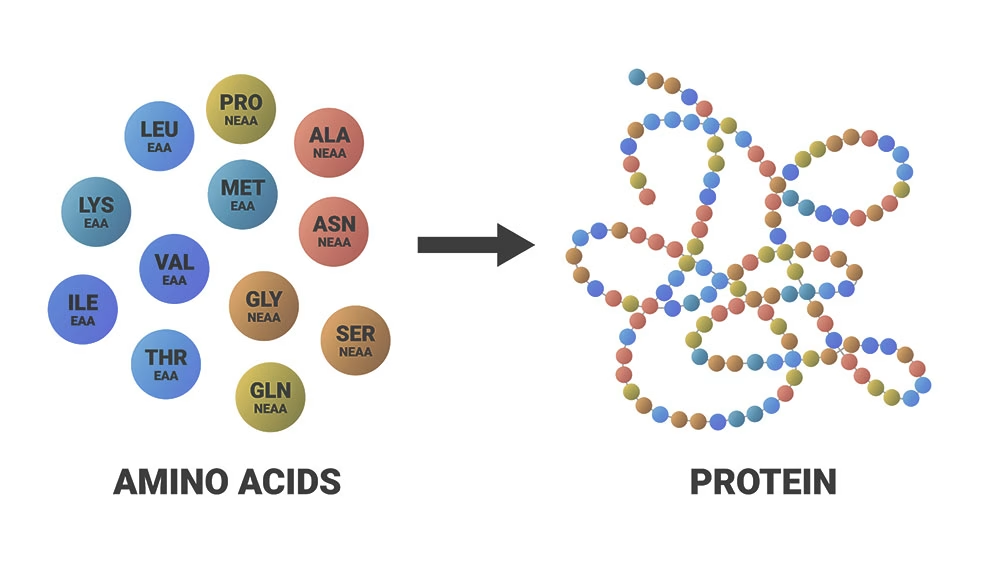 In May 1953, Miller reported their findings in the journal Science. In the study titled “A Production of Amino Acids Under Possible Primitive Earth Conditions,” Miller reported that glycine was the most prominent amino acid identified, followed by alanine and several other amino acids. The paper became a milestone in abiogenesis research.
Miller’s study was the first to demonstrate that abiogenic synthesis of organic compounds was possible under plausible early Earth conditions. The study supported the abiogenesis hypotheses envisioned by Oparin, Haldane, and Urey.
Subsequent studies eventually found that all the essential amino acids for life were produced using Miller’s method. Essential amino acids are amino acids that cannot be synthesized from scratch by the organism fast enough.
Proteins
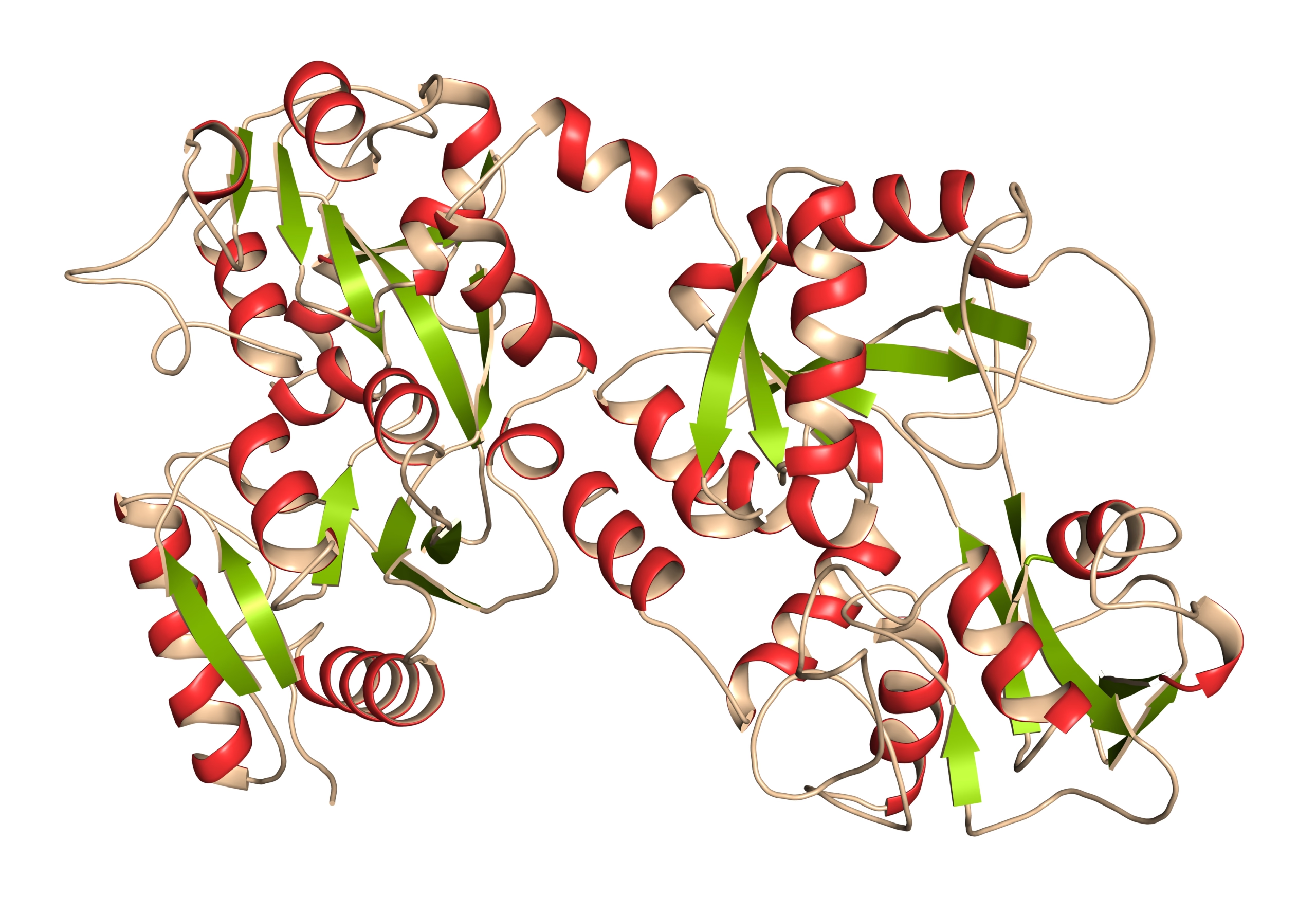 Proteins are macromolecules (pictured left) comprised of long chains of amino acids. They primarily perform most of the structural, functional, and regulatory work in living organisms. Proteins differ from one another primarily in their amino acid sequences, which are dictated by the nucleotide sequences of their genes.
Like other biological macromolecules such as polysaccharides and nucleic acids, proteins participate in virtually every process within cells. Many proteins are enzymes that catalyze biochemical reactions and are vital to metabolism.
Some proteins have structural or mechanical functions in muscle, and the cytoskeleton‘s scaffolding proteins that maintain cell shape. Other proteins are important in cell signaling, immune responses, cell adhesion, and the cell cycle.
Oxygen-Free to Oxygen-Dependent
The Miller-Urey experiment demonstrated that simple amino acids could form under simulated early-Earth reducing, oxygen-free conditions. Yet proteins – composed of amino acids – are essential to the functioning of Earth’s oxygen-dependent biosphere.
Origin-of-life researchers view these contrasting roles of oxygen as presumed sequential stages of Earth’s evolution. This concept has been called the Great Oxidation Event (GOE), Oxygen Catastrophe, Oxygen Revolution, Oxygen Crisis, or the Oxygen Holocaust.
The earliest stage of Earth’s evolution was an anoxic environment followed by the emergence of oxygenic photosynthesis in Cyanobacteria. Through photosynthesis, the bacteria gain biological energy. Cyanobacteriota are the first and only phylum known to produce oxygen.
Darwin Versus GOE
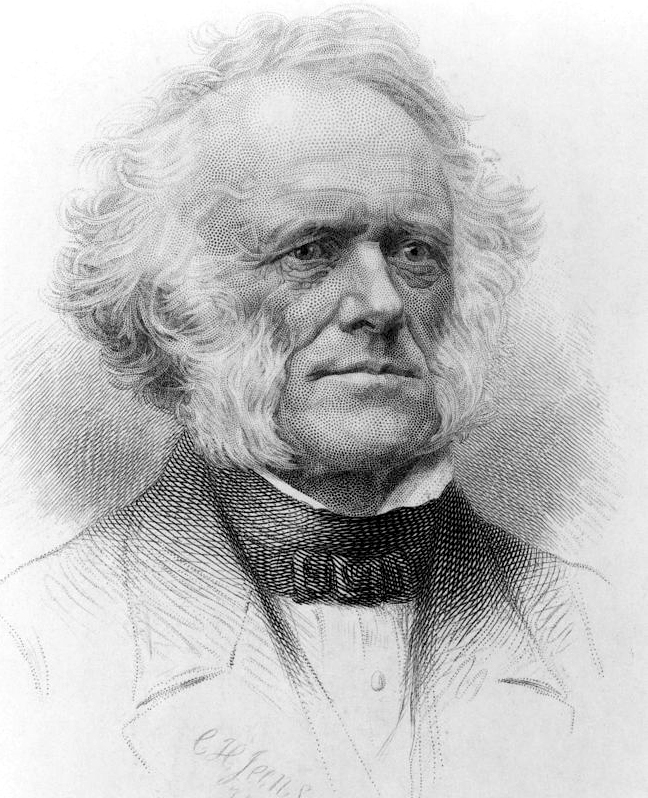 Charles Lyell’s (pictured right) concept of uniformitariansm geology strongly shaped Darwin’s thinking. As a result, Darwin viewed life as the gradual adaptation to Earth’s environment over long periods of time.
changing Earth → environmental conditions → natural selection → biological evolution
The GOE concept reverses Darwin’s concept. Rather than life adapting to the environment, life changes the environment for life.
Natural selection explains biological adaptations driven by the environment over long periods. By contrast, the GOE concept explains environmental changes driven by biological changes.
GOE Critics
Evolution scientists have not reached a consensus on the GOE. According to WIKIPEDIA –
“The question of when oxygenic photosynthesis evolved continues to engender debate and research.”
Louis Pasteur
 The GOE concept presumes the spontaneous generation of cyanobacteria (abiogenesis) emerging from chemicals. However, the concept violates Louis Pasteur’s (pictured left) law of nature –
“Omne vivum ex vivo – no cellular life has ever been observed to arise from non‑living matter.”
Pasteur reached this conclusion experimentally testing the popular concept of spontaneous generation.
Twentieth-Century GOE Critics
 Richard Dawkins (pictured right), in the book “The Greatest Show on Earth,” Dawkins writes:
“Never will the doctrine of spontaneous generation recover from the mortal blow struck by this [Pasteur’s] simple experiment.”
Pasteur demonstrrated that the concept of spontaneous generation is an unproven hypothesis.
One of the first to throw the wrench into the GOE theory was geologist Harrison Brown of the University of Chicago in the 1960s, noting that a stellar atmosphere vanished or never existed on Earth. By the 1970s, Philip Abelson of the Carnegie Institution gave a simple Q&A –
“What is the evidence for a primitive methane-ammonia atmosphere on Earth? The answer is that there is no evidence for it, but much against it.”
Later in the 1970s, Canadian geologists Erich Dimroth and Michael Kimberly wrote –
“In general, we find no evidence in the sedimentary distributions of carbon, sulfur, uranium, or iron that an oxygen-free atmosphere has existed at any time during the span of geological history recorded in well-preserved sedimentary rocks.”
Belgium biochemist Marcel Florkin joined Dimroth and Kimberly in 1975, noting that “the concept of a reducing primitive atmosphere has been abandoned” and that the Miller–Urey experiment is “not now considered geologically adequate.”
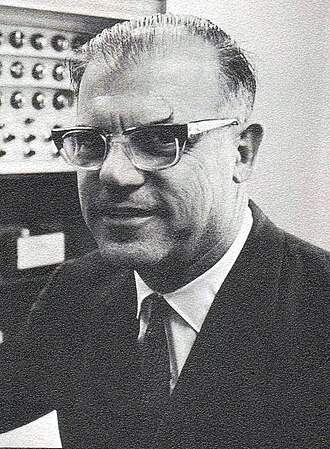 Even molecular biologists Sidney Fox (pictured left) and Klaus Dose joined the discussion in 1977, declaring –
“The inference that Miller’s synthesis does not have a geological relevance has become increasingly widespread.”
In 1982, British geologists Harry Clemmey and Nick Badham, after examining the evidence from the rocks, noted –
“From the time of the earliest dated rocks at 3.7 billion years, Earth had an oxygenic atmosphere.”
 By 1995, Jon Cohen (pictured right), senior editor for Science, the flagship journal of the American Association for the Advancement of Science (AAAS), explains –
“The early atmosphere looked nothing like the Miller–Urey simulation.”
The oxygen-free atmosphere hypothesis reflects a philosophy, not scientific evidence. Based on the evidence, in 1998, Richard Monastersky, writing for National Geographic, finally broadcast –
“Many scientists now suspect that the early atmosphere was very different from what Miller first supposed.”
Recent Study on the Early Earth Free-Oxygen Theory
In 2013, Sean A. Crowe and colleagues reported in Nature evidence of atmospheric oxygen approximately three billion years ago. In their paper, “Atmospheric oxygenation three billion years ago,” Crowe concluded –
“Overall, our findings suggest that there were appreciable levels of atmospheric oxygen about 3 billion years ago.”
Biogeologist Roger Buick of the University of Washington in Seattle, in an interview with The Scientist, noted that Crowe’s evidence –
“… adds greater complexity to our picture of how and when the Earth got its oxygen. ”
Nature World News in ”Traces of Oxygen Found in 3 Billion-year-old Rocks” concluded in reviewing Crowe’s, noting –
“We might have to take a second look at the evolution of life on Earth.”
To date, no scientific organization has developed a consensus on how life could have emerged from inorganic materials, with or without oxygen.
Genesis
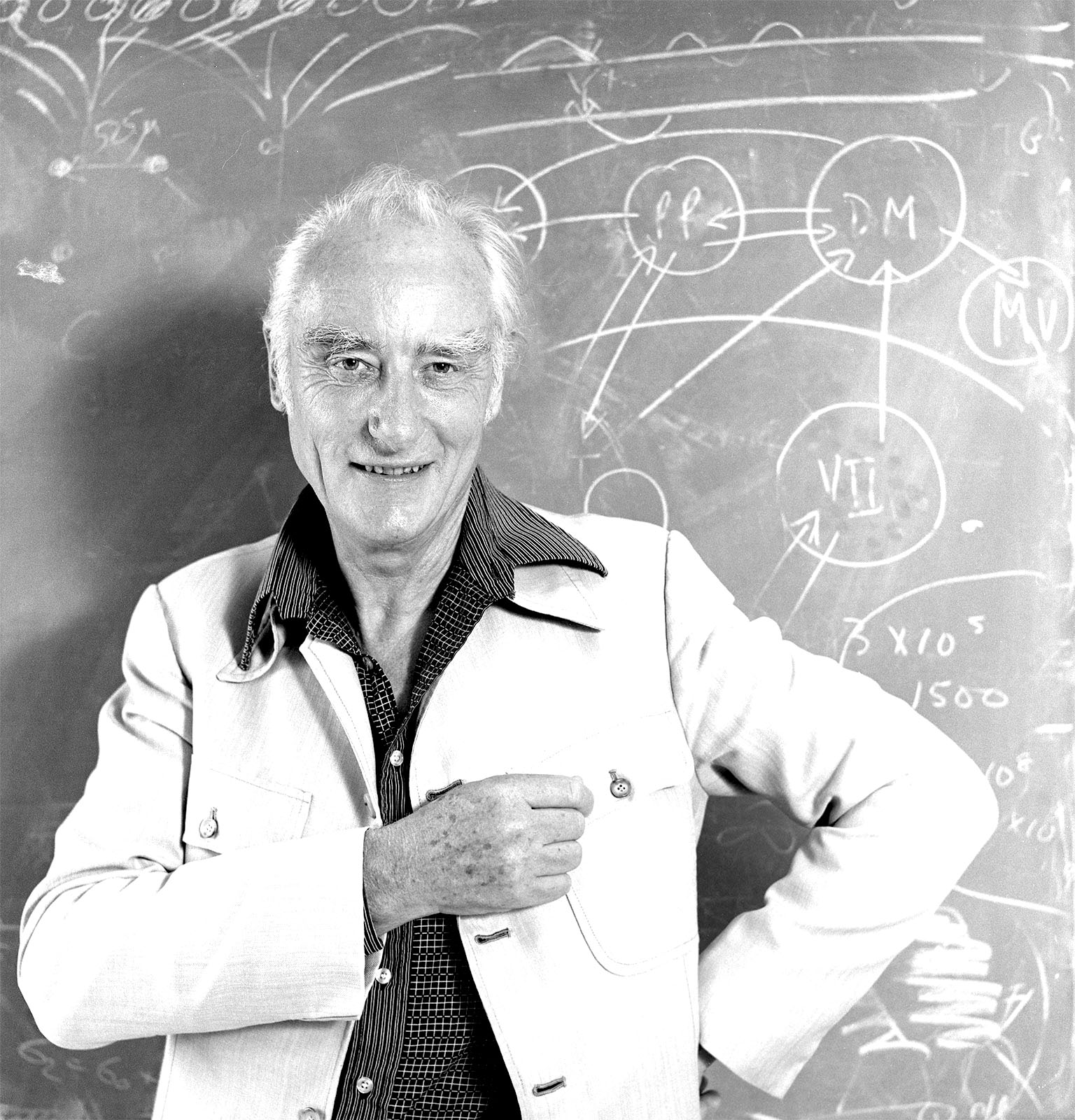 The Genesis account written by Moses remains consistent with scientific evidence. The Nobel Prize-winning discoverer of the DNA molecule, Francis Crick (pictured left), in the book Life Itself, recognized –
“An honest man, armed with all the knowledge available to us now, could only state that in some sense, the origin of life appears at the moment to be almost a miracle.”
Evidence from studies of the origin of life underscores why the theory of evolution remains speculative rather than scientifically valid.
2026 Update
 Earth scientist Peter W. Crockford of Carleton University and colleagues wrote “Revisiting the greatness of Earth’s great oxidation.” The paper was published in the journal Nature in April, 2026.
The paper retraces the challenges facing the scientific validity of the assumptions surrounding the GOE concept, begging the question –
“Despite many new tools to interrogate the GOE, today the defendable range of possible atmospheric O2 levels span orders of magnitude, begging the question, how great was Earth’s Great Oxidation?
Crockford concludes noting –
“The consequences of such disparate views on oxygenation levels are uncertainties regarding biospheric evolution, interpretations of the sedimentary record, and a limited ability to translate Earth’s atmospheric history into insights for exoplanet research.”
As of 2026, there is still no scientific consensus on how life emerged from inorganic materials – with or without oxygen.
Oxygen-Free Early-Earth Atmosphere is an Origin of Life article.

Darwin Then and Now is an educational resource on the intersection of evolution and science, highlighting the ongoing challenges to the theory of evolution.
Move On
Explore how to understand twenty-first-century concepts of evolution further using the following links –
-
- The Understanding Evolution category showcases how varying historical study approaches to evolution have led to varying conclusions. Subcategories include –
- Studying Evolution explains how key evolution terms and concepts have changed since the 1958 publication of The Origin of Species.
- What is Science explains Charles Darwin’s approach to science and how modern science approaches can be applied for different investigative purposes.
- Evolution and Science feature study articles on how scientific evidence influences the current understanding of evolution.
- Theory and Consensus feature articles on the historical timelines of the theory and Natural Selection.
- The Biography of Charles Darwin category showcases relevant aspects of his life.
- The Glossary defines terms used in studying the theory of biological evolution.
- The Understanding Evolution category showcases how varying historical study approaches to evolution have led to varying conclusions. Subcategories include –