by Richard William Nelson | Jan 2, 2011
 Leslie Stahl, long-time CBS journalist, interviewed on 60 Minutes with Mary Schweitzer in December, marking a new paleontology arena – the field of dinosaur soft tissue.
Schweitzer, an American paleontologist at North Carolina State University, unexpectedly discovered soft tissues from a Tyrannosaurus rex bone sent from the Museum of the Rockies in Montana.
Schweitzer’s controversial report, “Gender-Specific Reproductive Tissue in Ratites and Tyrannosaurus rex,” published in the journal Science in 2005, revolutionized our understanding of fossil preservation.
Continue Reading
by Richard William Nelson | Nov 28, 2010
Craig Venter, the maverick American biologist and businessman, captured worldwide attention by announcing the creation of “the first synthetic species,” nicknamed “Synthia.” Venter has the credentials. In 2000, Venter, along with Francis Collins of the National Institutes of Health, jointly announced the complete mapping of the human genome.
In a 60-Minute CBS interview with Steve Kroft (pictured right), in the aired TV segment entitled “J. Craig Venter: Designing Life,” CBS touted that Venter’s new synthetic species “gets its genetic instructions from a synthetic chromosome made by man, not nature.”
Continue Reading
by Richard William Nelson | Aug 29, 2010
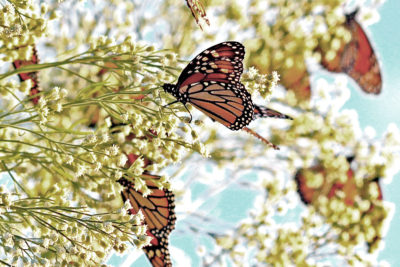
Jerry Coyne, in his new book entitled Why Evolution is True, conveniently overlooks any reference to the butterfly, as does Darwin-Discovering the Tree of Life by Niles Eldridge.
Even the California-sponsored website “Understanding Evolution” skirts around the mysterious transformation of the butterfly known as metamorphosis – a butterfly nightmare.
Depictions of mystical butterfly symbols have embellished Egyptian, Chinese, and Greek cultural expressions for over 3,500 years. Why is the evolution industry silent on butterfly metamorphosis?
Continue Reading
by Richard William Nelson | Aug 15, 2010
The evolution industry is celebrating 100 years of fruit fly genetic research. Charles W. Woodworth, at the University of California, Berkeley, at the turn of the twentieth century, was the first to use the fruit fly as a model in the study of genetics.
During the twentieth century, Drosophila melanogaster, the common fruit fly, was one of the most studied organisms in biological research, particularly in genetics.
The fruit fly model seemed to emerge as one of the first laboratory-induced speciation events.
Continue Reading
by Richard William Nelson | Jun 27, 2010
Faced with the failure of the Stanley-Urey model to explain the origin of life, evolutionary scientists have been exploring the RNA World theory. With only the four nucleic acids required to form RNA (pictured left) rather than the twenty amino acids to form a protein, the chance probability tipped the advantage to the RNA-first theory, but that is not all.
In The Ancestor’s Tale: A Pilgrimage to the Dawn of Evolution, Richard Dawkins explains –
“This is the RNA World. To see how plausible it is, we need to look at why proteins are good at being enzymes but bad at being replicators; at why DNA is good at replicating but bad at being an enzyme; and finally why RNA might just be good enough at both roles to break out of the Catch-22.”
Continue Reading

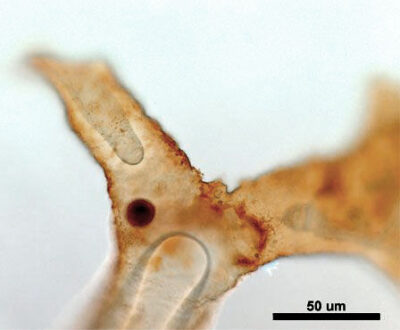 Leslie Stahl, long-time CBS journalist, interviewed on 60 Minutes with Mary Schweitzer in December, marking a new paleontology arena – the field of dinosaur soft tissue.
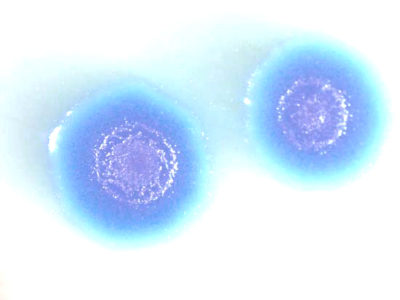 Craig Venter
 Jerry Coyne
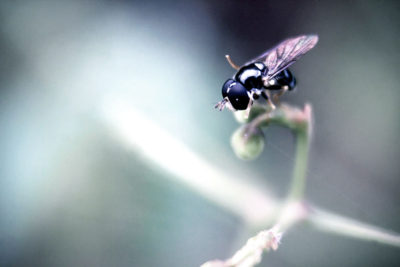 The evolution industry is celebrating 100 years of fruit fly genetic research.
 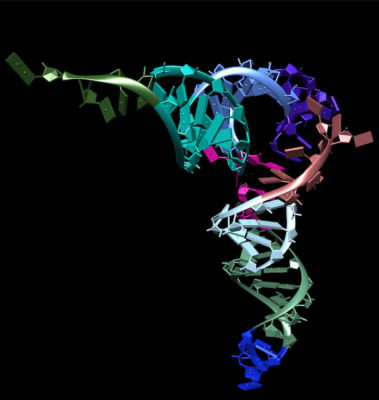 Faced with the failure of the