by Richard William Nelson | Aug 28, 2014
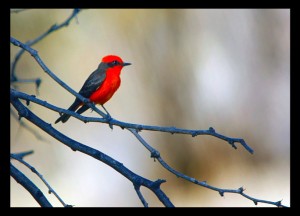
 Two new research studies, one on Himalayan songbirds and one on Brazilian ants, arrive at conflicting conclusions on speciation. The songbird research study was published in the prestigious British journal Nature, while the ant research study was published in the American journal Current Biology.
Trevor D. Price of the University of Chicago led the songbird study, and Christian Rabeling of the University of Rochester led the Brazilian ant study, both highly respected international teams.
While the findings in the Himalayan songbird study support Charles Darwin’s speciation theory of geographical isolation, the Brazilian ant’s findings undermine his theory. Speciation, an evolutionary term intended to explain how new species might have developed from existing species, is in trouble once again.
Continue Reading
by Richard William Nelson | Aug 8, 2014
Mark Armitage, a laboratory supervisor and widely published scientist for more than 30 years, was fired over dinosaur discovery by California State University, Northridge (CSUN) after publishing evidence of soft tissue extracted from a dinosaur fossil in a peer-reviewed journal.
Why did CSUN fire the scientist? Because the evidence undermines the long-standing dogma of the evolution industry. The dinosaur soft tissue, according to the prevailing dogma, should have died at least 60 million years ago. “This find cannot agree with an old earth,” an astute Examiner reporter explains:
“Even an old-earth creationist couldn’t explain it. But a young-earth creationist can.”
Continue Reading
by Richard William Nelson | Jun 9, 2014
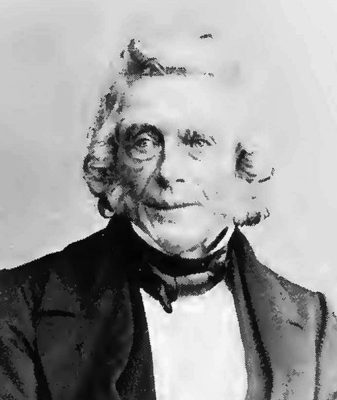
The war over natural selection, then and now. Not only did Charles Darwin (1812-1882) plagiarize Patrick Matthew’s (1790-1874) (pictured left) work, but evolutionary scientists continue battling over the theory. Mike Sutton, a criminology expert at Nottingham Trent University, spent years cross-referencing the works of Darwin alongside those of Matthew. According to Sutton,
“I have no doubt, based on the weight of new evidence, that Darwin did read Matthew’s book and then went on to replicate his discovery and key themes.”
Science correspondent Sarah Knapton, in the article, “Did Charles Darwin ‘borrow’ the theory of natural selection?” published by The Telegraph (UK), reported on Sutton’s findings –
“Darwin must not only have been aware of Matthew’s work but borrowed from it heavily,” proving that “the naturalist [Darwin] lied.”
Continue Reading
by Richard William Nelson | May 8, 2014
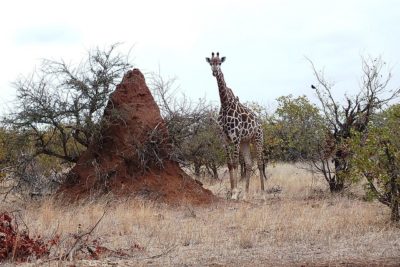
Charles Darwin wrestled to understand the interplay between instincts and natural selection. By observing ants, he hoped to connect the two. In The Origin of Species, Darwin argued –
“We shall, perhaps, best understand how instincts in a state of nature have become modified by selection by considering… the slave-making instinct of certain ants.”
Ant instincts have emerged as a problem for Darwin, however, along with his other major issue, the lack of transitional links. As Darwin explains in his introduction to The Origin of Species –
“The most apparent and gravest difficulties on the theory… namely, first, the difficulties of transitions… [and], secondly, the subject of Instinct.”
Continue Reading
by Richard William Nelson | Apr 3, 2014
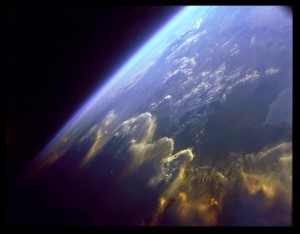
Oxygen is one of life’s most essential atomic elements. As molecular biologist Michael Denton highlights in his book “Nature’s Destiny: How the Laws of Biology Reveal Purpose in the Universe,” oxygen is the key element for “one of the most important chemical reactions on Earth.”
While oxygen is the third most abundant chemical element in the universe, after hydrogen and helium, oxygen is the most abundant chemical element by mass in the Earth’s biosphere, air, sea, and land, adding one more agonizing Achilles Heel to the theory of evolution.
Continue Reading
 Two new research studies, one on Himalayan songbirds and one on Brazilian ants, arrive at conflicting conclusions on speciation. The songbird research study was published in the prestigious British journal Nature, while the ant research study was published in the American journal Current Biology.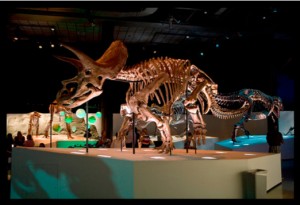
 Charles Darwin