by Richard William Nelson | Sep 12, 2011
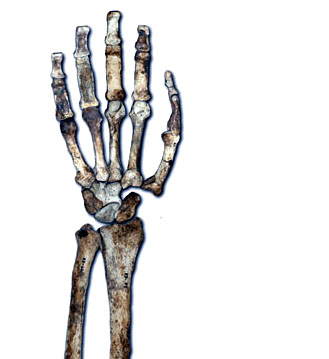
 The Australopithecus sediba saga intensified last week with a new series of reports published in the journal of Science. The journal is the official weekly publication of the American Association for the Advancement of Science, AAAS.
Last week’s edition (cover pictured left) featured eight articles and news reports specifically on A. sediba, inflaming a flurry of speculations on the human “missing link.”
This last week was the second Science edition to focus on human evolution findings in South Africa.
Continue Reading
by Richard William Nelson | Jan 2, 2011
Leslie Stahl, long-time CBS journalist, interviewed on 60 Minutes with Mary Schweitzer in December, marking a new paleontology arena – the field of dinosaur soft tissue.
Schweitzer, an American paleontologist at North Carolina State University, unexpectedly discovered soft tissues from a Tyrannosaurus rex bone sent from the Museum of the Rockies in Montana.
Schweitzer’s controversial report, “Gender-Specific Reproductive Tissue in Ratites and Tyrannosaurus rex,” published in the journal Science in 2005, revolutionized our understanding of fossil preservation.
Continue Reading
by Richard William Nelson | Nov 28, 2010
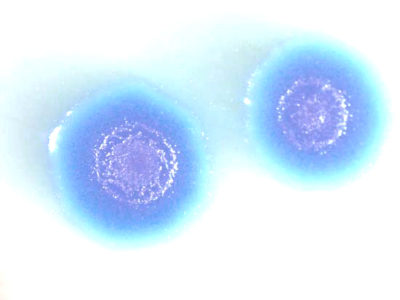
Craig Venter, the maverick American biologist and businessman, captured worldwide attention by announcing the creation of “the first synthetic species,” nicknamed “Synthia.” Venter has the credentials. In 2000, Venter, along with Francis Collins of the National Institutes of Health, jointly announced the complete mapping of the human genome.
In a 60-Minute CBS interview with Steve Kroft (pictured right), in the aired TV segment entitled “J. Craig Venter: Designing Life,” CBS touted that Venter’s new synthetic species “gets its genetic instructions from a synthetic chromosome made by man, not nature.”
Continue Reading
by Richard William Nelson | Aug 15, 2010
The evolution industry is celebrating 100 years of fruit fly genetic research. Charles W. Woodworth, at the University of California, Berkeley, at the turn of the twentieth century, was the first to use the fruit fly as a model in the study of genetics.
During the twentieth century, Drosophila melanogaster, the common fruit fly, was one of the most studied organisms in biological research, particularly in genetics.
The fruit fly model seemed to emerge as one of the first laboratory-induced speciation events.
Continue Reading
by Richard William Nelson | Jul 11, 2010
Natural selection is a simple scientific theory, according to the American Museum of Natural History, New York. For the museum’s Darwin Exhibit, the museum curator, Niles Eldredge, explains:
“A century and a half ago, Charles Darwin offered the world a single, simple scientific explanation for the diversity of life on Earth: evolution by natural selection.”
“Natural selection.” Eldredge explains, “is a simple mechanism that causes populations of living things to change over time.”
Continue Reading

 The Australopithecus sediba saga intensified last week with a new series of reports published in the journal of Science. The journal is the official weekly publication of the American Association for the Advancement of Science, AAAS.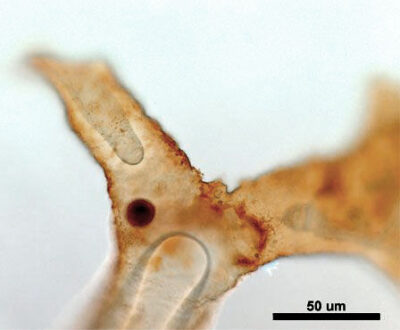
 Craig Venter
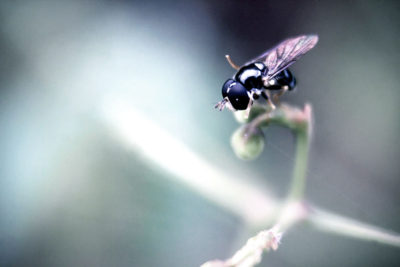 The evolution industry is celebrating 100 years of fruit fly genetic research.
  Natural selection