by Richard William Nelson | Aug 25, 2016
 The mystery behind the superiority of bird eyesight over humans is now more mysterious than ever. Joe Corbo, staring into the eye of a chicken seven years ago, saw something startling carpeting the retina. Rather than randomly distributed color-sensitive cones, like in humans, Corbo observed a uniform distribution of the cones – a pattern previously unrecognized in birds.
Science writer Natalie Wolchover (pictured right below), in A Bird’s-Eye View of Nature’s Hidden Order published in Quanta Magazine in July, reported that while cones were remarkably uniform in distribution, the actual cone locations seemed haphazard. “The dots’ locations followed no discernible rule, yet never seemed too close or too far apart” – a strange mix of bird-eye random regularity.
Continue Reading
by Richard William Nelson | Apr 21, 2016
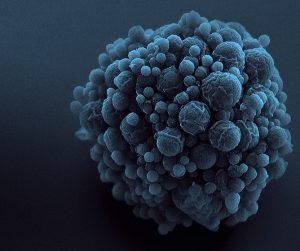
J. Craig Venter, best known for being the first to sequence the human genome in 2000, is recognized as one of the leading scientists of the 21st century. Ten years after his essential accomplishment, Venter was credited for successfully recreating “the first synthetic species” in 2010, named Mycoplasma laboratorium.
In his relentless pursuit to “understand the molecular and biological function of every gene in a cell,” Venter released the latest findings discovered in his genetics research laboratory in Southern California. The paper, entitled “Design and Synthesis of a Minimal Bacterial Genome,” was published on March 25, 2016, in the journal Science. The findings have emerged as a new genomic evolution nightmare for Craig Venter.
Continue Reading
by Richard William Nelson | Mar 3, 2016
R2D2, short for Artoo-Detoo, is best known as the fictional robotic character in the Star Wars universe series created by George Lucas. Inducted into the Robot Hall of Fame in 2003, R2D2 has since been included in the Smithsonian Institution’s list of 101 Objects that Made America.
R2D2 is the good guy, the favorite character of George Lucas, known for always saving the day at least once in every film. However, R2D2 disses Darwin.
In the realm of biology, however, the R2d2 gene is a Darth Vader villain terrorizing Darwin’s once-popular theory.
Continue Reading
by Richard William Nelson | Dec 3, 2015
Natural selection, sometimes known as the opium of evolutionary biologists, has long been envisioned as the driving mechanism of biological evolution. “On the Origin of Species by Means of Natural Selection” by Charles Darwin was the first publication to popularize natural selection.
In the words of twentieth-century evolutionary biologist Niles Eldredge,
“A century and a half ago, Charles Darwin offered the world a single, simple scientific explanation for the diversity of life on Earth: evolution by natural selection.”
Continue Reading
by Richard William Nelson | Nov 5, 2015
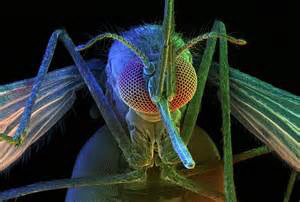
Evolutionary paradigms are increasingly struggling to survive under the weight of new scientific evidence. The malarial evolution nightmare is the latest. “Think of a deck of cards,” said Dan Larremore in an interview with Quanta Magazine science writer Veronique Greenwood.
“Now, take a pair of scissors and chop the 52 cards into chunks. Throw them in the air. Card confetti rains down, so the pieces are nowhere near where they started. Now tape them into 52 new cards, each one a mosaic of the original cards. After 48 hours, repeat.”
Continue Reading

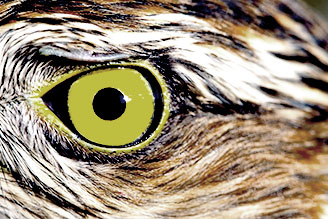 The mystery behind the superiority of bird eyesight over humans is now more mysterious than ever. Joe Corbo, staring into the eye of a chicken seven years ago, saw something startling carpeting the retina. Rather than randomly distributed color-sensitive cones, like in humans, Corbo observed a uniform distribution of the cones – a pattern previously unrecognized in birds.