by Richard William Nelson | Jan 9, 2015
 The genetic code is the universal language of life, from the first microbe to man. Searching for the origins of the first genetic code mystery, however, is akin to deciphering the evolution of life.
Over the past two years, the research team of Bojan Žagrović (pictured) at the Max F. Perutz Laboratories of the University of Vienna has been searching for a natural mechanism driving the genesis of the original genetic code − a longstanding challenge of the evolution industry.
Since the interactions between genetic material (nucleobases, DNA, and mRNA) and amino acids produce the workhorse molecules of life–proteins, Žagrović’s research team has been focusing on understanding what might have been the initial natural physicochemical mechanisms producing the original genetic code.
Continue Reading
by Richard William Nelson | Nov 4, 2014
The European eel illustrates exactly why Charles Darwin’s theory of evolution has continued to be on the wrong side of science. Darwin once argued that.
“By the theory of natural selection, all living species have been connected… So that the number of intermediate and transitional links, between all living and extinct species, must have been inconceivably great.”
Since the publication of The Origin of Species in 1859, Darwin’s “inconceivably great” number of evolutionary transitional links in the fossil record over the past 150 years remains missing despite the vast discovery of fossils.
Continue Reading
by Richard William Nelson | Aug 28, 2014
Two new research studies, one on Himalayan songbirds and one on Brazilian ants, arrive at conflicting conclusions on speciation. The songbird research study was published in the prestigious British journal Nature, while the ant research study was published in the American journal Current Biology.
Trevor D. Price of the University of Chicago led the songbird study, and Christian Rabeling of the University of Rochester led the Brazilian ant study, both highly respected international teams.
While the findings in the Himalayan songbird study support Charles Darwin’s speciation theory of geographical isolation, the Brazilian ant’s findings undermine his theory. Speciation, an evolutionary term intended to explain how new species might have developed from existing species, is in trouble once again.
Continue Reading
by Richard William Nelson | Jun 9, 2014
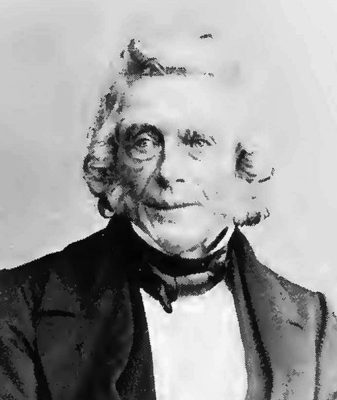
The war over natural selection, then and now. Not only did Charles Darwin (1812-1882) plagiarize Patrick Matthew’s (1790-1874) (pictured left) work, but evolutionary scientists continue battling over the theory. Mike Sutton, a criminology expert at Nottingham Trent University, spent years cross-referencing the works of Darwin alongside those of Matthew. According to Sutton,
“I have no doubt, based on the weight of new evidence, that Darwin did read Matthew’s book and then went on to replicate his discovery and key themes.”
Science correspondent Sarah Knapton, in the article, “Did Charles Darwin ‘borrow’ the theory of natural selection?” published by The Telegraph (UK), reported on Sutton’s findings –
“Darwin must not only have been aware of Matthew’s work but borrowed from it heavily,” proving that “the naturalist [Darwin] lied.”
Continue Reading
by Richard William Nelson | Apr 20, 2014
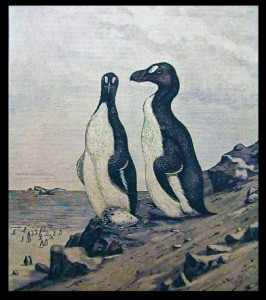
In The Origin of Species, Charles Darwin envisioned that “extinction and natural selection go hand in hand.” Extinction, however, was a relatively new concept, only emerging in revolutionary France following the publication of the Essay on the Theory of the Earth in 1813 by French naturalist Georges Cuvier.
“All these facts, consistent among themselves,” Cuvier argued, “seem to me to prove the existence of a world previous to ours… And what revolution was able to wipe it out [extinction]?”
Cuvier was a renowned French scientist who established the study of extinction as a distinct field of inquiry. When completed in time for the 1889 World’s Fair, his name was one of the only seventy-two names inscribed onto the Eiffel Tower.
Elizabeth Kolbert explains in The Sixth Extinction (2014) that the discovery of extinction made evolution seem “as unlikely as levitation,” an issue Darwin conveniently overlooked.
Continue Reading

 The genetic code is the universal language of life, from the first microbe to man. Searching for the origins of the first genetic code mystery, however, is akin to deciphering the evolution of life.
 The
The  Two new research studies, one on Himalayan songbirds and one on Brazilian ants, arrive at conflicting conclusions on speciation. The songbird research study was published in the prestigious British journal Nature, while the ant research study was published in the American journal