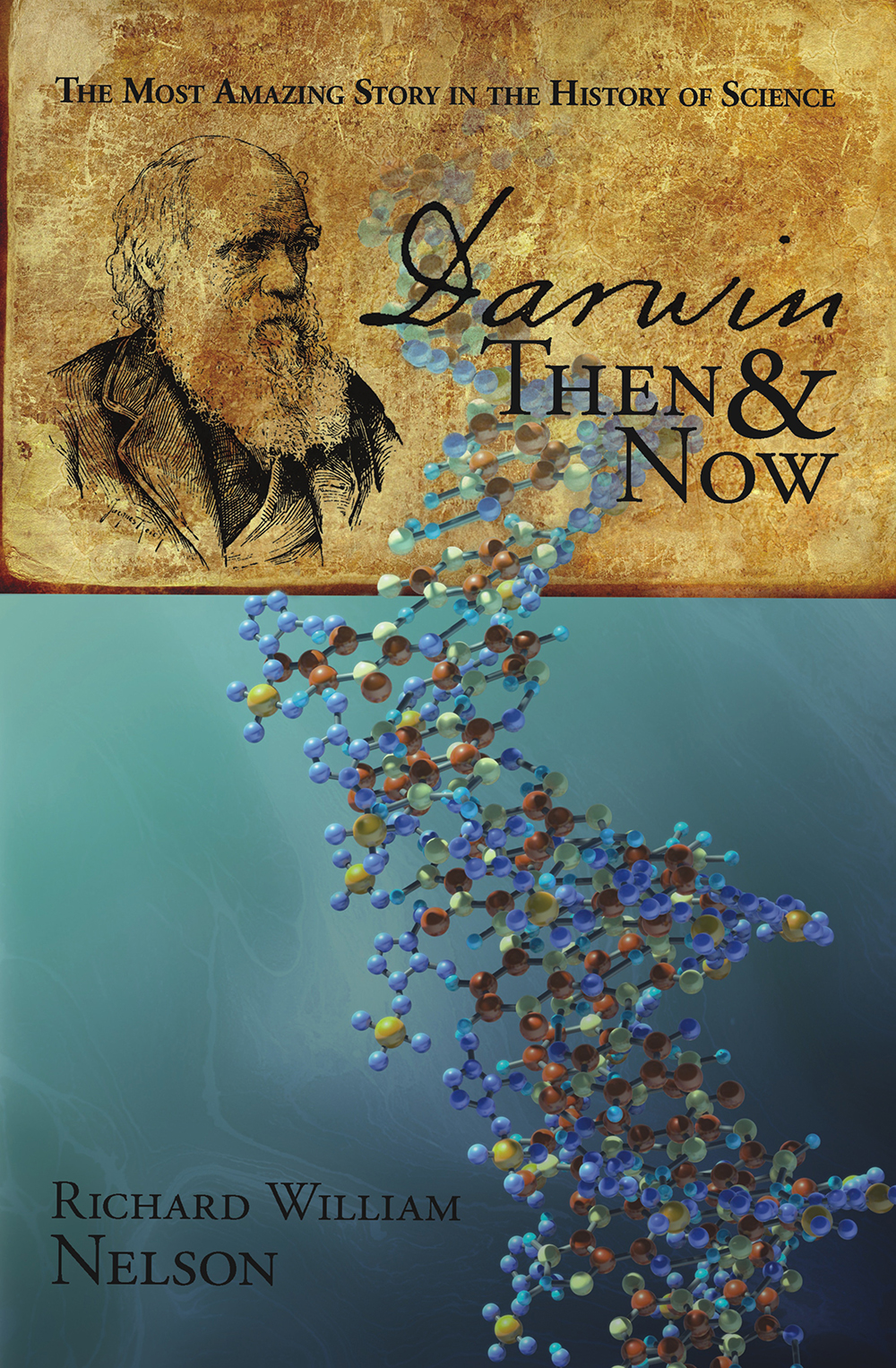
by Richard William Nelson | May 9, 2010
 In 1856, just three years before the publication of The Origin of Species by Means of Natural Selection, the first Neanderthal in the fossil record was discovered in the Neander Valley limestone quarry located in Germany.
In The Descent of Man, Darwin argued against the concept that the Neanderthals were humans’ ancestors based on the Neanderthal skull’s larger size. “Nevertheless,” Darwin noted,
“It must be admitted that some skulls of very high antiquity, such as the famous one of Neanderthal, are well developed and capacious.”
Continue Reading
by Richard William Nelson | Jan 3, 2010
Molecular clocks played a significant role in the search for evidence of biological evolution over the past seventy-five years. Driven by biotechnological advances, the integration of molecules with morphology reflects the shift from Darwinism to the Modern Synthesis theory of evolution.
Early formulations of the molecular-clock concept assumed that biological molecules—DNA, RNA, and proteins—accumulated sequence changes at consistant rates. These changes were envisioned to as chronological signatures within a lineage, similar to growth rings in a tree trunk. By tracing the order and magnitude of these changes, researchers expected to reconstruct the evolutionary history of each species.
Continue Reading

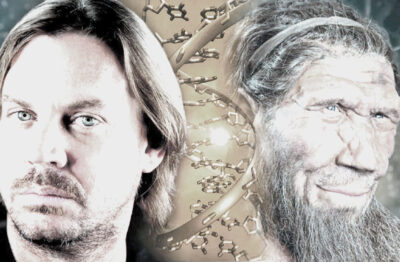 In 1856, just three years before the publication of The Origin of Species by Means of Natural Selection, the first Neanderthal in the fossil record was discovered in the Neander Valley limestone quarry located in Germany.