by Richard William Nelson | Jun 9, 2014

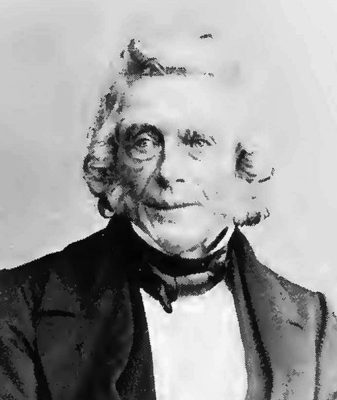
The war over natural selection, then and now. Not only did Charles Darwin (1812-1882) plagiarize Patrick Matthew’s (1790-1874) (pictured left) work, but evolutionary scientists continue battling over the theory. Mike Sutton, a criminology expert at Nottingham Trent University, spent years cross-referencing the works of Darwin alongside those of Matthew. According to Sutton,
“I have no doubt, based on the weight of new evidence, that Darwin did read Matthew’s book and then went on to replicate his discovery and key themes.”
Science correspondent Sarah Knapton, in the article, “Did Charles Darwin ‘borrow’ the theory of natural selection?” published by The Telegraph (UK), reported on Sutton’s findings –
“Darwin must not only have been aware of Matthew’s work but borrowed from it heavily,” proving that “the naturalist [Darwin] lied.”
Continue Reading
by Richard William Nelson | May 22, 2014
In The Origin of Species, Charles Darwin presented nature as a constant struggle, often coined as the “war of nature” or the “survival of the fittest.” As one dominates and eliminates others through a continuous process of competition and change, Darwin argued, “extinction and natural selection go hand in hand.” Recent freshwater studies, however, on algae defy Darwin.
Bradley Cardinale (pictured left) of the University of Michigan led a research team that performed experiments on 60 species of freshwater green algae and their impact on environmental conservation. According to Marlene Cimons of the National Science Foundation, unexpectedly, the evidence “failed to support Darwin’s theory.”
Continue Reading
by Richard William Nelson | May 8, 2014
Charles Darwin wrestled to understand the interplay between instincts and natural selection. By observing ants, he hoped to connect the two. In The Origin of Species, Darwin argued –
“We shall, perhaps, best understand how instincts in a state of nature have become modified by selection by considering… the slave-making instinct of certain ants.”
Ant instincts have emerged as a problem for Darwin, however, along with his other major issue, the lack of transitional links. As Darwin explains in his introduction to The Origin of Species –
“The most apparent and gravest difficulties on the theory… namely, first, the difficulties of transitions… [and], secondly, the subject of Instinct.”
Continue Reading
by Richard William Nelson | Apr 20, 2014
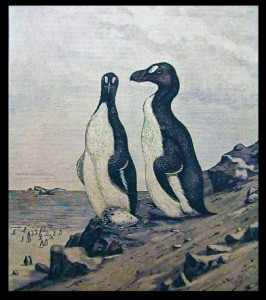
In The Origin of Species, Charles Darwin envisioned that “extinction and natural selection go hand in hand.” Extinction, however, was a relatively new concept, only emerging in revolutionary France following the publication of the Essay on the Theory of the Earth in 1813 by French naturalist Georges Cuvier.
“All these facts, consistent among themselves,” Cuvier argued, “seem to me to prove the existence of a world previous to ours… And what revolution was able to wipe it out [extinction]?”
Cuvier was a renowned French scientist who established the study of extinction as a distinct field of inquiry. When completed in time for the 1889 World’s Fair, his name was one of the only seventy-two names inscribed onto the Eiffel Tower.
Elizabeth Kolbert explains in The Sixth Extinction (2014) that the discovery of extinction made evolution seem “as unlikely as levitation,” an issue Darwin conveniently overlooked.
Continue Reading
by Richard William Nelson | Mar 20, 2014
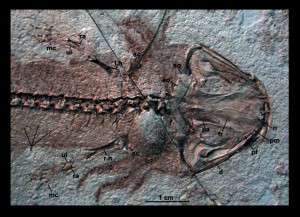
Over the past two decades, a treasure trove of fossils has been unearthed in China. Some of the world’s most exquisitely preserved feathered dinosaurs, birds, reptiles, and mammals have been recovered near the quiet northeastern China village of Daohugou.
Chinese farmers first discovered the trove near this Inner Mongolian village in 1998. The following summer, two distinct salamander species were recovered. Since then, the now-infamous fossil site has been named the Daohugou Biota and has yielded more than 30 different vertebrate taxa (groups). The treasure trove of scientific evidence, however, further upends Charles Darwin’s theory of evolution “by means of natural selection.”
Continue Reading

 In
In  Charles Darwin