by Richard William Nelson | Sep 20, 2013
 Geographical isolation is a driving force of speciation, hypothesized by Charles Darwin in The Origin of Species by means of natural selection. The emergence of new species is “chiefly grounded on the laws of geographical distribution, that forms now perfectly distinct [species] have descended from a single parent-form,” Darwin argued.
The University of California, Berkeley (UCB) Evolution 101 hosts the website page “Causes of Speciation.” Their argument for the theory is logical:
“Scientists think that geographic isolation is a common way for the process of speciation to begin: rivers change course, mountains rise, continents drift, organisms migrate, and what was once a continuous population is divided into two or more smaller populations.”
Continue Reading
by Richard William Nelson | Jan 24, 2013
Origin of life researchers collected “new insights” from a new paper entitled “The origin of membrane biogenetics,” published in the December issue of the journal Cell. The media elevated the hype into an origin-of-life sea saga spectacle.
The journal Nature covered the paper in an article entitled “How life emerged from deep-sea rocks” by Ed Yong. The subtitle. “The origin of ion-pumping proteins could explain how life began in and escaped from undersea thermal vents,” seemed to seal the deal.
Continue Reading
by Richard William Nelson | Oct 31, 2012
As the novelty generating the flight of birds, the feather, the most complex integumentary structure found in vertebrates, has long intrigued and fascinated naturalists.
Since Charles Darwin published The Origin of Species in 1859, however, the origin of the feather emerged as a contentious issue. The newfound association between feathers and dinosaurs has only intensified the problem.
Continue Reading
by Richard William Nelson | Sep 12, 2011
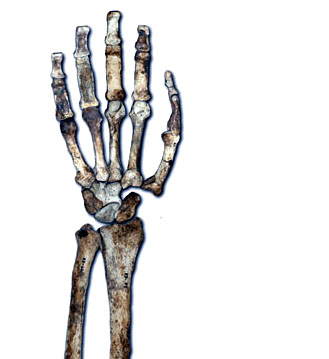
The Australopithecus sediba saga intensified last week with a new series of reports published in the journal of Science. The journal is the official weekly publication of the American Association for the Advancement of Science, AAAS.
Last week’s edition (cover pictured left) featured eight articles and news reports specifically on A. sediba, inflaming a flurry of speculations on the human “missing link.”
This last week was the second Science edition to focus on human evolution findings in South Africa.
Continue Reading

 Geographical isolation is a driving force of speciation, hypothesized by Charles Darwin in The Origin of Species by means of natural selection. The emergence of new species is “chiefly grounded on the laws of geographical distribution, that forms now perfectly distinct [species] have descended from a single parent-form,” Darwin argued.
 Origin of life researchers collected “new insights” from a new paper entitled “
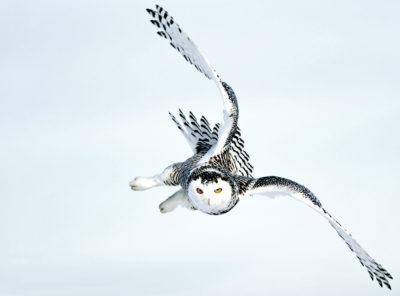 As the novelty generating the flight of birds, the feather, the most complex integumentary structure found in vertebrates, has long intrigued and fascinated naturalists.
 The
The