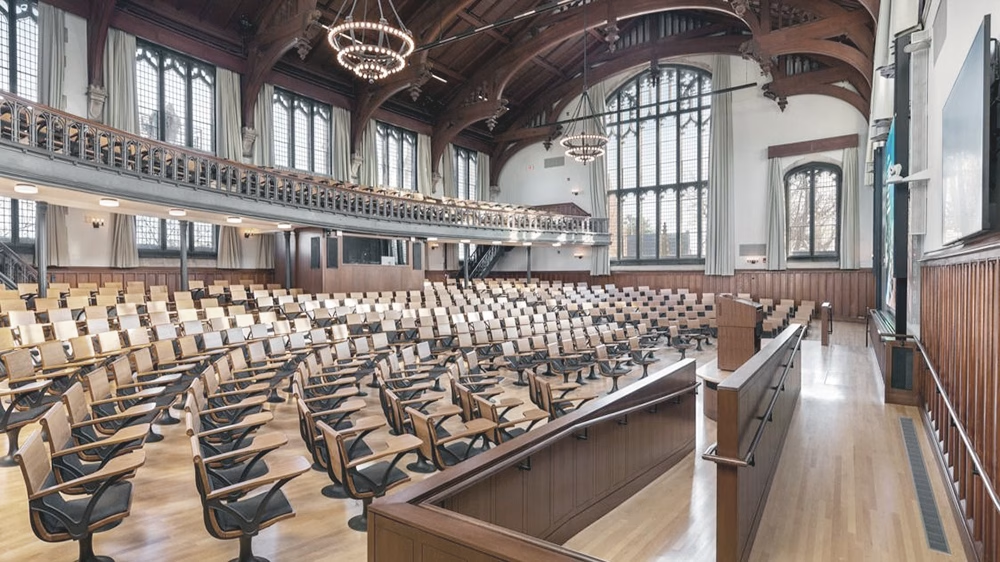
 Princeton University hosted an “Origins of Life” workshop last month to bring together origin-of-life researchers to integrate and foster collaboration. According to WIKIPEDIA,
“The origin of life on Earth is a scientific problem, which is not yet solved. There are many ideas but few clear facts.”
Although Charles Darwin introduced natural selection as the driving mechanism of speciation, new species must emerge from existing ones. However, natural selection only explains adaptive modifications, not the origin of life.
Charles Darwin
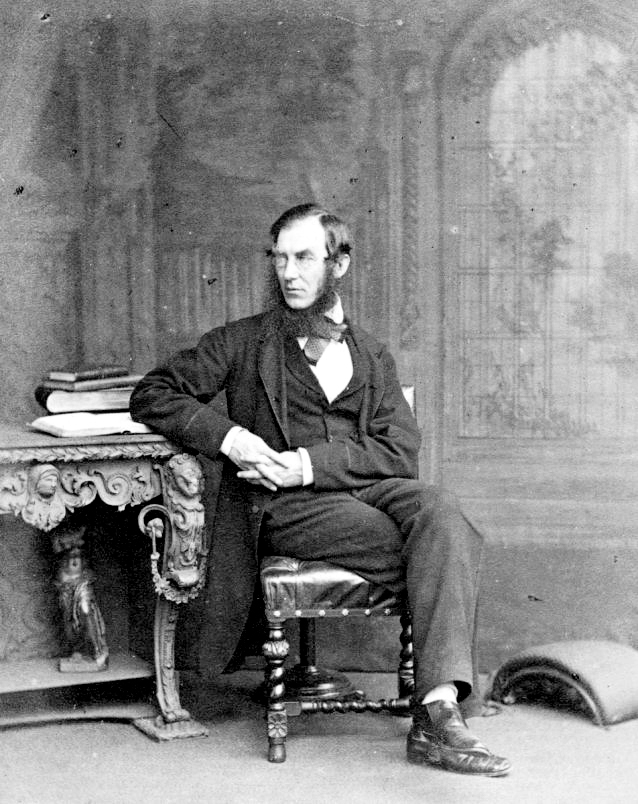 In The Origin of Species, Darwin mentioned an origin-of-life concept, but it was not a natural process – like natural selection. In the letter to J.D. Hooker (pictured right) in March 1863, Darwin privately expressed his disdain for even addressing the topic, declaring —
“It is mere rubbish thinking at present of the origin of life.”
A scientific approach to solving the mystery of life had long been a perplexing mystery. However, since natural selection acts only on what exists, a natural explanation for the existence of life was essential. In the last sentence of his 1st Edition in 1859, Darwin alluded to an effect, writing –
“There is grandeur in this view of life, with its several powers, having been originally breathed into a few forms or into one…”
Science, however, requires a measurable material cause associated with a resulting observable effect. In his 2nd Edition, published just months later in 1860, he updated the sentence to include a cause –
“There is grandeur in this view of life, with its several powers, having been originally breathed by the Creator into a few forms or into one.”
The remaining four editions used this same sentence. Darwin had been in a logical dilemma since natural selection only acts on what already exists. In his final 6th Edition, “Creator” is used nine times, a vestige of diplomacy.
However, Darwin was in pursuit of a natural explanation for the origin of life, not an act of a Creator. Philosophically, Darwin viewed natural laws—not miracles—as governing nature.
Nineteenth Century Concepts
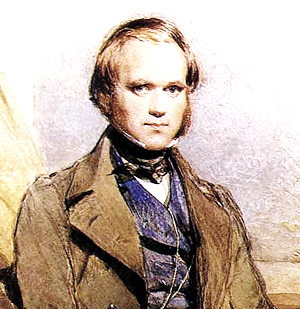 In the nineteenth century, the prevailing natural explanation for the origin of life was “spontaneous generation,” This concept was popularized in ancient Greek philosophy. However, Darwin (pictured left) viewed the concept with caution and skepticism. In the 1st Edition, Darwin never used “spontaneous” as a root term.
However, beginning with the 2nd Edition, the root term was used twice, and by the 6th Edition, 20 times. Spontaneous generation offered Darwin a natural explanation. Earlier in 1837, Darwin speculated in his notebook, writing –
“The intimate relation of Life with laws of chemical combination… render spontaneous generation not improbable.”
Through the decades, opinions varied, especially regarding the origin of life. By the 1861 3rd Edition, Darwin conceded –
“…it is no valid objection that science as yet throws no light on the far higher problem of the essence or origin of life.”
Later, in an 1871 letter again to J.D. Hooker, Darwin outlines the essence of a “spontaneous generation” theory, explaining –
“But if (and oh what a big if) we could conceive in some warm little pond with all sort of ammonia and phosphoric salts,—light, heat, electricity present, that a protein compound was chemically formed, ready to undergo still more complex changes…”
Publicly, the “Creator” remained Darwin’s formal origin-of-life causative agent. However, he privately envisioned nature acting as the agent. This contradiction caught Darwin in a theoretical dilemma.
However, a theory of evolution for Earth’s biosphere without a scientifically valid origin-of-life theory is incomplete.
Origin of Life Workshop
For a modern scientific approach to evolution’s lingering origin-of-life dilemma, the Princeton Center for Theoretical Science (PCTS) organized a workshop. The workshop was jointly sponsored by the NASA Astrobiology Institute (NAI) and the Society for Molecular Biology and Evolution (SMBE).
Evolutionary scientists from Canada, the United Kingdom, France, Germany, Mexico, and Japan, representing 26 institutions, gathered for 38 presentations. The invitation outlined the purpose of the workshop to “integrate these themes,” “foster collaborations,” and “encourage scientists to pursue studies of life’s origins.”
The late C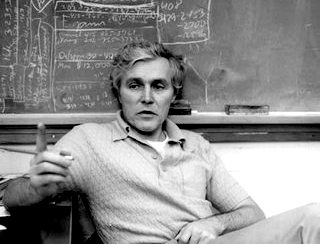 arl Woese (pictured left) of the University of Illinois largely influenced the workshop’s conceptual framework. Earlier, the NAI had awarded Woese $8 million for his origin-of-life research program. In 2000, Woese won the National Medal of Science award for his view that “life is a process.”
In the workshop, leading research scientists presented a wide range of origin‑of‑life research projects. Geochemistry, hydrothermal vent bioenergetics, RNA world, molecular biology, informational and mathematical models were the primary frameworks. These are listed in the Appendix with their presenting scientists.
Workshop Consensus
 The Princeton 2013 Origins of Life conference reviewed a range of fields of study — geochemical, biochemical, genetic, planetary, and information‑theoretic. Following the workshop, only Wim Hordijk published a commentary on the meeting. Hordijk was a workshop participant.
The sponsors – Nature, Science, PNAS, Astrobiology, or Princeton Origins of Life – did not issue a public comment on the workshop. Even Princeton University Press did not publish any follow-up comments. Hordijk did write that, in the workshop, “there are no experts,” in the strict sense, and that it was too fragmented.
Contrary to expectations, Princeton’s Origins of Life was not the anticipated pivotal origin-of-life workshop. No unifying evolutionary links were recognized connecting early Earth to the emergence of evolving biological systems. Importantly, nor was any plan formulated on how to proceed to develop a cohesive natural theory to account for the origin of life. As WIKIPEDIA explains,
“The origin of life on Earth is a scientific problem which is not yet solved. There are many ideas but few clear facts.”
Genesis
 Evidence in the Genesis account remains compatible with available scientific evidence, while the expected natural evolutionary mechanism becomes increasingly remote, intensifying Darwin’s Dilemma.
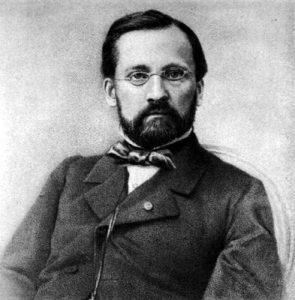
As Louis Pasteur (pictured left), a French chemist and microbiologist, discoverer of the principles of vaccination, microbial fermentation, pasteurization, and developed vaccines for Rabies, Diphtheria, Anthrax, noted during the Scientific Revolution –
“A bit of science distances one from God, but much science nears one to Him.”
Efforts to develop a scientific consensus underscores why origin of life theories remains speculative but still not scientifically valid.
Appendix
In the workshop, leading research scientists presented a wide range of origin‑of‑life research frameworks. These frameworks include geochemistry, hydrothermal vent bioenergetics, RNA world, molecular biology, informational models, and mathematical models.
-
Geochemistry
- Earth’s early atmosphere and climate, Jim Kasting, Pennsylvania State University
- Cosmochemistry and the origin of life, Sandra Pizzarello, Arizona State University
- The origin of biological nitrogen fixation, Nilesh Vaidya, Montana State University
- The limits of life on Earth, John Baross, University of Washington
-
Hydrothermal‑Vent Bioenergetics
- Emergence of Bioenergetics in Hydrothermal Vents on the Early Earth, Laurie Barge, NASA Jet Propulsion Laboratory
- Reactivity of pyruvate under simulated hydrothermal vent conditions, Shelley Copley, University of Colorado Boulder
- Bringing rocks to life: Hydrothermal vents and microbial origins, Bill Martin, Heinrich-Heine-Universität
- Hydrothermal polymerization: Nanopore analysis of RNA-like products, David Deamer, UC Santa Cruz
-
RNA‑World
- Reconciling the iron–sulfur and RNA worlds, John Sutherland, Laboratory of Molecular Biology (Cambridge)
- The origin of the RNA world, Paul Higgs, McMaster University
- Semicontinuous processes for forming oligomeric RNA, Steven Benner, Foundation for Applied Molecular Evolution
- Ribonucleotide origins: sporadically fed pools, Michael Yarus, University of Colorado Boulder
- RNA fitness landscapes, Irene Chen, University of California, Santa Barbara
- The origin of life: a systems approach, Dave Deamer, University of California, Santa Cruz
- Spontaneous network formation among cooperative RNA replicators, Nilesh Vaidya, Princeton University
- Transport of DNA and RNA in temperature and solute gradients: A possible molecular sorter for early life, Yusuke Maeda, Kyoto University
- Active RNA droplets: Intracellular and protocellular assembly, Cliff Brangwynne, Princeton University
- RNA evolution and my grandfather’s axe. Nicholas Hud, Georgia Institute of Technology
- RNA-catalyzed RNA replication. Jamie Attwater, MRC Laboratory of Molecular Biology
- RNA synthesis inside protocell vesicles, Katarzyna Adamala, Harvard Medical School
-
Molecular Biology
- The origin of biological membranes, Andrew Pohorille, NASA Ames Research Center
- Biology and the chemistry of the possible, Jim Cleaves, Carnegie Institution of Washington
- Ancient protein reconstruction, Eric Gaucher, Georgia Institute of Technology
- A Formal Framework for Autocatalytic Sets, Wim Hordkijk, com
- The origin of protein structures and functions, Andrew Pohorille, NASA Ames Research Center
- Ironing out ancient biochemistry, Loren Williams, Georgia Institute of Technology
- The relationship between early metabolism and prebiotic mineral catalysis, John Peters, Montana State University
- The origin of protein structures and functions, Andrew Pohorille, NASA Ames Research Center
- Synthetic biology: Enabling life with molecular parts designed in the laboratory, Michael Hecht, Princeton University
- Reconstructing the ancient proteome, Aaron Goldman, Princeton University
- Coalescence, gene transfer, and the study of pre-LUCA molecular evolution, Peter Gogarten, University of Connecticut
- Investigating the role of compartmentalization in the origin of life using microfluidics, Rebecca Turk MacLeod, École Supérieure de Physique et de Chimie Industrielles
- Phylogeny of cell shape: A window into origins or adaptive dead end?, Janet Siefert, Rice University
-
Informational Models
- Comparative genomics and cell evolution: Not all RNA-related processes are ancient, Antonio Lazcano, Universidad Nacional Autónoma de México
- Recombining horizontal gene transfers resolve conflicting narratives for the origin of eukaryotes, Greg Fournier, Massachusetts Institute of Technology
- Oxytricha as a modern analog of ancient genome evolution, Laura Landweber, Princeton University
-
Mathematical Models
- The algorithmic origins of life, Sara Walker, Arizona State University
- Chance and the origin of life, Dave Spiegel, Institute for Advanced Study
Princeton’s Origin of Life Workshop is an Origin of Life article.
2026 Update
Since the 2013 Princeton workshop, origin‑of‑life theory has shifted from fragmented hypotheses to integrated, multi‑scale models that unify geochemistry, chemical networks, protocells, information theory, and early evolution.
Wim Hordijk noted, in a March 2013 KUNC article, An Eclectic Mix Of Giants Takes On The Origin Of Life –
“Being a relative newcomer to this research area, I suddenly found myself surrounded by some of the giants of the field. What better way to learn than from the experts themselves? Although one of those giants (Steve Benner) did say that ‘when it comes to the origin of life, there are no experts.’”
This year, in April 2026, Cell Press has published the latest advances in the study of the origin of life in the following two articles to date:
“What it takes to solve the origin of life: An integrated review. Part 1–Experimental methods and data repositories” concluded –
“The analytical foundations of OoL research draw on mature techniques from biology, geochemistry, and analytical chemistry, many of which are now broadly accessible to experimentalists entering the field. Adapting these methods to abiotic, prebiotic, or synthetic biological systems remains challenging and often requires time-intensive protocol development.”
“What it takes to solve the origins of life: An integrated review. Part 2: Theoretical methods and emerging trends” concluded –
“Formulating a scientific explanation for the spontaneous animation of inanimate matter, along with experimental demonstrations of this process, would be a landmark achievement in the history of science. If accomplished in the coming decades, it will rely, at least in part, on the experimental and theoretical methodologies outlined here.”
In an interview, legendary biochemist Stuart Kauffman of the University of Vermont points to the realities of the mystery –
“It’s really unlikely that the earliest life on Earth used anything as complicated as contemporary DNA, RNA, and protein because the machinery by which our DNA gets translated into proteins is incredibly complicated… life could not have started that complex.”
Princeton’s Origin of Life Conference is a Origin of Life article
Darwin Then and Now is an educational resource on the intersection of evolution and science, highlighting the ongoing challenges to the theory of evolution.
Move On
Explore how to understand twenty-first-century concepts of evolution further using the following links –
-
- The Understanding Evolution category showcases how varying historical study approaches to evolution have led to varying conclusions. Subcategories include –
- Studying Evolution explains how key evolution terms and concepts have changed since the 1958 publication of The Origin of Species.
- What is Science explains Charles Darwin’s approach to science and how modern science approaches can be applied for different investigative purposes.
- Evolution and Science feature study articles on how scientific evidence influences the current understanding of evolution.
- Theory and Consensus feature articles on the historical timelines of the theory and Natural Selection.
- The Biography of Charles Darwin category showcases relevant aspects of his life.
- The Glossary defines terms used in studying the theory of biological evolution.
- The Understanding Evolution category showcases how varying historical study approaches to evolution have led to varying conclusions. Subcategories include –