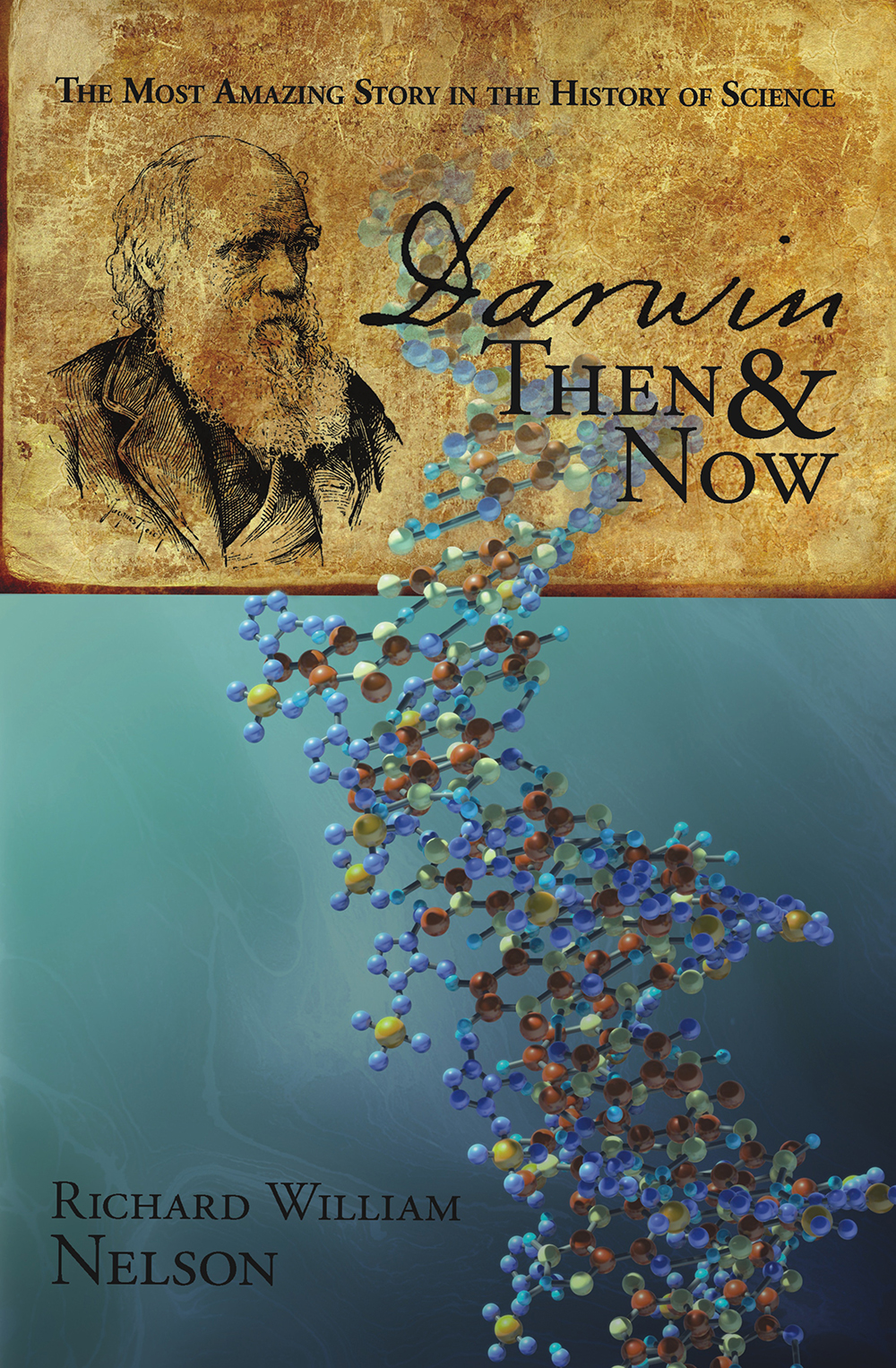
by Richard William Nelson | Jun 21, 2013
 The history of the evolutionary tree of life, from ancient Greek philosophers to twenty-first-century scientists, provides insights into the theory’s origin and its evolution through Western civilization.
While approaches have been diverse, elements that progress in increasing complexity over time are a constant theme.
Porphyry (234–305 BC), a third-century Greek philosopher, composed the first known tree of life in his work entitled Isagoge while living in Sicily. Isagoge is an “Introduction” by Porphyry edited into Aristotle‘s (384–322 BC) text known as Categories.
Continue Reading
by Richard William Nelson | May 11, 2013
Embryology plays a critical role in Charles Darwin’s theory of evolution. The “leading facts in embryology … [were] second to none in importance,” he argued in The Origin of Species.
Illustrations of embryos by Ernst Haeckel, a German biologist, influenced Darwin. Haeckel’s drawings depict embryos repeating the steps of evolution, a concept known as the “ontogeny recapitulates phylogeny” theory.
It is believed that genes drive evolution through the process of natural selection. Since turtles have a unique body plan, studying the turtle genome during embryonic development is expected to give insight into their origin.
Continue Reading
by Richard William Nelson | Apr 30, 2013
“Natural selection” is the name Charles Darwin used to describe the mechanism driving evolution and the origin of species. The title of his book was The Origin of Species by Means of Natural Selection. Natural selection was the “means” of evolution, the fundamental tenet of Darwin’s theory.
Natural selection emerged as the cornerstone law of evolution following the publication of The Origin in 1859. “I do believe,” Darwin argued, “natural selection acts slowly by accumulating slight, successive, favorable variations.”
Natural selection, the tenet of Darwin’s theory, when viewed through the lens of twenty-first-century technologies, increasingly faces scientific challenges.
Continue Reading
by Richard William Nelson | Feb 19, 2013
“The origin of life on Earth is a scientific problem,” according to WIKIPEDIA, “which is not yet solved. There are many ideas but few clear facts.”
In 2013, Princeton University hosted an international Origin of Life conference to address this issue.
In the nineteenth century, the “spontaneous generation” theory had long been the prevailing natural explanation for the origin of life, dating back to Greek philosophy. Even Charles Darwin, centuries later, endorsed the theory in The Origin of Species (1859).
Continue Reading
by Richard William Nelson | Feb 4, 2013
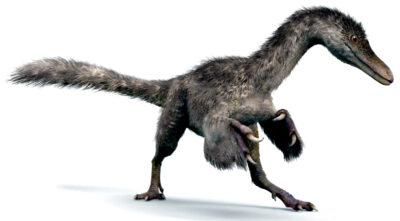
Paleontologist Pascal Godefroit of the Royal Belgian Institute of Natural Sciences in Belgium published a paper in Nature in January, challenging the current understanding of “the first bird.” In Liaoning Province of north-east China, Godefroit collaborated with a research team from the Jilin University Geological Museum, China, and found fossil evidence challenging the Archaeopteryx as “the first bird.” Archaeopteryx means the “ancient wing.”
Nature published their paper entitled “Reduced plumage and flight ability of a new Jurassic paravian theropod from China,” Godefroit stated –
“These specimens have challenged the pivotal position of Archaeopteryx in bird phylogeny.”
Continue Reading

 The history of the evolutionary tree of life, from ancient Greek philosophers to twenty-first-century scientists, provides insights into the theory’s origin and its evolution through Western civilization.
 Embryology plays a critical role in
  “
“ “The origin of life on
  Paleontologist