by Richard William Nelson | Oct 24, 2013
 For more than two decades, international teams of paleoanthropologists have been discovering human-like fossils from a medieval archaeological site in the former Soviet Republic of Georgia known as Dmanisi.
A new human Georgian skull further fuels the dilemma. In 1991, David Lordkipanidze of the Georgian National Museum in Tbilisi discovered the first four human-like fossils.
Increased archaeological interest in this Georgian site began in 1936 following the discovery of ancient and medieval artifacts.
Continue Reading
by Richard William Nelson | Oct 10, 2013
Scientists have long known that extremely low levels of free oxygen [< 10-5] atmosphere on early Earth are critical for any viable origin of life model of evolution.
The controversy surrounding the atmospheric concentration of oxygen in the origin of life stems from the laws of organic chemistry.
The autonomous assembly of complex organic molecules has only been observed in an oxygen-free atmosphere.
However, the evidence for an oxygen-free Earth atmosphere has a checkered history.
Continue Reading
by Richard William Nelson | Sep 27, 2013
As a student at Christ’s College in Cambridge (1827-1831), Charles Darwin was reported given his first microscope by one of his insect-collecting friends, John Maurice Herbert. Today, scientists use satellite nanoscopes to study intracellular molecular dynamics and signaling networks between cells.
While loop networks have long been used in architecture, Uri Alon of the Weizmann Institute of Science is credited with discovering them in biology.
In 2002, Alon published an article entitled “Network motifs in the transcriptional regulation network of Escherichia coli” in the April edition of the journal Nature Genetics. These newly recognized loop networks, however, challenge the theory of evolution.
Continue Reading
by Richard William Nelson | Sep 20, 2013
Geographical isolation is a driving force of speciation, hypothesized by Charles Darwin in The Origin of Species by means of natural selection. The emergence of new species is “chiefly grounded on the laws of geographical distribution, that forms now perfectly distinct [species] have descended from a single parent-form,” Darwin argued.
The University of California, Berkeley (UCB) Evolution 101 hosts the website page “Causes of Speciation.” Their argument for the theory is logical:
“Scientists think that geographic isolation is a common way for the process of speciation to begin: rivers change course, mountains rise, continents drift, organisms migrate, and what was once a continuous population is divided into two or more smaller populations.”
Continue Reading
by Richard William Nelson | Jul 5, 2013
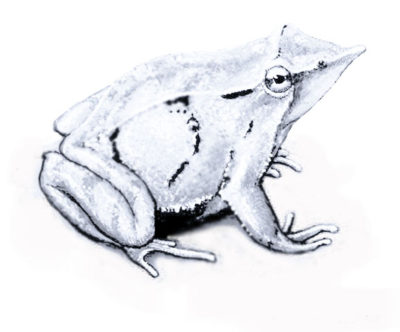
In December 1834, during the five-year voyage of the HMS Beagle, Charles Darwin described the colorings of an unusual frog on the temperate forest Island of Lemuy, Chiloe Archipelago, in his Beagle field notebook. Named in his honor, Rhinoderma darwinii, Darwin’s frog now faces extinction, not evolution.
The only known sister Rhinoderma species, Rhinoderma rufum, was discovered by French zoologist André Marie Constant Duméril (1774 – 1860) in Argentina. In 2004, the International Union for Conservation of Nature (IUCN) listed R. rufum as “critically endangered” and R. darwinii as “vulnerable.”
Continue Reading

 For more than two decades, international teams of paleoanthropologists have been discovering human-like fossils from a medieval archaeological site in the former Soviet Republic of Georgia known as Dmanisi.

 Geographical isolation is a driving force of speciation, hypothesized by
  In December 1834, during the five-year voyage of the