by Richard William Nelson | May 22, 2012
 Andrew J. Wendruff and Mark V. H. Wilson of the University of Alberta added a new dimension to the ongoing coelacanth saga this week in the paper “A fork-tailed coelacanth, Rebellatrix divaricerca,” published in the Journal of Vertebrate Paleontology.
In the paper, Wendruff and Wilson present a newly discovered coelacanth species found surprisingly on the rocky slopes of the Canadian Rockies, British Columbia.
The species named Rebellatrix divaricerca means “rebel coelacanth (with a) forked tail.” Far different from today’s Indian Ocean coelacanths, these ancient rebel fast-swimming predators further undermine attempts to develop a cohesive coelacanth evolution saga.
Continue Reading
by Richard William Nelson | Apr 3, 2012
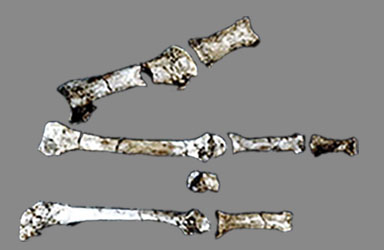
The sequence of biological events leading to hominin locomotion has long intrigued evolution scientists.
Last week, the journal Nature reported on a hominin-like foot discovered in Eastern Africa.
Entitled “A new hominin foot from Ethiopia shows multiple Pliocene bipedal adaptations,” the finding raises questions about the evolution of hominin locomotion.
Continue Reading
by Richard William Nelson | Mar 13, 2012
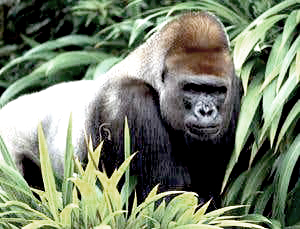
The “Insights into hominid evolution from the gorilla genome sequence” report, published by the British journal Nature this last week, stands as a historical milestone in the study of human origins, sequencing the gorilla genome.
Aylwyn Scally (pictured right below) at the Wellcome Trust Sanger Institute led the research team to complete the gorilla genome sequence project, the last genus of the living great apes to have its genome decoded. The use of gorilla genome sequences, Scally explains –
“Will promote a deeper understanding of great ape biology and evolution.”
The findings change the evolution narrative.
Continue Reading
by Richard William Nelson | Sep 18, 2011
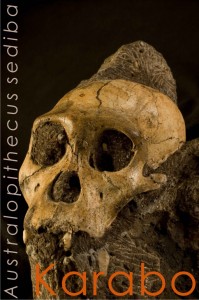
In the journal Science, the September 9 edition, a collection of reports generated a storm of controversy on the evolutionary status of Australopithecus sediba. Nicknamed Karabo, meaning “answers,” the fossils have emerged as the latest human ancestor candidate.
While last week’s topic focused on Karabo’s transitional links, this week examines the dating of these two remarkable fossilized skeletons recovered from the Malapa site in South Africa.
The Karabo dating surprised the investigators.
Continue Reading
by Richard William Nelson | Jan 2, 2011
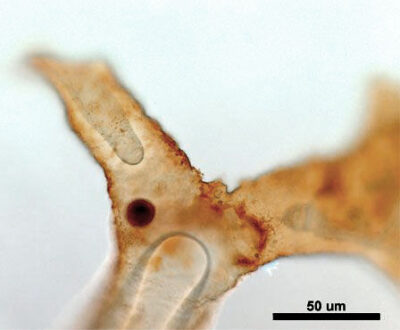
Leslie Stahl, long-time CBS journalist, interviewed on 60 Minutes with Mary Schweitzer in December, marking a new paleontology arena – the field of dinosaur soft tissue.
Schweitzer, an American paleontologist at North Carolina State University, unexpectedly discovered soft tissues from a Tyrannosaurus rex bone sent from the Museum of the Rockies in Montana.
Schweitzer’s controversial report, “Gender-Specific Reproductive Tissue in Ratites and Tyrannosaurus rex,” published in the journal Science in 2005, revolutionized our understanding of fossil preservation.
Continue Reading

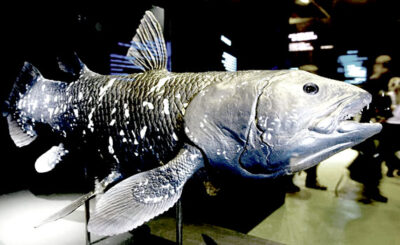 Andrew J. Wendruff and Mark V. H. Wilson of the University of Alberta added a new dimension to the ongoing coelacanth saga this week in the paper “A fork-tailed coelacanth, Rebellatrix divaricerca,” published in the Journal of Vertebrate Paleontology.
 The sequence of biological events leading to hominin locomotion has long intrigued evolution scientists.
 The “Insights into hominid evolution from the gorilla genome sequence”