by Richard William Nelson | Feb 4, 2013
 Paleontologist Pascal Godefroit of the Royal Belgian Institute of Natural Sciences in Belgium published a paper in Nature in January, challenging the current understanding of “the first bird.” In Liaoning Province of north-east China, Godefroit collaborated with a research team from the Jilin University Geological Museum, China, and found fossil evidence challenging the Archaeopteryx as “the first bird.” Archaeopteryx means the “ancient wing.”
Nature published their paper entitled “Reduced plumage and flight ability of a new Jurassic paravian theropod from China,” Godefroit stated –
“These specimens have challenged the pivotal position of Archaeopteryx in bird phylogeny.”
Continue Reading
by Richard William Nelson | Sep 12, 2011
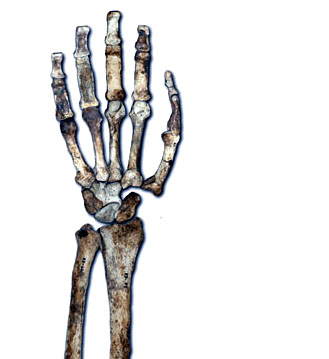
The Australopithecus sediba saga intensified last week with a new series of reports published in the journal of Science. The journal is the official weekly publication of the American Association for the Advancement of Science, AAAS.
Last week’s edition (cover pictured left) featured eight articles and news reports specifically on A. sediba, inflaming a flurry of speculations on the human “missing link.”
This last week was the second Science edition to focus on human evolution findings in South Africa.
Continue Reading
by Richard William Nelson | Jan 2, 2011
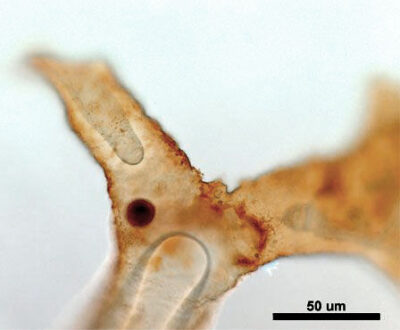
Leslie Stahl, long-time CBS journalist, interviewed on 60 Minutes with Mary Schweitzer in December, marking a new paleontology arena – the field of dinosaur soft tissue.
Schweitzer, an American paleontologist at North Carolina State University, unexpectedly discovered soft tissues from a Tyrannosaurus rex bone sent from the Museum of the Rockies in Montana.
Schweitzer’s controversial report, “Gender-Specific Reproductive Tissue in Ratites and Tyrannosaurus rex,” published in the journal Science in 2005, revolutionized our understanding of fossil preservation.
Continue Reading
by Richard William Nelson | Jun 20, 2010
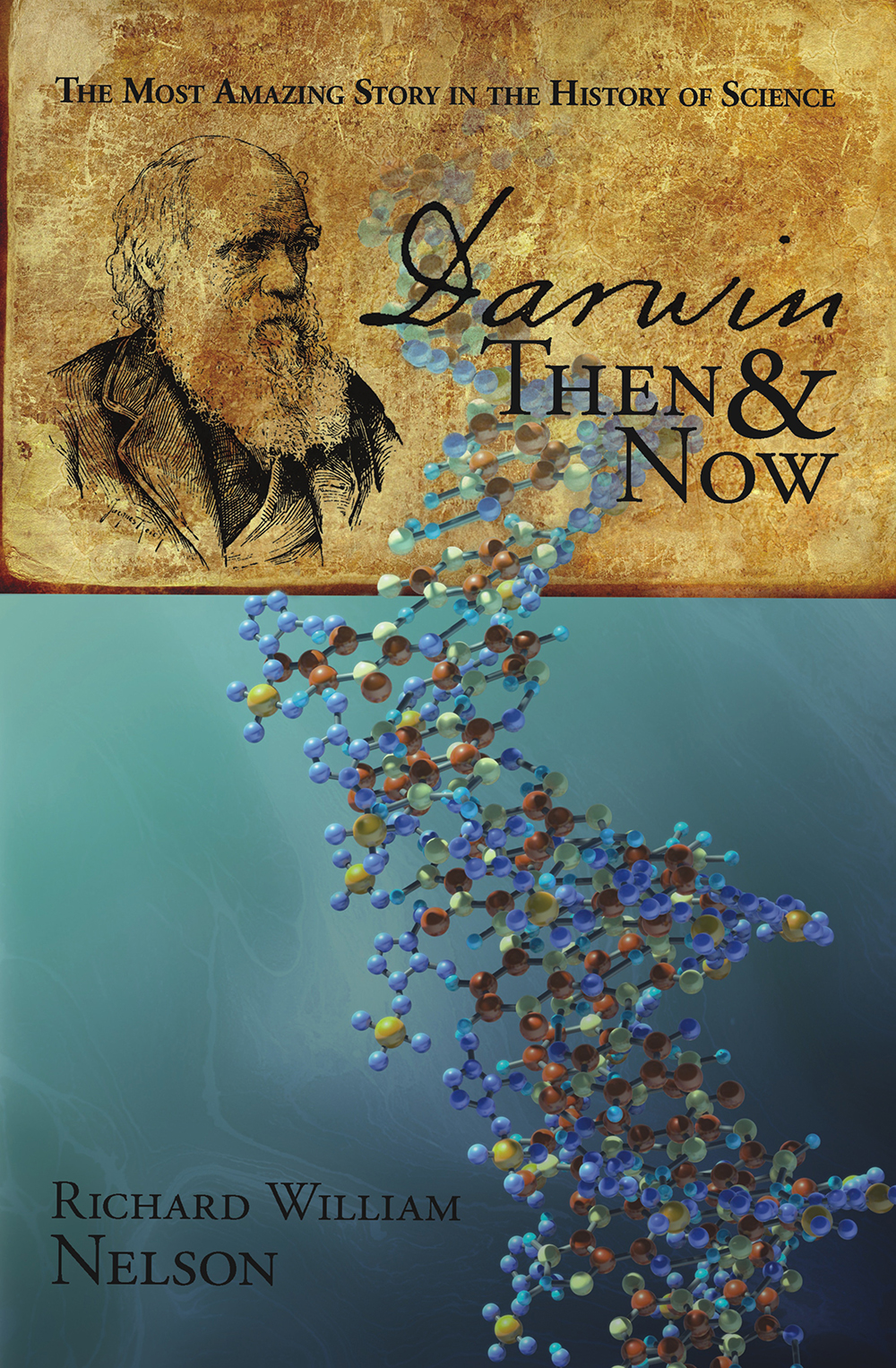
Why Evolution is True, one of the best-selling books in support of evolution written by Jerry Coyne and endorsed by Richard Dawkins, conveniently fails to address one minor evolutionary issue—the origin of life problem. Charles Darwin had been stonewalled by this problem, too, in The Origin of Species.
In the mid twentieth century, using a simple laboratory experiment, Stanley Miller (pictured left) and Harold Urey (pictured right) were the first to demonstrate how life may have started from simple molecules and energy. In the excitement, addressing the scope of the Miller-Urey probability issue was postponed.
Continue Reading
by Richard William Nelson | Jan 3, 2010
Molecular clocks played a significant role in the search for evidence of biological evolution over the past seventy-five years. Driven by biotechnological advances, the integration of molecules with morphology reflects the shift from Darwinism to the Modern Synthesis theory of evolution.
Early formulations of the molecular-clock concept assumed that biological molecules—DNA, RNA, and proteins—accumulated sequence changes at consistant rates. These changes were envisioned to as chronological signatures within a lineage, similar to growth rings in a tree trunk. By tracing the order and magnitude of these changes, researchers expected to reconstruct the evolutionary history of each species.
Continue Reading

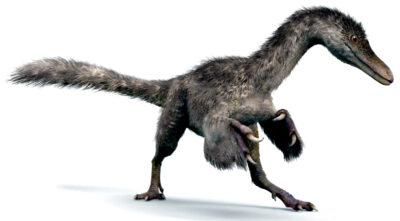 Paleontologist Pascal Godefroit of the Royal Belgian Institute of Natural Sciences in Belgium published a paper in Nature in January, challenging the current understanding of “the first bird.” In Liaoning Province of north-east China, Godefroit collaborated with a research team from the Jilin University Geological Museum, China, and found fossil evidence challenging the Archaeopteryx as “the first bird.” Archaeopteryx means the “ancient wing.”
 The
The