by Richard William Nelson | Mar 20, 2014
 Over the past two decades, a treasure trove of fossils has been unearthed in China. Some of the world’s most exquisitely preserved feathered dinosaurs, birds, reptiles, and mammals have been recovered near the quiet northeastern China village of Daohugou.
Chinese farmers first discovered the trove near this Inner Mongolian village in 1998. The following summer, two distinct salamander species were recovered. Since then, the now-infamous fossil site has been named the Daohugou Biota and has yielded more than 30 different vertebrate taxa (groups). The treasure trove of scientific evidence, however, further upends Charles Darwin’s theory of evolution “by means of natural selection.”
Continue Reading
by Richard William Nelson | Dec 30, 2013
The genomic revolution is an increasingly challenging, long-standing orthodoxy in human evolution. An international team of geneticists headed by Matthias Meyer (pictured right below) of the Max Planck Institute for Evolutionary Anthropology in Germany reported in the journal Nature earlier this month.
The team studied the mtDNA of 28 fossilized hominins estimated to be 400,000 years old from the Sima de Los Huesos cave in northern Spain‘s Sierra de Atapuerca Mountain range (pictured left).
Meyer’s team, which included legendary Swedish geneticist Svante Paabo, analyzed the genetics of these fossils collected during the 1970s. The study report, entitled “A mitochondrial genome sequence of a hominin from Sima de Los Huesos,” unexpectedly concluded that the fossils were genetically similar to the Denisovans, even though they morphologically resembled Neanderthals. Sima de los Huesos means “Pit of the Bones.”
Continue Reading
by Richard William Nelson | Dec 14, 2013
Origin of Life scientists will assemble next month in Galveston, Texas, for the “Understanding the Origin and Evolution of Life on Earth and the Galaxy” conference hosted by Gordon Research Conferences (GRC), a non-profit organization started in 1931.
GRC gives scientists a forum to discuss “frontier research in the biological, chemical, and physical sciences, and their related technologies.” Access to the conference, however, is restricted. Only those who have been sent an invitation can register − not even the press. The conference attendees must agree not to quote anyone. GRC is concealing the origin of life research. Australian news reporter, Suzan Mazur, concerned about the lack of transparency, published an interview with the conference organizer, Steve Benner, posted on the Huffington Post, noting:
“So I decided to have a chat with Steve Benner about the upcoming Texas Origins meeting.”
Continue Reading
by Richard William Nelson | Nov 10, 2013
Radiometric dating is one of the most popular techniques in paleontology to establish the age of materials like stones and bones. Reported dates often fall in the millions or billions of years.
However, questions surround the art of radiometric dating − for good reasons. The Public Broadcasting Service (PBS) recently ran the story “1.8 million-year-old skull may revise understanding of human evolution.”
Since the skull was unearthed in a medieval village in the former Soviet Republic of Georgia, known as Dmanisi, dating back to the ninth century A.D., the apparent question centers on the validity of the million-year radiometric dating of the skull found within the same geological stratum as the village.
Continue Reading
by Richard William Nelson | Jun 21, 2013
The history of the evolutionary tree of life, from ancient Greek philosophers to twenty-first-century scientists, provides insights into the theory’s origin and its evolution through Western civilization.
While approaches have been diverse, elements that progress in increasing complexity over time are a constant theme.
Porphyry (234–305 BC), a third-century Greek philosopher, composed the first known tree of life in his work entitled Isagoge while living in Sicily. Isagoge is an “Introduction” by Porphyry edited into Aristotle‘s (384–322 BC) text known as Categories.
Continue Reading

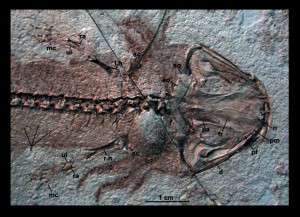 Over the past two decades, a treasure trove of fossils has been unearthed in China. Some of the world’s most exquisitely preserved feathered dinosaurs, birds, reptiles, and mammals have been recovered near the quiet northeastern China village of Daohugou.
 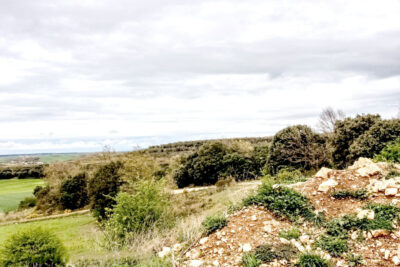 The genomic revolution is an increasingly challenging, long-standing orthodoxy in human evolution. An international team of geneticists headed by
  Origin of Life scientists will assemble next month in Galveston, Texas, for the “Understanding the Origin and Evolution of Life on Earth and the Galaxy”
 The history of the evolutionary tree of life, from ancient Greek philosophers to twenty-first-century scientists, provides insights into the theory’s origin and its evolution through Western civilization.