by Richard William Nelson | Aug 5, 2015
 Sharks get a bad rap. With only a cartilaginous skeleton, sharks were once thought to be the primitive evolution forerunner of the fish originating more than 400 million years ago during the Paleozoic Era―yet somehow surviving unchanged.
Sharks suffer as a stereotypical indiscriminate evolution forerunner, surviving only to kill with unintelligent, deadly instincts. However, a new study on the migratory patterns of the tiger shark, Galeocerdo cuvier, published in the journal Nature, dispels these misconceptions.
Continue Reading
by Richard William Nelson | Mar 5, 2015
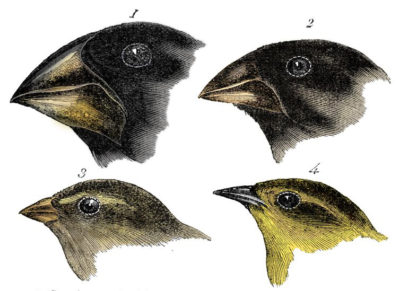
The finches Charles Darwin encountered on the Galapagos Islands have served as one of the most enduring examples of evolution throughout the twentieth century.
As Darwin explains in The Origin of Species, “one [finch] species had been taken and modified [changed] for different ends” – the essence of natural selection.
However, in the nineteenth century. The technology to scientifically validate these changes in the genetics of Darwin’s finches was inconceivable.
Continue Reading
by Richard William Nelson | Sep 18, 2014
New high-resolution CT scans of the Taung Child skull (pictured left) by an international research team led by Ralph L. Holloway of Columbia University in New York raise renewed questions about the institute’s inane Smithsonian evolution storytelling practices.
Discovered in 1924 in South Africa, models of the skull have been duplicated for natural history museums worldwide, including the Smithsonian, as evidence of human evolution. Found near Taung, South Africa, the lynchpin skull was tagged with the common name of Taung Child because of the fossil’s estimated age of 3 years. It was later named Australopithecus africanus, meaning the “southern ape from Africa.” However, Hollow’s new high-resolution CT scan images undermine the long-held pre-Homo fossil status of the skull.
Continue Reading
by Richard William Nelson | Aug 28, 2014
Two new research studies, one on Himalayan songbirds and one on Brazilian ants, arrive at conflicting conclusions on speciation. The songbird research study was published in the prestigious British journal Nature, while the ant research study was published in the American journal Current Biology.
Trevor D. Price of the University of Chicago led the songbird study, and Christian Rabeling of the University of Rochester led the Brazilian ant study, both highly respected international teams.
While the findings in the Himalayan songbird study support Charles Darwin’s speciation theory of geographical isolation, the Brazilian ant’s findings undermine his theory. Speciation, an evolutionary term intended to explain how new species might have developed from existing species, is in trouble once again.
Continue Reading
by Richard William Nelson | May 8, 2014
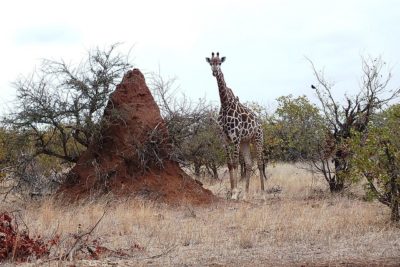
Charles Darwin wrestled to understand the interplay between instincts and natural selection. By observing ants, he hoped to connect the two. In The Origin of Species, Darwin argued –
“We shall, perhaps, best understand how instincts in a state of nature have become modified by selection by considering… the slave-making instinct of certain ants.”
Ant instincts have emerged as a problem for Darwin, however, along with his other major issue, the lack of transitional links. As Darwin explains in his introduction to The Origin of Species –
“The most apparent and gravest difficulties on the theory… namely, first, the difficulties of transitions… [and], secondly, the subject of Instinct.”
Continue Reading

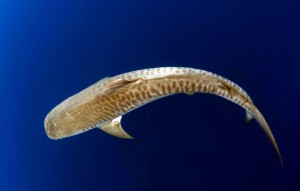 Sharks get a bad rap. With only a cartilaginous skeleton, sharks were once thought to be the primitive evolution forerunner of the fish originating more than 400 million years ago during the Paleozoic Era―yet somehow surviving unchanged.
 The
The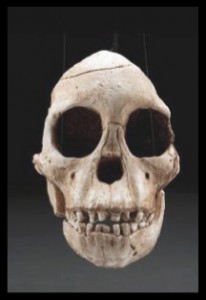
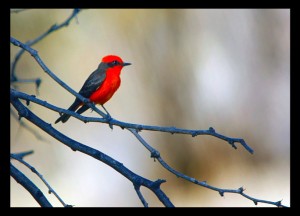 Two new research studies, one on Himalayan songbirds and one on Brazilian ants, arrive at conflicting conclusions on speciation. The songbird research study was published in the prestigious British journal Nature, while the ant research study was published in the American journal
  Charles Darwin