by Richard William Nelson | Jun 29, 2016
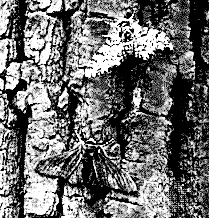
 Britain’s peppered moth has long served as an iconic example of evolution. This month, a new genetic discovery sheds light on the moth’s once-iconic status. As ScienceDaily reports –
Researchers from the University of Liverpool have identified and dated the genetic mutation that gave rise to the black form of the peppered moth, which spread rapidly during Britain’s industrial revolution. The new findings solve a crucial missing piece of the puzzle in this iconic textbook example of evolution by natural selection.”
Continue Reading
by Richard William Nelson | Mar 3, 2016
R2D2, short for Artoo-Detoo, is best known as the fictional robotic character in the Star Wars universe series created by George Lucas. Inducted into the Robot Hall of Fame in 2003, R2D2 has since been included in the Smithsonian Institution’s list of 101 Objects that Made America.
R2D2 is the good guy, the favorite character of George Lucas, known for always saving the day at least once in every film. However, R2D2 disses Darwin.
In the realm of biology, however, the R2d2 gene is a Darth Vader villain terrorizing Darwin’s once-popular theory.
Continue Reading
by Richard William Nelson | Jan 11, 2016
The status of evolution as a science is verging closer to extinction following a workshop in Germany last month. The essence and definition of science were at the center stage at this historic convening of leading physicists and philosophers of science last month.
The meeting convened in the Romanesque-style Ludwig Maximilian University lecture hall. Science writer Natalie Wolchover covered the story for Quanta Magazine, entitled “A Fight for the Soul of Science,” and later reprinted on TheAtlantic.com, entitled “Physicists and Philosophers Hold Peace Talks.”
Continue Reading
by Richard William Nelson | Nov 5, 2015
Evolutionary paradigms are increasingly struggling to survive under the weight of new scientific evidence. The malarial evolution nightmare is the latest. “Think of a deck of cards,” said Dan Larremore in an interview with Quanta Magazine science writer Veronique Greenwood.
“Now, take a pair of scissors and chop the 52 cards into chunks. Throw them in the air. Card confetti rains down, so the pieces are nowhere near where they started. Now tape them into 52 new cards, each one a mosaic of the original cards. After 48 hours, repeat.”
Continue Reading
by Richard William Nelson | Sep 3, 2015
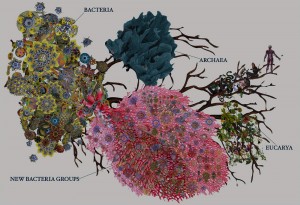
A new and unanticipated evolution dilemma now follows the wake of a massive new microbe discovery. Using a new technique, the number of known bacteria has been “bolstered by almost 50 percent,” according to a new article by Kevin Hartnett published in QuantaMagazine.org and reprinted in ScientificAmerican.com.
With a series of successively smaller porous filters, the University of California Banfield Group at Berkeley discovered a massive number of tiny “bacteria representing > 35 phyla… that consistently distinguished these organisms from other bacteria.”
Continue Reading

 Britain’s peppered moth has long served as an iconic example of evolution. This month, a new genetic discovery sheds light on the moth’s once-iconic status. As ScienceDaily reports –