 Dating fossils using radioisotopes gained popularity in the twentieth century for estimating a fossil’s age. However, a recent Public Broadcasting Service (PBS) program illustrates why questioning an age-dating theory based solely on radioisotopes is essential.
The case in point, a “1.8 million-year-old skull,” the PBS reported, “may revise [our] understanding of human evolution.” While the fossilized skull was dated to 1.8 million years old using radiocarbon dating, it was discovered in a medieval village in the former Soviet Republic of Georgia.
Ultimately bound to Earth’s physical constraints, fossils play a critical role in understanding the history of life. However, as methods for examining fossils have come and gone, so has our understanding of the ages assigned to them. The reported age difference between the 1.8-million-year-old skull discovered in a ninth-century village highlights tensions associated with radiometric dating.
From ancient philosophers to nuclear physicists, the history of methods for dating life on Earth dates back to the fourth century B.C.
B.C. Dating
The Greek philosopher Aristotle, in the fourth century B.C., reasoned that Earth’s existence extends from eternity past and continues into an infinite future. Also, regarding motion and matter as metaphysically eternal, he held that a beginning arising from nothing was impossible.
Aristotle’s assumptions effectively removed all time limits, making the concept of a beginning impossible. However, in modern science, the concept of the beginning of time is one of its most secure foundations. The concept of life emerging before Earth’s timeframe defies modern empirical logic.
Moses’ Genesis, a thirteenth-century B.C. document, is recognized as the most enduring source of time, asserting a finite beginning of time. However, this narrative was not available in Greek during Aristotle’s lifetime, and it was not translated into Greek until the third century B.C.
In the first century B.C., the Roman philosopher Titus Lucretius Carus, intellectual heir to the Greek atomists, inverted Aristotle’s logic of eternity. Using empirical-historical reasoning, Lucretius argued that the Earth is relatively young, since there were no records before the Trojan War. Since then, Lucretius’ historical record logic has been overturned.
Recognizing the limitations of using historical records to estimate historical time, the search turned toward identifying measurable physical observations to serve as natural time proxies. The shift marked a decisive methodological breakthrough in the study of Earth’s biospheric history.
Early A.D. Dating
Pre-Darwin
James Ussher
In 1654, Archbishop James Ussher estimated the Earth’s origin at 4004 B.C., founded primarily on genealogies in Genesis. However, Ussher is credited as the first to apply a radical new chronology method. Along with the genealogies, Ussher integrated cross-disciplines. These included the reigns of Near Eastern kings, classical historical sources, and astronomical markers, specifically Johannes Kepler’s Tabulae Rudolphinae (1627).
In some editions, the King James Bible often included Ussher’s dating synthesis in the margins. Ussher emerged as a pivotal pre‑scientific Earth age figure by pioneering the synchronization of textual and historical reasoning.
However, since biblical genealogies were the foundation of Ussher’s approach. the dating was skewed since biblical genealogies are telescoped, not exhaustive. For certain reasons, biblical writers often omitted generations from genealogies. As a result, genealogies describing that “A begat B” can mean “A was an ancestor of B,” not “A was the father of B.”
John Herschel
John Herschel (1792–1871), an English mathematician, astronomer, and chemist, found reasons for “many thousand millions of years.” Since Darwin was intent on understanding Earth’s history, he arranged to meet with Herschel when the HMS Beagle ported in Cape Town, South Africa, in 1836.
Herschel is credited with introducing the Julian day system in astronomy. Geologically, Herschel aligned with Charles Lyle’s concepts of Earth’s history.
Charles Lyle
English geologist Charles Lyle (1797–1875), in the Principles of Geology (1830–33), advanced that to understand Earth’s history, “the present is the key to the past.” A theory known as uniformitarianism. Therefore, no sudden climatic changes have ever occurred, including the global flooding event mentioned throughout the biblical texts.
While on the 5-year voyage on the HMS Beagle, Darwin read Lyle’s three volumes of the Principles of Geology. Eventually, as he looked “through Lyell’s eyes,” Darwin synthesized the geological spheres of Lyell’s influence with his theory of natural selection.
Despite friendship and collegiality, Lyell eventually, and only reluctantly, gave small credence to Darwin’s theory of natural selection.
Post-Darwin
Lyell’s reluctance, however, was overshadowed by Irish physicist William Thomson Kelvin‘s (1824–1907) critique. Based on thermodynamic principles and calculations of Earth’s cooling, Kelvin publicly challenged the concepts of time in uniformitarianism and natural selection. Darwin had explained in The Origin of Species –
“We may continue the process [natural selection] by similar steps for any length of time.”
While viewing the Earth’s age as longer than Ussher’s estimate, Darwin’s “any length of time” concept drew increasing criticism. The late nineteenth-century discovery of radioactivity, however, was soon to disintegrate the time assumptions drawn by Lyell, Darwin, and Kelvin.
Origins of Radiometric Dating
Henri Becquerel 
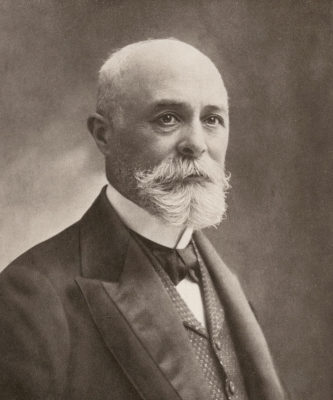
The discovery of radioactivity in 1896 by Henri Becquerel (pictured left), a Frenchman, revolutionized the dating of Earth’s biosphere. In the broadest sense, radioactivity refers to the process of energy transformation within the nucleus of an atom consisting of protons and neutrons.
The word atom is derived from the ancient Greek atomos, which meant discrete, “uncuttable” units. Atoms are chemical particles that are distinguishable by their number of protons in the nucleus, known as the atomic number.
Gases, liquids, and solids are composed of atoms, each consisting of a nucleus of protons and surrounded by electrons. In a neutral atom, the number of electrons equals the number of protons, while the number of neutrons varies among isotopes.
Becquerel, overturning the Greek notion of immutable atoms, observed that certain nuclei spontaneously transform, altering their proton–neutron ratios. The alteration releases energy in the process. This spontaneous transformation is known as radioactive decay.
Bertram Boltwood
The rate of radioactive decay is unique to each isotope, giving every radioactive nuclide a characteristic age range. The time for half of a population of unstable nuclei to decay became known as its half‑life (t½).
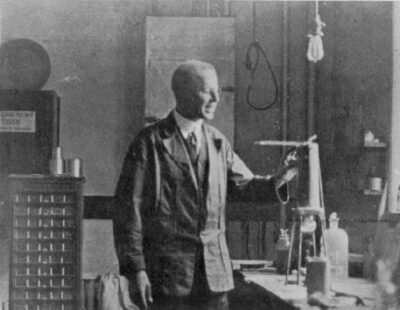 In 1907, Yale University chemist Bertram Boltwood was the first to propose that radioactive decay could function like a chronometer. His method of estimating the age of geological materials laid the foundation for what would become modern radiometric dating.
Of the 94 naturally occurring elements, 36 have at least one naturally occurring radioactive isotope. However, only a small subset are measurable in Earth’s crust.
From this small subset, Boltwood was the first to propose the uranium–lead decay method for dating. Uranium is abundant enough, long‑lived enough, and produces a stable daughter (lead), making it a candidate for estimating deep‑time. Discovering the uranium–lead (U–Pb) decay process was a scientific breakthrough.
However, unlike the law of gravity, radioactive decay is complex, not driven by a universal law of nature.
Radiometric Dating
Calculation
Decay is unpredictable in one sense, yet completely predictable in another. Rather than being governed by a universal law, like the law of gravity, radioactive decay is governed by probabilities. Radioactive decay limitations follow the laws of quantum mechanics.
A single nucleus has no internal clock. Therefore, in principle, predicting when one specific atom will decay is unknowable. However, in a large population of atoms, their collective behavior follows a precise exponential law governed by the decay constant λ.
Only three radioactive isotopes in Earth’s crust, Carbon‑14, Potassium-40 (⁴⁰K → ⁴⁰Ar), and Uranium Isotopes (U‑238, U‑234, Th‑230), have proven to be useful for dating the age of fossils. Population decay chain predictabilities, however, vary widely by multiple orders of magnitude –
-
- Carbon‑14: half‑life ≈ 5,730 years
- Potassium-40: half-life ≈ 1.248 billion years
- Uranium‑238: half‑life ≈ 4.47 billion years
However, Carbon-14 is the only radioactive isotope capable of directly dating biological tissue through inhalation while alive. Potassium-40 (K-40) and Uranium‑238 (U38) are only found in geological formations, not biological tissues.
Limitations
Dating using Carbon, however, due to its relatively short half life, is useful for estimating ages only up to about 50,000 years old. Beyond this age, the remaining ¹⁴C is too small to measure accurately, and indistinguishable from background radiation and contamination.
For life-forms embedded in sedimentary rock, rather than measuring Carbon-14, scientists indirectly date the age of the fossil by synchronizing geological dating inferences. An age applied to any fossil with an estimated age of 50,000 years or older, the calculated date is based on layers of inferential assumptions
As radiometric dating faces natural challenges, current fossil dating methodologies carry a range of additional inherent uncertainties.
Dating Constraints
A radiometrically derived fossil age based on parent–daughter isotope ratios and known decay constants is a logical concept. However, a radiometrically derived age is not a certainty for numerous technical and reasoning reasons.
Calculated ages have constraints stemming from measurement challenges, initial condition assumptions, and understandings of inferred history geological timeframes. Specifically, these include –
-
- Measuring limitations include instrumental noise, calibration uncertainty, and background corrections.
- Assumptions of the initial conditions uncertainties drawn into the calculation are only based on logical inferences.
- Varied, broad, and biased Interpretations of inferred geological timeframes histories unsynchronized with the presumed time frame of the studied artifact.
These constraints draw into question the factuality of radiometrically derived age calculations. Within each isotopic system challenges and varying susceptibility to disturbances culminate in varying dating uncertainties. Not surprisingly, different study methods can yield different age estimates for the same sample.
Dating methods measure elements that decay over time, not time itself. However, the only element whose radioactive isotope is capable of directly dating the remains of a once‑living organism is the Carbon-14 (¹⁴C) isotope.
Carbon-14
Distinctions
Carbon-14 has the only radioactive isotope in nature that can directly date the remains of a once‑living organism, not Potassium-40 or Uranium‑238. Specific Carbon -14 distinctions include –
-
- Only Carbon‑14 is incorporated into living tissue while the organism is alive.
- Plants acquire C-14 by photosynthesis from atmospheric CO₂.
- Animals acquire C-14 by eating plants (or plant‑eating animals).
- Plants and animals acquire C-12 and the C-14 isotope proportional to atmospheric concentrations and remain constant until death.
- Only the Carbon‑14 isotope begins decaying the moment the organism dies.
- Only Carbon‑14 records the time since death within biological tissues.
- Only Carbon‑14 is incorporated into living tissue while the organism is alive.
Carbon-14 is uniquely qualified to directly date a life-form by meeting the following isotope requirements –
-
- Integrated by the organism during life.
- Replenishment stopped at death.
- Decay at a measurable rate.
- Detectable quantities found in tissues.
Only Carbon-14 meets all four of these conditions, while other all other known radioactive elements are present in Earth’s crust, but these –
-
- Not incorporate by organisms in predictable ratios.
- Do not function as biological clocks.
Limitations
Carbon dating cannot be applied to determine the age of non-living materials, like rocks. Non-Carbon isotopes are only useful for estimating geological ages, not biological ages.
Importantly, as with all radiometric dating, any calculation on the history of the Earth requires the use of layers of assumptions. The use of each untested assumption compounds the uncertainty of any age dating calculation.
However, C-14 radiometric dating is only useful for biological ages estimated to be less than 50,000 years old. Therefore, evolution scientists apply the age of its embedded geological elements with longer daughter isotopes half-lives to the fossil.
The assumption is that the fossil’s age mirrors that of its embedding environment: the calculated geological age of the embedded fossil is recognized as the age of the fossil.
Fossil Dating Assumptions
 Calculating the age of a fossil using radiometric dating requires the use of a range of interconnected assumptions. However, each assumption introduces a measure of uncertainty.
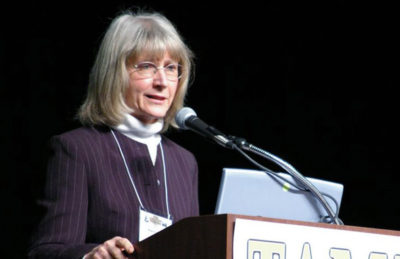
In Evolution vs. Creationism, Eugenie Scott, executive director of the National Center for Science Education (NCSE) highlights the inherent issues with using assumptions as a calculation foundation. To introduce the topic, Scott includes this quote from Philip Morrison, professor of physics at the Massachusetts Institute of Technology (MIT) –
“If certain assumptions are made about it [radiometric dating], then it can yield a date which could be called the apparent age. Whether or not the apparent age is the true age depends completely on the validity of the assumptions.”
While measuring concentrations is empirical, dating requires using scientists layers of assumptions, Scott continues quoting Morrison –
“Since there is no way in which these assumptions can be tested, there is no sure way (except by divine revelation) of knowing the true age of any geological formation.”
While assumptions may be founded on valid scientific facts, they are only scientifically valid if they pass falsification testing.
Source of Uncertainties
In recognizing these limitations, “the highly speculative nature of all methods of geochronometry [radiometric dating] becomes apparent,” Scott continues, “one realizes that not one of the above assumptions is valid! None are provable, or testable, or even reasonable.” Assumption include –
-
- Radiation exposure has been constant, despite known bursts of cosmic radiation and Earth’s core.
- “If the level of atmospheric C-14 were constant, this would be easy. However, it has fluctuated significantly throughout history.” (PhysOrg, Proceedings on the Royal Society).
- Production of parent isotopes has been constant since the origin of the specimen.
- The ratio and concentrations of the isotope in the sample since the origin of the specimen are known.
- Decay rates are constant since the origin of the specimen.
- Radiation exposure has not occurred since the origin of the specimen.
- No daughter (stable) elements existed in the specimen before the origin of the specimen.
- Use of scientifically validated radioisotope decay rates.
- Isotope concentration changes only stem from the decay process
- Radiation exposure has been constant, despite known bursts of cosmic radiation and Earth’s core.
Examples of Uncertainties
Continuing, Scott notes that the first assumption, “atmospheric radiation concentrations have been constant,” is now known not to be true. “The amount of carbon-14 in the atmosphere fluctuates through time; it’s not a constant baseline,” Julie Hoggarth of Baylor University explains for PHYS.ORG in the paper “Scientists develop a statistical fix for archaeology’s dating problem.”
Solar flares, also known as solar storms, produce radiation across the electromagnetic spectrum, though at varying intensities. While not as intense as visible light on Earth, they can be very bright at particular spectral lines, producing bremsstrahlung in X-rays and synchrotron radiation. Solar flares were first observed by Richard Carrington and Richard Hodgson independently on 1 September 1859.
In 2025, a “mysterious” blip in the radioactive isotope Beryllium-10 was unexpectedly found deep in the Pacific Ocean, undermining the assumption that radiation exposure has been constant over time.
Assumption Uncertainties
Different radiometric dating methods vary in the timescale over which they are accurate. “We must remember that the past is not open to the normal processes of experimental science,” Scott continues –
“A scientist cannot do experiments on events that happened in the past… Scientists do not measure the age of rocks; they measure isotope concentrations… [and] the age is calculated using assumptions about the past that cannot be proven.”
The assumption that neither the parent nuclide nor the daughter product can enter or leave the material after its formation is erroneous.
Scientific Consensus
A universal scientific consensus on dating a fossil’s age has not been endorsed by any scientific organization. However, general agreement exists on the following three dating fossil pillars:
-
- Relative dating establishes order (older vs. younger) using geological principles such as superposition and stratigraphic correlation.
- Absolute dating uses radioactive decay systems—especially radiocarbon (C‑14) for young fossils and potassium‑argon (K‑Ar) or argon‑argon (Ar‑Ar) for volcanic layers bracketing older fossils.
- Multiple methods must converge; no fossil is dated by a single technique in isolation. This is a widely accepted methodological norm.
The three major types of uncertainties preventing scientific organization from developing a consensus on how to date a fossil are –
-
- Fossils occur in diverse geological contexts.
- No single method works for all materials or timescales.
- Dating requires integrating multiple independent evidence systems.
The “1.8 million-year-old skull” discovered in a “medieval village” in the Republic of Georgia is a classic example of the problems with radiometric dating.
Dating Fossils is a subcategory of the Fossil Record.
More
Subcategories in the Fossil Record include –
-
- Darwin’s Dilemma
- Fossil Record by the Decade
- Dating Fossil Age (current page)
- Time Frames of Earth’s Biosphere

Darwin Then and Now is an educational resource on the intersection of evolution and science, highlighting the ongoing challenges to the theory of evolution.
Move On
Explore how to understand twenty-first-century concepts of evolution further using the following links –
-
- The Understanding Evolution category showcases how varying historical study approaches to evolution have led to varying conclusions. Subcategories include –
- Studying Evolution explains how key evolution terms and concepts have changed since the 1958 publication of The Origin of Species.
- What is Science explains Charles Darwin’s approach to science and how modern science approaches can be applied for different investigative purposes.
- Evolution and Science (current page) features study articles on how scientific evidence influences the current understanding of evolution.
- Theory and Consensus feature articles on the historical timelines of the theory and Natural Selection.
- The Biography of Charles Darwin category showcases relevant aspects of his life.
- The Glossary defines terms used in studying the theory of biological evolution.
- The Understanding Evolution category showcases how varying historical study approaches to evolution have led to varying conclusions. Subcategories include –