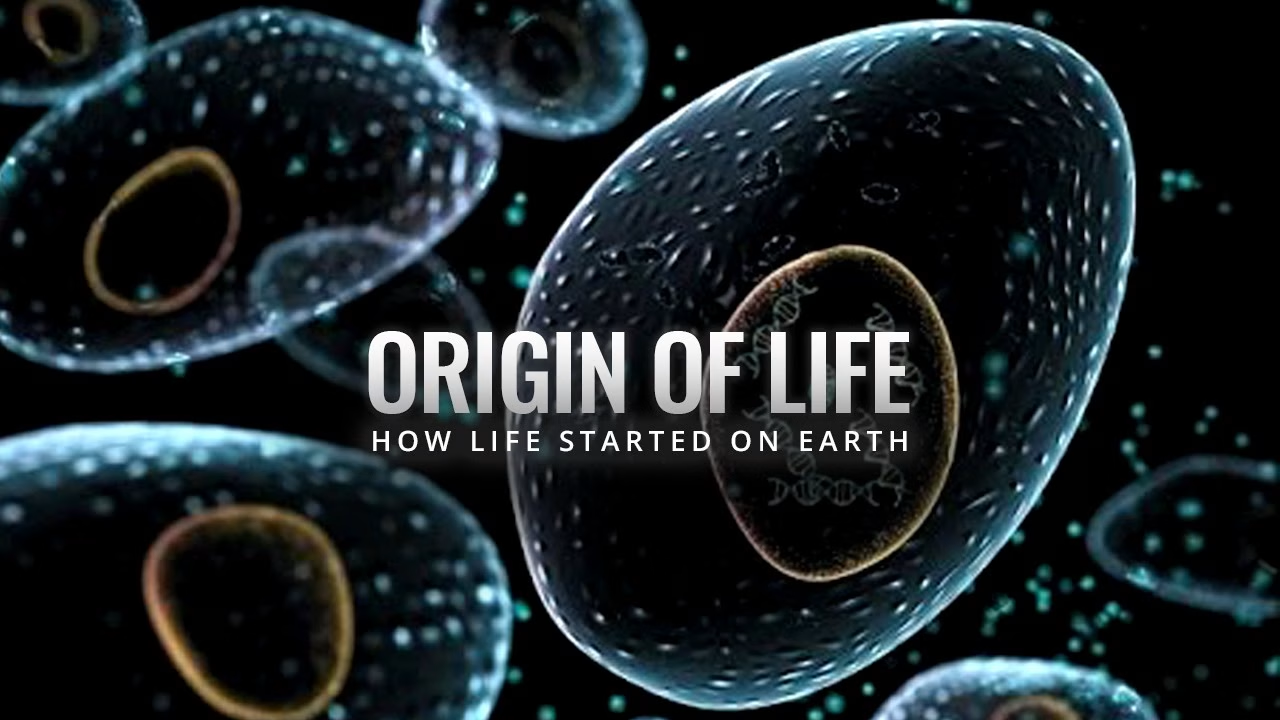
 The origin of life is the grandest phenomenon of the universe, yet is one of nature’s greatest mysteries. Is life inevitable? Surprisingly, Charles Darwin, in a letter to J.D. Hooker in March 1863, privately expressed his disdain for even thinking about the topic, declaring —
“It is mere rubbish thinking at present of the origin of life.”
Darwin had struggled to link the origin of life with his theory of natural selection. However, both concepts are essential for a comprehensive explanation for the natural emergence of Earth’s biosphere. Darwin faced a logical dilemma: natural selection acts only on what already exists.
Conflicted over how to address the origin of life issue, Darwin rationalized the dilemma –
“It is no valid objection that science as yet throws no light on the far higher problem of the essence or origin of life. Who can explain what is the essence of the attraction of gravity?”
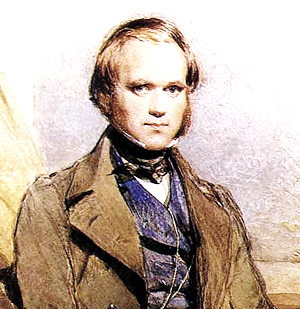 However, in science there is no substitute for a valid physical cause. In the 1st Edition of The Origin of Species, Darwin (pictured left) did not include a cause for the origin of life. However, beginning with the last paragraph of the 2nd Edition, Darwin did include a cause, noting –
“There is grandeur in this view of life, with its several powers, having been originally breathed by the Creator into a few forms or into one.”
In the final four editions, Darwin included this same sentence in the book’s last paragraph. By the 6th Edition, the “Creator” is referred to nine times. Privately, however, Darwin envisioned a natural “warm little pond” as his explanation for the origin of life.
The Origin-Evolution Gap
Scientific origin-of-life research centers on examining inert abiotic evidence that is causally linkable to the emergence of biological systems. Rather than studying change within living systems, origin-of-life researchers examine historical artifacts in association with presumed prebiotic Earth conditions.
The space between the prebiotic and biotic Earth is generically referred to as the “gap,” or the “abiogenesis–evolution boundary.” In the literature, this concept is also called the “origin of life gap,” or the “Darwinian threshold.”
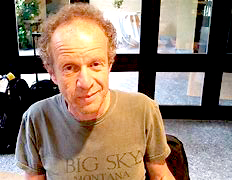 According to Eugene Koonin (pictured right) of the National Center for Biotechnology Information, this seemingly evolutionary gap is known as –
“… the hardest problem in all of biology.”
“Chemical evolution and the origins of life” is the focus of the Center for Chemical Evolution at Georgia Institute of Technology. Specifically, the program centers on resolving the scientific dilemma of how life could have naturally emerged from prebiotic building blocks.
The National Science Foundation and NASA Astrobiology sponsor the center’s program.
Gap Building Blocks
A primary goal of origin‑of‑life research is to identify prebiotic building blocks in nature that can transition into biotic ones. Therefore, scientists search and examine historical artifacts for evidence of geochemical processes that could have transitioned to prebiotic systems.
The “origin of life gap” exists because a mechanism for transitioning from geochemical processes to prebiotic systems is only conceptual. A transition is only speculative; it has never been observed. While abiogenesis and biological evolution theories are adjacent, they are non‑overlapping natural domains.
However, for a cohesive evolutionary molecules-to-man theory, a solution to the origin-evolution gap dilemma is essential. The gap is an existential red line for the development of a cohesive scientific theory of evolution.
The origin-of-life transition gap is theoretically on par with the lack of transitional links in the fossil record. As Darwin noted in The Origin of Species –
“Why then is not every geological formation and every stratum full of such intermediate links? Geology assuredly does not reveal any such finely-graduated organic chain; and this, perhaps, is the most obvious and serious objection which can be urged against the theory.“
Not surprisingly, across the history of ancient civilizations, origin‑of‑life accounts were near‑universal.
Historical Origin of Life Concepts
Every known culture with a cosmology contains an origin-of-life narrative. Greek, Roman, Egyptian, Mesopotamian, Indian, Chinese, Mesoamerican, and Andean cultures all had one.
In the sixth century BC, Greek philosophers pioneered the use of reasoning to address questions about nature. This shift from myth to reason became one of the foundational influences shaping Western academia.
By the twenty‑first century, the origin‑of‑life is regarded as a historical science, although, surprisingly, remaining intellectually rooted in Greek philosophy.
Greek Philosophy
Fifth-century Greek philosophers were the first to formulate natural mechanisms of causation to explain life. The pre-Socratic philosopher Anaxagoras shifted the understanding of nature’s mechanisms from a deity-based explanation to a natural one.
Anaxagoras believed the universe was filled with “seeds” of life – a concept known as panspermia. If life exists throughout the universe, it logically follows that life on Earth originated from those seeds.
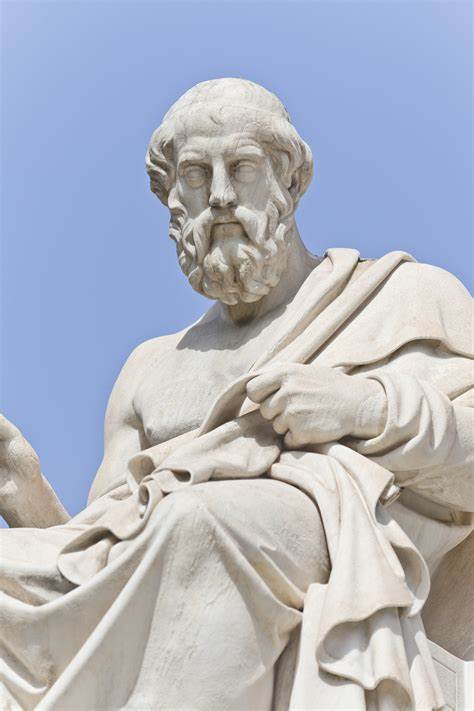 Aristotle (pitured left) , a student of Socrates, rejected Anaxagoras’ idea that the cosmic seeds of life originate in the universe. Instead, Aristotle taught that life originated through spontaneous generation from causes on Earth, not from cosmic seeds. arguing –
“That it is a cause as substance is clear, for substance is the cause of being for all things, and for living things, being is life, and the soul is also the cause and source of life.”
However, Louis Pasteur, a French chemist, pharmacist, and microbiologist, a contemporary of Darwin, disproved the concept of spontaneous generation. As a father of the germ theory, Pasteur is renowned for discovering the principles of vaccination, microbial fermentation, and pasteurization.
Louis Pasteur, however, did not publish his results until 1861, more than a year after Darwin published The Origin of Species.
The Darwins
Erasmus Darwin
As early as the eighteenth century, the origin of life had become a widely popular and contentiously debated topic. With the availability of new tools and discoveries, the glaring absence of a scientific answer became impossible to ignore.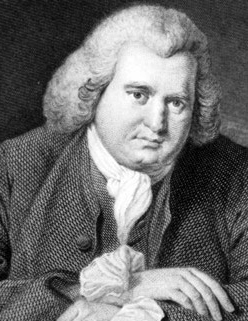
In 1794, Erasmus Darwin (pictured right), Charles’s grandfather, entered the origin of life fray with his popular book Zoonomia, noting –
“Would it be too bold to imagine that all warm-blooded animals have arisen from one living filament?”
In his doctoral dissertation, freethinking intellectual Robert Edmond Grant quoted from Zoonomia. Eventually becoming one of the foremost early 19th-century naturalists at Edinburgh University, he influenced the young Charles Darwin.
In essence, though, Erasmus had only envisioned one biotic system leading to another.
Charles Darwin
Charles Darwin did not incorporate his grandfather’s logical approach for good reason, writing in the Origin of Species –
“It is no valid objection that science as yet throws no light on the far higher problem of the essence or origin of life. Who can explain what is the essence of the attraction of gravity?”
Enlightenment Crossroads
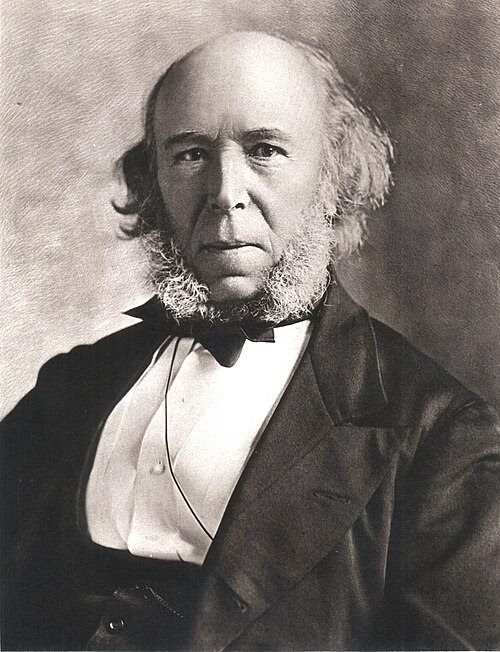 During the mid-nineteenth century, Age of Enlightenment progressives envisioned life originating from non-living matter. Progressive intellectual Herbert Spencer (pictured left) in Principles of Biology (1864-1867) advanced a gradualist abiogenesis model.
In the wake of Pasteur’s findings, the Enlightenment tone became more cautious, critical, and scientific. In his 1870 paper – “On spontaneous generation and evolution” – science intellectual W.T. Thiselton-Dyer concluded that spontaneous generation is “likely false.”
Spencer represents the pre‑Pasteur philosophical evolutionists, while Thiselton‑Dyer represents the emerging experimental biologists who demanded scientific proof.
Caught in the controversy, Darwin finally rejected the concept of spontaneous generation, but kept pangenesis. In a letter (1871) to Joseph Hooker, Darwin noted –
“I am always delighted to see a word in favour of Pangenesis, which some day, I believe, will have a resurrection… But if (& oh what a big if) we could conceive in some warm little pond with all sorts of ammonia & phosphoric salts,—light, heat, electricity &c present, that a protein compound was chemically formed, ready to undergo still more complex changes.”
In spontaneous generation, life emerged from nonliving matter, but pangenesis refers only to the emergence of inherited traits. During his lifetime, Darwin witnessed a scientific revolution in biology – one that has only continued to accelerate.
Pillars of Origin of Life Research
 By the early twentieth century, the influence of Gregor Mendel’s (pictured right) theory of inheritance relaunched scientific interest in Darwin’s theory. However, the absence of a natural causative mechanism for the origin of species posed an additional existential risk to Darwin’s theory.
Establishing a scientifically valid concept of the origin of life is essential for any comprehensive theory of evolution. By the mid-twentieth century, financial grants and technological advances fueled the quest to solve the mystery.
Aleksandr Oparin
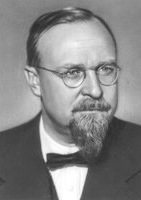 Russian biochemist Aleksandr Oparin (pictured left) in the 1920’s began framing a conceptual architecture for abiogenesis. Today, Oparin is considered the father of our modern origin‑of‑life hypothesis.
Oparin eventually built a complete, mechanistic, testable scientific framework for abiogenesis, one that underlies every major origin‑of‑life research program today. His framework was the first to offer a coherent, stepwise, natural, causal scientific model for understanding the emergence of life.
Since then, Oparin’s four-pillar framework for the origin of life has been further expanded, spearheaded by pioneering architects.
Chemical Evolution
Aleksandr Oparin (1894–1980) – Reducing atmosphere → organic synthesis → coacervates.
J.B.S. Haldane (1892–1964) – Environmental and energetic context for prebiotic chemistry.
Stanley Miller (1930–2007) & Harold Urey (1893–1981) – Plausibility of prebiotic organic synthesis.
Sidney Fox (1907–1998) – Early protocell and polymerization concepts.
John Sutherland (1970) – Modern prebiotic synthetic chemistry.
Ramanarayanan Krishnamurthy (1960) – Chemical space for early genetic systems.
Metabolism‑First & Geochemical Energy
Günter Wächtershäuser (1938) – Surface metabolism and mineral catalysis frameworks.
Michael Russell (1939) – Developed the alkaline hydrothermal vent model.
Harold Morowitz (1927–2016) – Energy‑flow logic in origin‑of‑life systems.
Information‑First & RNA World
Carl Woese (1928–2012) – Genetic continuity from prebiotic RNA to modern biology.
Leslie Orgel (1927–2007) – Chemical plausibility of RNA self‑replication.
Walter Gilbert (1932) – Unified evolutionary logic with RNA chemistry.
Jack Szostak (1952) – The leading architect of protocell‑RNA integration.
Irene Chen (1980) – Evolutionary dynamics in primitive cell systems.
Systems Chemistry & Complexity
Stuart Kauffman (1939) – Mathematical foundation for emergent complexity.
Wim Hordijk (1970) – Formalization of self‑sustaining chemical systems.
Eugene Koonin (1956) – Evolutionary constraints on early replicators.
Sara Walker (1980) – Information as a physical driver of life’s origin.
Leeroy (Lee) Cronin (1973) – Quantitative framework for chemical evolution.
Nick Lane (1967) – Energy‑first integration of metabolism and evolution.
Origin-of-life research is fundamentally different from evolutionary biology. While evolution explains changes in living systems, abiogenesis explains how living systems arise from nonliving precursors.
Origin of Life Research Networks
Origin‑of‑life research networks are formal, multi‑institutional scientific collaborations that coordinate researchers across disciplines working on the pillars of origin research. Aleksandr Oparin was the first to establish an organization (ISSOL) dedicated to the scientific study of the mechanism of the origin of life.
In 1957, Oparin spearheaded the organization of the International Society for the Study of the Origin of Life (ISSOL). This was the world’s first organized network dedicated to scientific research into the origin of life. Beginning in the 1990’s, five new organizations have since been established, each with its mission’s goal –
IAU Astrobiology Commission (1990s) – Coordinate international research on the origin, evolution, and distribution of life in the universe.
NASA Astrobiology Institute (1998) – Advance astrobiology by developing the scientific foundations of the search for life and the study of life’s origins and evolution.
Earth-Life Science Institute (2012) – Discover how the Earth formed, how life emerged, and how the planet and biosphere co‑evolved.
Simons Collaboration on the Origins of Life (2013) – Advance understanding of life’s emergence by coordinating multidisciplinary research across the science fields to address the transition to Darwinian evolution.
Origins Federation (2023) – Harvard, Cambridge, ETH Zürich, and the University of Chicago to serve as international hubs for origin‑of‑life discovery.
Importantly, the elements across all organizational frameworks align with Oparin’s original conceptual architecture of abiogenesis. While the methods vary, each organization’s mission centers on bridging the gap between prebiotic and biotic systems.
Closing the Gap
The overall structural framework for studying the origin of life is now continuing past its fifth decade. Each new study has identified ways to refine the structural framework of origin-of-life studies. And, importantly, each subsequent new scientific discovery has shed light on the feasibility of closing the gap between chemistry and life.
However, the field now has historical inertia. Its conceptual categories— prebiotic chemistry, RNA world, protocells —are entrenched. New paradigms – metabolism-first, systems-first, noncanonical genetics – must integrate into existing structures.
 The 2015 “A Strategy for Origin of Life Research” consensus led by Caleb Scharf (pictured right), plus thirty-six others, explains the problem with past origin of life studies –
“The origin of life is a problem that is studied by scientists working in a wide variety of fields. These communities differ not only in the types of questions they ask but also in what is taken to constitute an answer. Communication between such different perspectives can be difficult, but the origin of life is a problem that requires precisely this.”
In 2026, however, the prospects of closing the gap seem increasingly unlikely, as have decades of successive advanced studies. As Steve Koppes, writing for the University of Chicago News (November 2025), explains –
“The origin of life on Earth stands as one of the great mysteries of science. Various answers have been proposed, all of which remain unverified.”
Darwin’s Enduring Conclusion
The evidence for a natural explanation of the origin of life gives a clear answer to the question: Is life inevitable? Charles Darwin wisely concluded in The Origin of Species –
“There is grandeur in this view of life, with its several powers, having been originally breathed by the Creator into a few forms or into one.”
The central mechanistic gap—how prebiotic chemistry transitions into Darwinian evolution—remains unresolved.
Origin of Life Homepage is a subcategory of Evolution and Science.
More
To understand how evidence in Origin of Life studies scientifically challenges the theory of evolution, consider reading the following –
Each article describes how observable evidence scientifically challenges the current understanding of evolution.
Darwin Then and Now is an educational resource on the intersection of evolution and science, highlighting the ongoing challenges to the theory of evolution.
Move On
Explore how to understand twenty-first-century concepts of evolution further using the following links –
-
- The Understanding Evolution category showcases how varying historical study approaches to evolution have led to varying conclusions. Subcategories include –
- Studying Evolution explains how key evolution terms and concepts have changed since the 1958 publication of The Origin of Species.
- What is Science explains Charles Darwin’s approach to science and how modern science approaches can be applied for different investigative purposes.
- Evolution and Science feature study articles on how scientific evidence influences the current understanding of evolution.
- Theory and Consensus feature articles on the historical timelines of the theory and Natural Selection.
- The Biography of Charles Darwin category showcases relevant aspects of his life.
- The Glossary defines terms used in studying the theory of biological evolution.
- The Understanding Evolution category showcases how varying historical study approaches to evolution have led to varying conclusions. Subcategories include –