 Science offers a fascinating process for understanding the universe through observation, logic, and testing. By offering a systematic framework of principles, it offers an approach to understanding how nature works.
The Scientific Method, empirical research, experimental research, and historical research are the four most commonly used scientific methods. While they share similarities, their purposes, methods, and scientific value differ. Understanding the strengths and limitations of each method is important for understanding evolution scientifically, as will be discussed.
Science plays a crucial role in understanding the mysteries of nature and, importantly, separating facts from fiction.
Laws of Nature
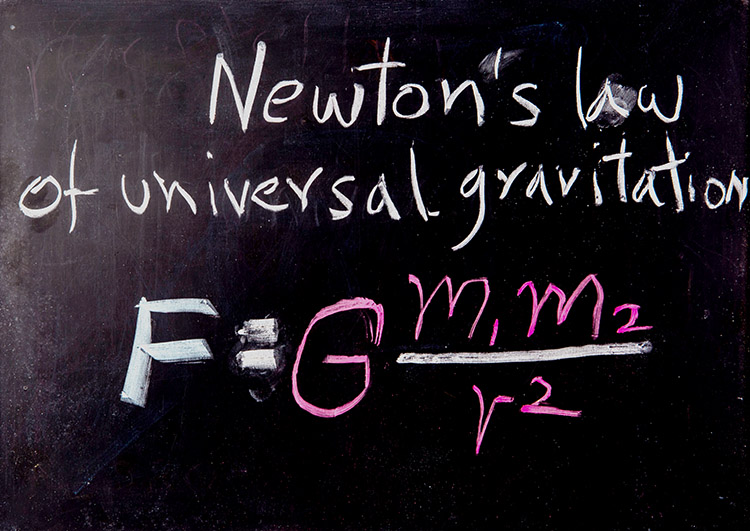 The laws of nature drive the universal patterns and regularities of the universe’s past, present, and future. For centuries, the Scientific Method has been the gold standard for understanding nature.
Isaac Newton is widely credited as the most notable scientist to have advanced the Scientific Revolution through the Scientific Method. Often expressed mathematically, this method is unparalleled in describing, predicting, and validating how nature works.
However, unlike the natural laws of physics, the natural forces of biology are not universal. The life sciences are infinitely more complex than physics. Yet the successive principles of the Scientific Method serve as the gold standard for discovering nature’s mysteries in both fields.
Scientific Method
Life sciences have distinctive mechanisms. However, unlike the physical sciences, biology does not have universal laws in the same sense. However, biological forces have distinctive patterns, tendencies, and mechanisms. The best and most dramatic example demonstrating the power of the Scientific Method in biology is the discovery of the germ theory of disease.
 The sequential work of Ignaz Semmelweis, Louis Pasteur (pictured left), and Robert Koch ultimately upended infectious disease dogma. By using the Scientific Method steps to understand infectious diseases, their discoveries collectively ushered in modern medicine.
Successive Steps
The framework of the Scientific Method consists of seven successive steps –
-
- Observation: Objectively observe a defined measurable phenomenon.

- Hypothesis: Formulate testable alternative hypotheses to explain the observation.
- Test: Design and conduct cause-and-effect experiments to evaluate the formulated hypotheses.
- Collect Data: Organize and record objective observations.
- Analysis: Analyze the calculated predictive value of the proposed hypotheses to explain the phenomenon.
- Evaluation: Evaluate observed predictive value to accept, refine, or reject proposed hypotheses.
- Triage: Perform falsification testing to refine or further validate hypotheses with high predictive value. If not, restart the process using new hypotheses.
- Observation: Objectively observe a defined measurable phenomenon.
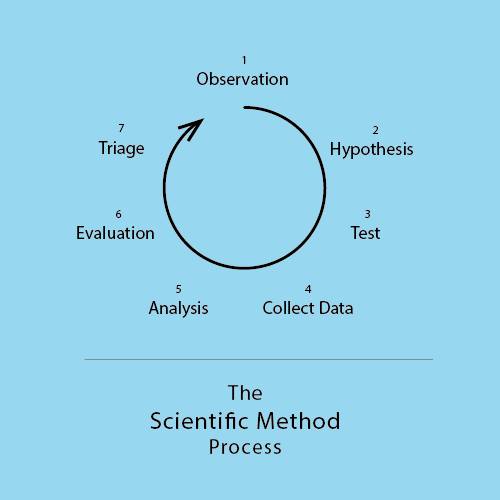
Triage following falsification testing distinguishes the Scientific Method as the most rigorous framework for decoding the laws of nature. Yet because nature’s complexity is effectively infinite, the process of uncovering its laws is necessarily open‑ended and never complete.
Role of Falsification
Falsification is the test that separates scientifically valid explanations from plausible ideas. The following three steps are required in falsification testing:
-
- Identify a prediction that must occur if the hypothesis is true.
- Design a test that could prove the hypothesis wrong.
- If the prediction fails, the hypothesis is falsified.
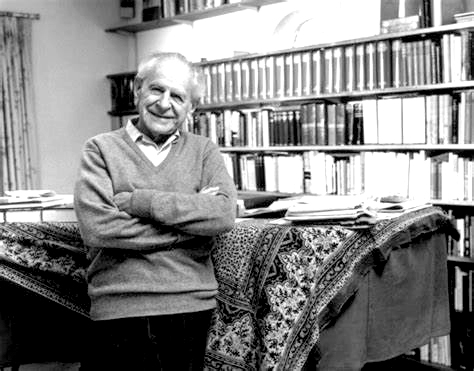 A scientific theory, by definition, must be testable and capable of being proven incorrect by observable evidence. Karl Popper (pictured left), one of the 20th century’s most influential philosophers of science, considered falsifiability—not verification—the hallmark of scientific thinking.
Falsification testing elevates the Scientific Method above all other methods of inquiry. Only through the possibility of disproof can reliably distinguish genuine laws of nature—whether universal or contingent—from ideas that merely appear true.
The Scientific Method is science’s premiere method for characterizing the the apparent laws of nature. However, not all hypothesis can undergo falsification testing. Empirical research is a closely related study method.
But unlike the Scientific Method, empirical research is not designed to verify the validity of a hypothesis.
Empirical Research
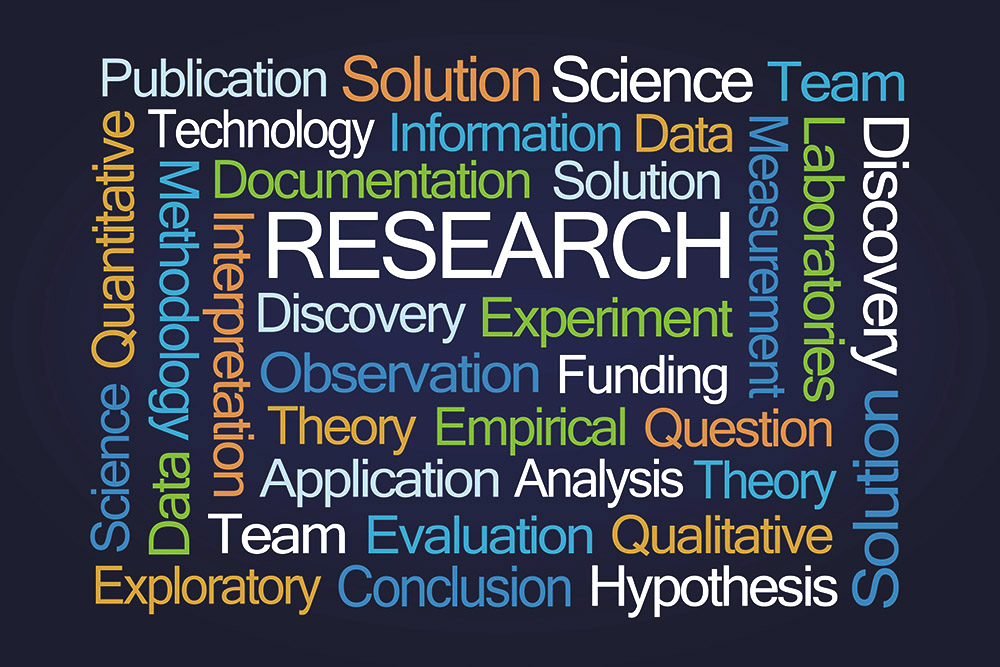 Empirical research aims to acquire evidence about nature through observation or experience, independent of hypotheses or experimental manipulation. While a component of the Scientific Method, empirical research is not its synonym since it does not involve hypothesis verification.
The word ” empirical” is derived from the Greek word empeirikos, which means “experienced.” However, like the Scientific Method, empirical research involves systematic collection and analysis of observations and measurements.
However, unlike the Scientific Method, empirical research may also draw on indirect observations and experiences, making it prone to subjective influences. And crucially, empiric research does not require a hypothesis, experimentation, falsification testing, or the formulation of predictions.
Empirical research provides the descriptive and evidential foundation upon which more structured scientific methods—such as hypothesis testing and experimentation—can operate.
 A classic empirical study example in evolutionary biology is the emergence geographic variation in house sparrows (pictured left) introduced to North America in the nineteenth century. Researchers directly observed how populations diverged in body size and coloration across climates—without manipulating variables or testing hypotheses experimentally.
Successive Steps
The eight successive steps in empirical research include –
-
- Identify an Issue: Define a clear, specific, answerable empirical issue grounded on observed evidence.
- Review the Existing Literature: Examine published studies to understand what is known. Identify gaps, refine the study’s issue, and outline a method of inquiry.
- Formulate a Hypothesis: Develop a hypothesis to address the study’s issue.
- Design Study: Define whether the study is qualitative, quantitative, or mixed methods. Determine what data to collect and how they will be collected.
- Collect Data: Collect observable, measurable evidence.
- Analyze Data: Apply appropriate qualitative or quantitative techniques to address the issue
- Interpret Findings: Compare results to the hypothesis (if one was stated). Relate findings to prior literature and explain what the evidence shows about the identified issue.
- Report and Compare with Other Studies: Present results clearly and transparently. Contrast findings with earlier research to show continuity or divergence.
Empirical research, however, does not establish cause‑and‑effect relationships. However, the aim of experimental research is to investigate cause‑and‑effect relationships, whether X produces Y, not merely whether X and Y co‑occur.
Manipulation and control are the essential defining elements of experimental research allowing researchers to isolate causal effects.
Experimental Research
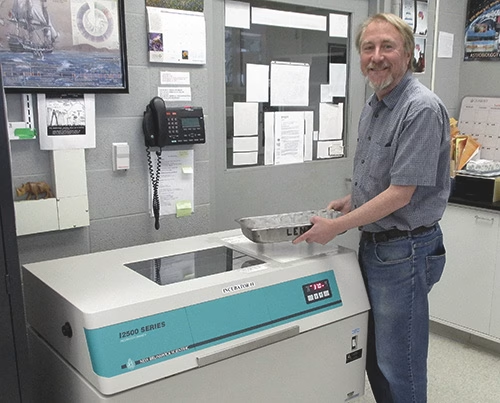 Experimental research aims to establish cause‑and‑effect relationships. By manipulating a single independent variable while holding all other factors constant, this structure allows researchers to determine how this isolated variable influences the observed outcome.
Richard Lenski’s (pictured left) long-term E. coli study (pictured above) is an exemplarily modern example of experimental research. Interestingly, embedded in the book’s tile, Darwin’s infers that his theory is based evidence that natural selection is evolution’s causal variable, too –
“On the Origin of Species by Means of Natural Selection”
However, Darwin’s inferred method does not align with the modern principles of experimental research.
Successive Steps
 Experimental research proceeds through a structured sequence that begins with defining the problem and ends with interpreting results.
-
- Define the Research Problem: Identify the specific phenomenon or relationship you want to investigate. Conduct background research to refine the question and ensure it is researchable.
- Formulate the Hypothesis and Identify Variables: State a testable prediction. Specify the independent and dependent variables. Anticipate potential confounding variables.
- Operationalize Variables: Establish precise measurement procedures. Ensure reliability and validity of instruments.
- Select the Sample: Choose participants who represent the population of interest. Aim for homogeneity to reduce extraneous variation.
- Form Experimental and Control Groups: Create at least two groups: experimental group (receives the treatment), control group (does not), ensure groups are equivalent at baseline.
- Assign Participants to Groups: Randomization minimizes bias and strengthens internal validity.
- Implement the Experimental Procedure: Apply the independent variable to the experimental group, old all other conditions constant across groups, collect data systematically.
- Analyze the Data: Compare outcomes between groups using appropriate statistical methods, determine whether differences support the hypothesis.
- Interpret and Report the Results: Draw causal conclusions, discuss limitations, alternative explanations, and implications, and report methods transparently to enable replication.
Overview
Drawing conclusions by inferring causation without experimental control is inherently risky. Experimental research is a crucial method in scientific studies, particularly in fields where understanding cause-and-effect relationships is essential.
However, when only ancient samples are available for study, historical research must replace the Scientific Method, empirical, and experimental research approaches to study evolution.
Historical Research
 Science extracts value from data. However, because extracting data on ancient phenomena from sediments and rocks is complicated, the rules governing Historical Research are more flexible than those in other fields of science.
Historical Research, however, while the only method to directly study evidence for evolution, is science’s least verifiable method. Based on similarities and differences, scientists can only infer patterns of descent using this method.
The Earth contains a treasure trove of ancient life, from microbes to woolly mammoths, from mountain peaks to the ocean bottom. Alfred Sherwood Romer’s widely circulated textbook, Vertebrate Paleontology, noted that the fossil record is nearly complete, with 97.7 percent of the known living orders represented in the fossil record.
Paleontology
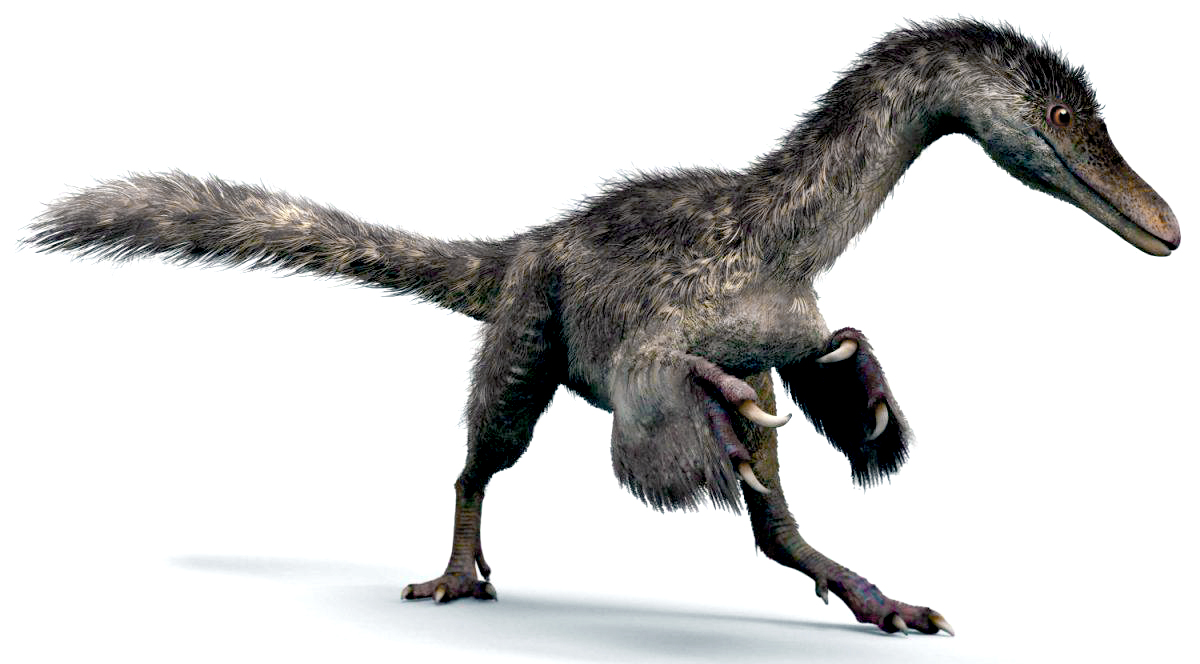 Paleontology is an expanding field of science studying ancient life on Earth. Biotechnology advances now allow paleontologists to study increasing levels of complexity in Earth’s biosphere.
Archaeology, geology, astronomy, and cosmology are other natural sciences that rely on Historical Research. Unlike the Scientific Method, Historical science aims to describe and explain what happened, not to predict what will happen or explain causes.
However, the structure of the Historical Research process follows that of the other scientific methods.
Successive Steps
Historical research proceeds through a sequence of interpretive and evidentiary steps that transform traces of the past into a coherent, defensible narrative. The following framework integrates the major stages identified across authoritative guides
-
- Identify and Delimit the Research Topic: Choose a historically meaningful, feasible, and sufficiently specific topic.
- Identify and Delimit the Research Topic: Choose a historically meaningful, feasible, and sufficiently specific topic.
- Formulate a Research Question or Problem: Convert the topic into a focused, investigable question.
- Conduct a Preliminary Literature Review: Survey existing secondary scholarship to understand prevailing interpretations, methodological approaches, historiographical debates, and gaps or contested claims.
- Locate and Gather Primary Sources: Identify the surviving traces of the past: documents, letters, newspapers, government records, artifacts, images, oral histories.
- Critically Evaluate Sources: External criticism: verifying authenticity, authorship, date, and integrity. Internal criticism: assessing credibility, bias, perspective, purpose, and context.
- Analysis and Interpretation: Extract patterns, causal relationships, motivations, and contextual factors.
- Synthesize Findings into a Coherent Narrative: Integrate evidence and interpretation into a structured explanation.
- Write the Historical Narrative or Analytical Account: Present the argument clearly, with appropriate citations and contextualization.
- Revise, Refine, and Edit: Reassess the argument, evidence, structure, and clarity. Ensure accuracy, coherence, and historiographical relevance.
Unlike the other methods, historical research is not simply “collecting facts.” It is a disciplined process of question-driven reconstruction, where the historian must:
-
- Work with incomplete and biased sources,
- Evaluate credibility,
- Infer causation without experimentation, and
- Craft a persuasive, evidence-based interpretation.
This makes historical research both methodologically rigorous and interpretively rich, but the most prone method to be influenced by subjective bias..
Overview
The four most common investigative methods in natural sciences are the Scientific Method, empirical Research, experimental research, and historical research. However, each method has a different purpose, such as –
Scientific Method – validating the laws of nature.
Empirical Research – explaining ongoing observations in nature.
Experimental Research – investigating natural cause-and-effect.
Historical Research – inferring ancient Earth explanations.

Darwin Then and Now is an educational resource on the intersection of evolution and science, highlighting the ongoing challenges to the theory of evolution.
Explore the following subcategories of What Is Science
Move On
Explore how to understand twenty-first-century concepts of evolution further using the following links –
-
- Understanding Evolution category showcases how varying historical study approaches to evolution have led to varying conclusions. Subcategories include –
- Studying Evolution explains how key evolution terms and concepts have changed since the 1958 publication of The Origin of Species.
- What is Science (current category) explains Charles Darwin’s approach to science and how modern science approaches can be applied for different investigative purposes.
- Evolution and Science feature study articles on how scientific evidence influences the current understanding of evolution.
- Theory and Consensus feature articles on the historical timelines of the theory and Natural Selection.
- Biography of Charles Darwin category showcases relevant aspects of his life.
- Glossary defines terms used in studying the theory of biological evolution.
- Understanding Evolution category showcases how varying historical study approaches to evolution have led to varying conclusions. Subcategories include –
More
Explore Charles Darwin’s five principles of natural selection using the V.I.S.T.A. acronym developed by Niles Eldredge of the American Museum of Natural History –