by Richard William Nelson | Jan 9, 2014
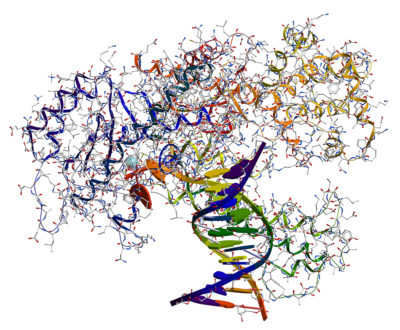
 Pristine preservation of DNA is of critical importance in the study of ancient DNA. The structural integrity of the DNA molecule, contrary to the Jurassic Park tale, is not infinitely stable.
Damage to the DNA molecule in living organisms occurs naturally from normal metabolic and hydrolytic processes and from environmental factors such as ultraviolet light and radiation.
Damage to DNA in mammalian cells is known to occur 1 million times daily. While living organisms can identify and correct these damages, the evolutionary industry has been reticent to address the stability of ancient DNA in the fossil record.
Continue Reading
by Richard William Nelson | Dec 30, 2013
The genomic revolution is an increasingly challenging, long-standing orthodoxy in human evolution. An international team of geneticists headed by Matthias Meyer (pictured right below) of the Max Planck Institute for Evolutionary Anthropology in Germany reported in the journal Nature earlier this month.
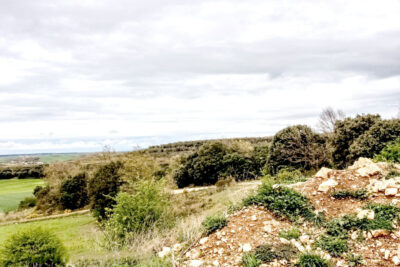
The team studied the mtDNA of 28 fossilized hominins estimated to be 400,000 years old from the Sima de Los Huesos cave in northern Spain‘s Sierra de Atapuerca Mountain range (pictured left).
Meyer’s team, which included legendary Swedish geneticist Svante Paabo, analyzed the genetics of these fossils collected during the 1970s. The study report, entitled “A mitochondrial genome sequence of a hominin from Sima de Los Huesos,” unexpectedly concluded that the fossils were genetically similar to the Denisovans, even though they morphologically resembled Neanderthals. Sima de los Huesos means “Pit of the Bones.”
Continue Reading
by Richard William Nelson | May 11, 2013
Embryology plays a critical role in Charles Darwin’s theory of evolution. The “leading facts in embryology … [were] second to none in importance,” he argued in The Origin of Species.
Illustrations of embryos by Ernst Haeckel, a German biologist, influenced Darwin. Haeckel’s drawings depict embryos repeating the steps of evolution, a concept known as the “ontogeny recapitulates phylogeny” theory.
It is believed that genes drive evolution through the process of natural selection. Since turtles have a unique body plan, studying the turtle genome during embryonic development is expected to give insight into their origin.
Continue Reading
by Richard William Nelson | Apr 23, 2013
The long-awaited analysis of one of the most influential lobed-finned fish in evolutionary history, the coelacanth genome (pictured left), was published last week by Chris T. Amemiya (pictured right below) of the University of Washington and Jessica Alföldi from MIT and Harvard in the prestigious journal Nature.
The coelacanth plays a crucial and colorful role in the history of evolution.
Biologist Louis Agassiz, born in Switzerland, became a professor at Harvard University and founder of the Museum of Comparative Biology and was the first to describe and name the fish in 1839. Ironically, Agazzi became a leading critic of Charles Darwin.
Continue Reading
by Richard William Nelson | Apr 13, 2013
A research team led by Michael Blaber of Florida State University College of Medicine recently reported a solution to a problem with the “protein-first,” also known as the protein self-assembly origin of life theory. The issue involves protein folding.
Biologically active proteins are only functional when folded into specific molecular structures.
Proteins’ ability to fold into specific structures is essential to performing cellular functions. While the team’s approach aligns with Charles Darwin’s theory, the protein self-assembly origin of life competes with the popular “RNA-first” origin of life theory.
Continue Reading

 Pristine preservation of DNA is of critical importance in the study of ancient DNA. The structural integrity of the DNA molecule, contrary to the Jurassic Park tale, is not infinitely stable.
 The genomic revolution is an increasingly challenging, long-standing orthodoxy in human evolution. An international team of geneticists headed by
  Embryology plays a critical role in
 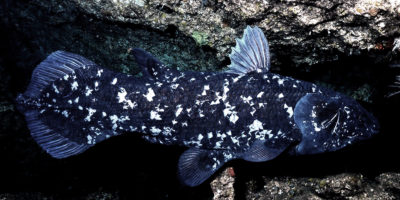 The long-awaited analysis of one of the most influential lobed-finned fish in evolutionary history, the coelacanth genome (pictured left), was published last week by