by Richard William Nelson | Jul 11, 2010
 Natural selection is a simple scientific theory, according to the American Museum of Natural History, New York. For the museum’s Darwin Exhibit, the museum curator, Niles Eldredge, explains:
“A century and a half ago, Charles Darwin offered the world a single, simple scientific explanation for the diversity of life on Earth: evolution by natural selection.”
“Natural selection.” Eldredge explains, “is a simple mechanism that causes populations of living things to change over time.”
Continue Reading
by Richard William Nelson | Jun 27, 2010
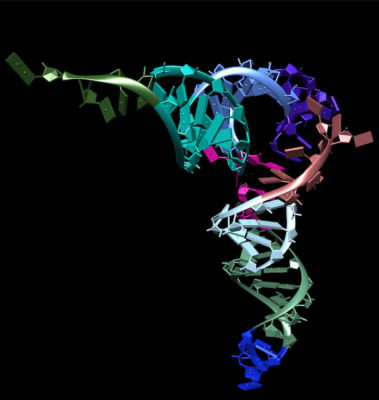
RNA World, a natural explanation for the origin of life, has a Catch-22 dilemma. Stanley-Urey’s experiments in the early 1950s laid the foundation for the RNA hypothesis.
Their experiments demonstrated that essential biological molecules, specifically amino acids, could have naturally emerged in Earth’s presumed early environment. However, amino acids alone, while essential for life, since they cannot reproduce, cannot account for abiogenesis – the origin of life.
Continue Reading
by Richard William Nelson | Jun 20, 2010
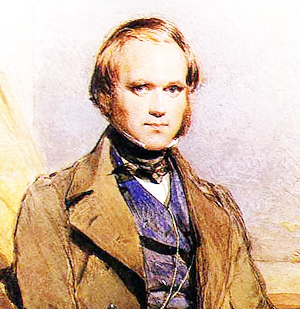
In The Origin of Species, along with natural selection, Charles Darwin (pictured left) included an unexpected explanation for the origin of life. In the six editions between 1859 and 1872, the last sentence he ventured on an origin of life concept, noting —
“There is grandeur in this view of life, with its several powers, having been originally breathed into a few forms or into one.”
Continue Reading
by Richard William Nelson | Jun 6, 2010
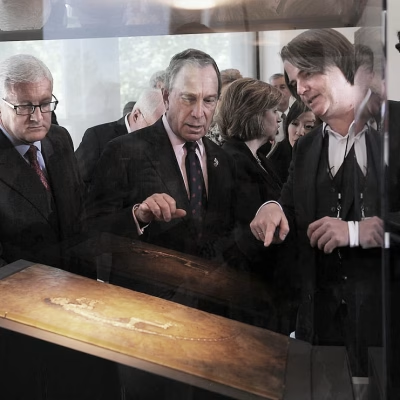
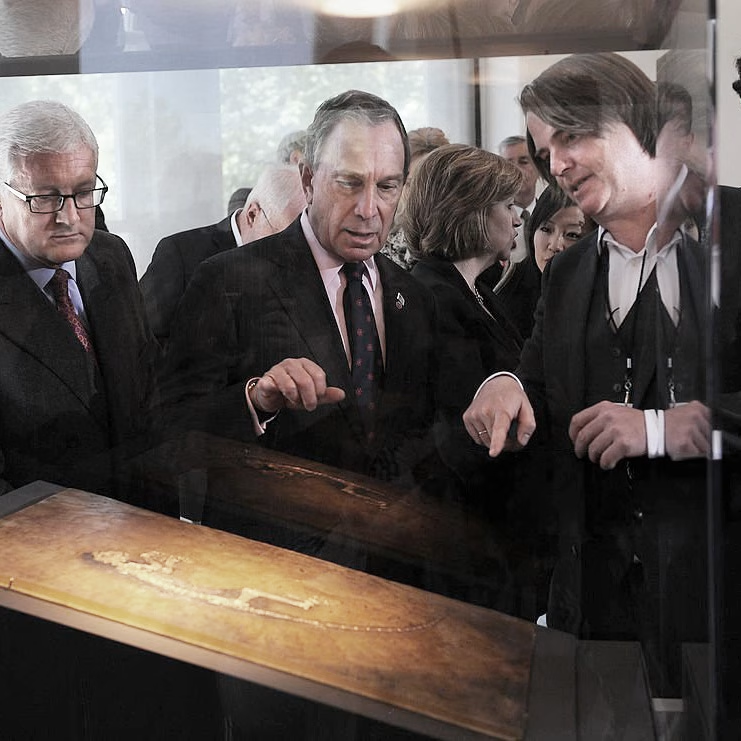
 The discovery of a primate-like fossil named Ida in 1983 launched a complex, nearly three-decade-long investigative and media blitz and bust. Ida (pictured left with Bloomberg and Hurum) was discovered in the Messel quarry (pictured right) in Hesse, Germany.
Rumors soon emerged that this pristine, primate-like fossil appeared to be a potential link in human evolution. In 1995, the pit was declared a UNESCO World Heritage Site. By 2009, Jens Lorenz Franzen (pictured right below with Ida and Hurum), head of Paleoanthropology at the Naturmuseum Senckenberg in Frankfurt, declared the fossil as –
“The eighth wonder of the world.”
Continue Reading
by Richard William Nelson | May 30, 2010
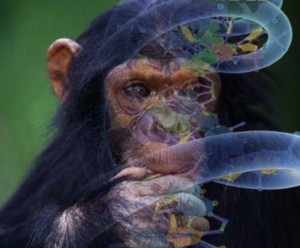
The name “chimpanze” was first published in The London Magazine in 1738, meaning “mockman” in Angola. While the “chimpanzee” spelling appeared in a 1758 supplement to Chambers’ Cyclopædia, the “chimp” colloquialism was coined in the 1870’s.
Before the publication of The Origin of Species in 1859, Charles Darwin gave his view of the differences between chimpanzees and humans. In a letter sent to Joseph Hooker, a close colleague, it read –
“I cannot swallow Man [being that] distinct from a Chimpanzee.”
Continue Reading

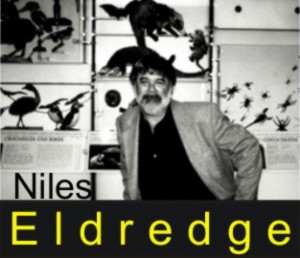 Natural selection is a simple scientific theory, according to the American Museum of Natural History, New York. For the museum’s Darwin Exhibit, the museum curator, Niles Eldredge, explains: