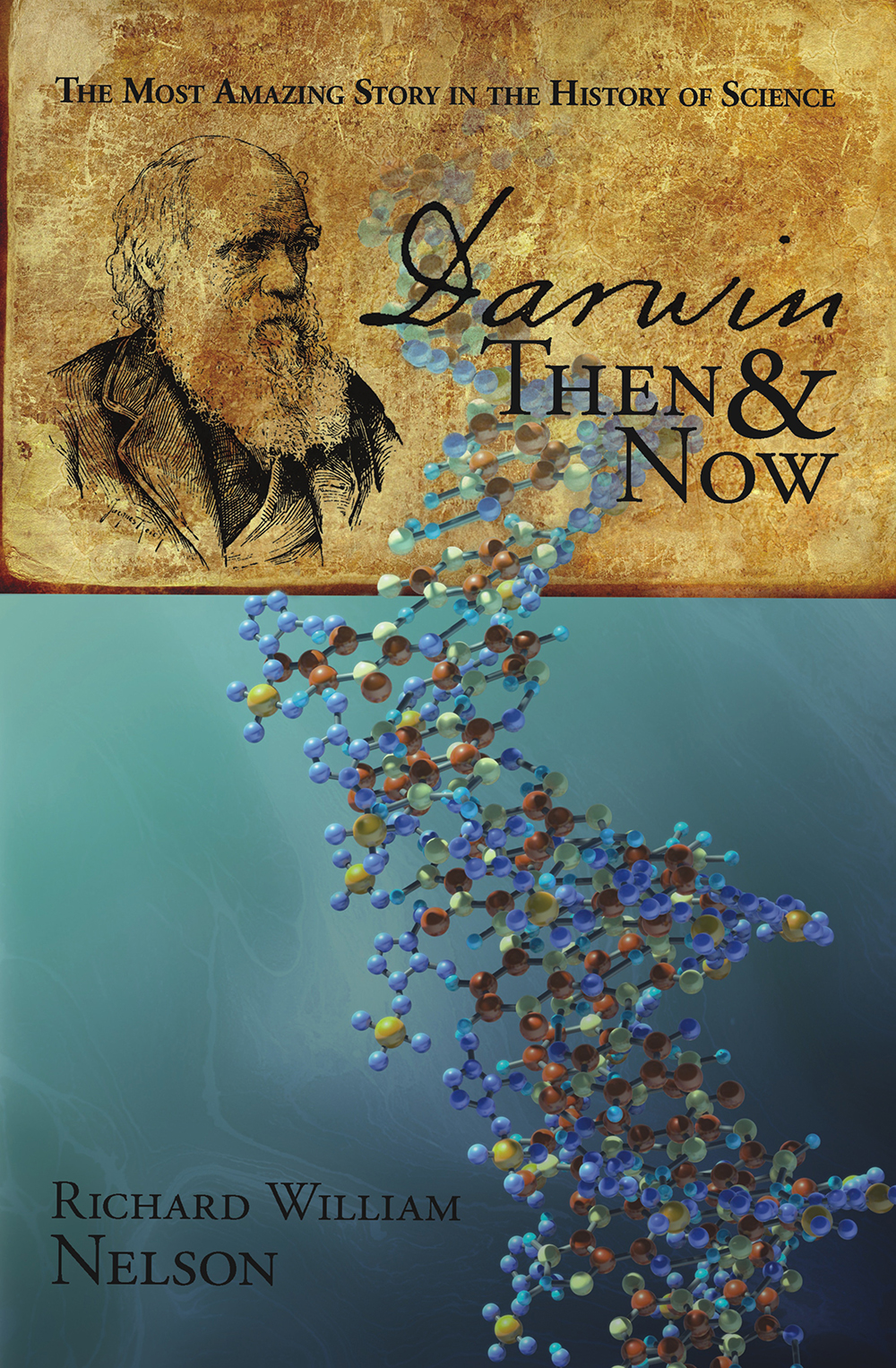
by Richard William Nelson | May 9, 2010

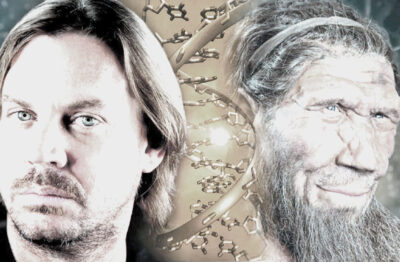
Three years before the publication of The Origin of Species, the first Neanderthal fossil was discovered in Neander Valley, Germany. However, even Darwin questioned whether Neanderthals were human ancestors. More than a decade later, in The Descent of Man (1871), Darwin addressed his issue with the Neanderthal skull size –
“Nevertheless, it must be admitted that some skulls of very high antiquity, such as the famous one of Neanderthal, are well developed and capacious.”
Continue Reading
by Richard William Nelson | Apr 25, 2010
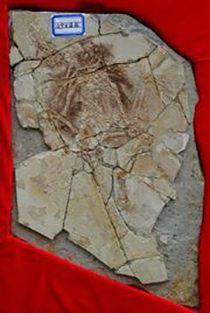
Each fossil record discovery has a unique story, and the Archaeoraptor composite is an exceptional example. In November 1999, a feature article in National Geographic titled “Feathers for T. Rex?” emerged as one of the most spectacular disasters in the history of paleontology. Archaeoraptor China hoax rivals the Piltdown Man saga, alleging –
“A true missing link in the complex chain that connects dinosaurs to birds.”
The Archaeoraptor storyline began in 1997 in northeastern Liaoning Province, China, following its presumed discovery by farmers (pictured above). At the time, the fossil appeared to have a bird’s body with small, terrestrial-dinosaur teeth and a tail. The name given, Archaeoraptor liaoningensis, was in recognition of its discovery site.
Continue Reading
by Richard William Nelson | Apr 18, 2010
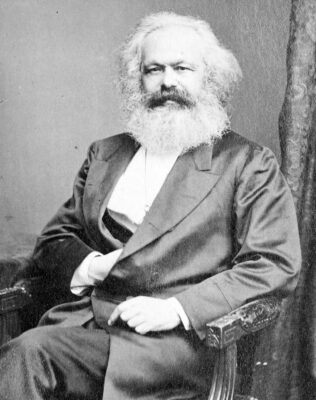
Karl Heinrich Marx (pictured left) was intellectually aligned with Charles Darwin’s theory of natural selection. In 1848, Marx published The Communist Manifesto two decades before The Origin of Species. However, what Marx lacked, Darwin had: specifically, objective, observable, and measurable cause-and-effect explanations for change.
Both theories center on struggle, but Darwin’s struggle is biological and mechanistic, while Marx’s is social and dialectical. However, Darwin had what Marx didn’t: a popular, logical, and seemingly scientific causal mechanism for change – natural selection.
Continue Reading
by Richard William Nelson | Apr 4, 2010
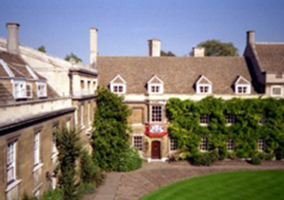
In 1825, at the age of sixteen, Charles Darwin was sent to Edinburgh University to study medicine. Soon, however, he found the study of medicine “intolerably dull” and “hated the sight of blood.” Fearing that his eighteen-year-old son would “ne’er do well,” his father transferred him to Christ’s College (pictured left), University of Cambridge.
His father, Robert Darwin, thought that a generalist Bachelor of Arts degree would qualify him to be a government clergyman. The Church of England offered a low-cost, high-status career pathway, a position socially comparable to medicine, law, or politics.
Continue Reading
by Richard William Nelson | Mar 21, 2010
A consensus understanding of Charles Darwin’s theory of natural selection varies even among evolutionary scientists. Richard Dawkins (pictured left), in his “Illusion of Design” paper originally published in the Natural History Magazine, envisioned natural selection as –
“Non-random survival of randomly varying hereditary instructions.”
While Dawkins’ explanation of natural selection is widely held, developing a consensus among evolutionary scientists remains contentious. In reference to an understanding of natural selection, Darwin conceded –
“No one definition has satisfied all naturalists.”
Continue Reading

 A consensus