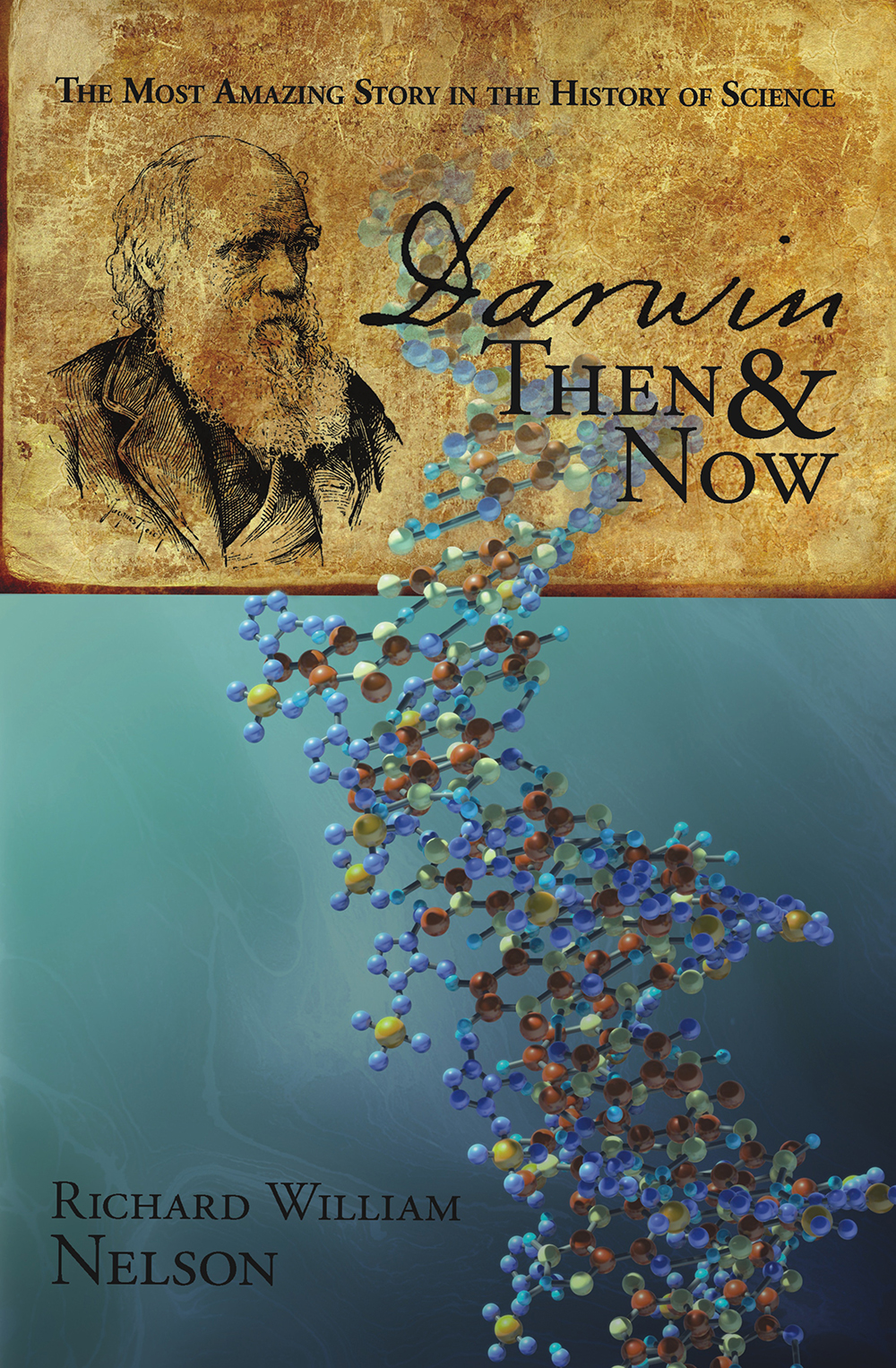
 Natural selection is the cornerstone of Charles Darwin’s theory of evolution. First introduced in 1859, the concept remains highly influential in the twenty-first century. NASA, for example, defines life as a self-sustaining chemical system capable of “Darwinian evolution” –
“Life is a self-sustaining chemical system, capable of Darwinian evolution.”
Its popularity blossomed with its ease of understanding distilled into a single phrase: natural selection. As J. Arvid Agren, an evolutionary biologist at Harvard University, notes in The Gene’s Eye View of Evolution, notes –
“What attracted me to biology was a fascination with the logic of the theory of evolution by natural selection. No other theory explains so much with so little.”
Developing a Logical Explanation
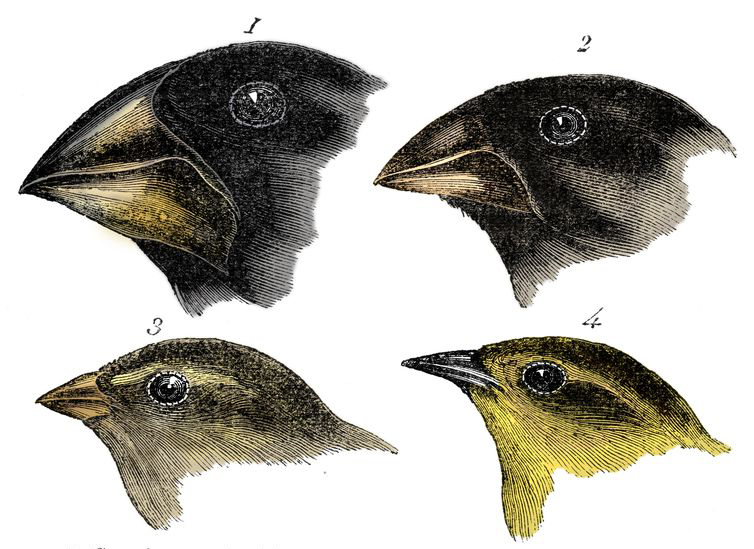
 Natural selection is a logical explanation for the origin of Earth’s vast biosphere. However, the legions of Darwin formulating his theory by comparing finch beaks on the Galapagos Islands, while popular, are misleading. The real history is far more interesting and revealing of Darwin’s actual reasoning processes.
Darwin regularly sent specimens back to England, but did not begin working on a theory during his five-year voyage on the H.M.S. Beagle. At the time, he didn’t even label them by the island of capture, thinking they were a mix of blackbirds, grosbeaks, and wrens. Another two years would elapse before working on a cohesive theory. Reflecting on his voyage experiences, 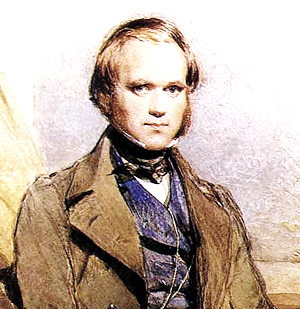 Darwin (pictured right) explained in his diary –
“In July [1837], opened first note Book on ‘Transmutation of Species’— Had been greatly struck from about the month of previous March —on the character of S. American fossils—& species on Galapagos Archipelago. These facts originate (especially latter) of all my views.”
However, Darwin still needed a reason to explain why and how nature drives the ‘transmutation of species.’ An explanation was still a year away, in an unlikely essay.
Thomas Malthus
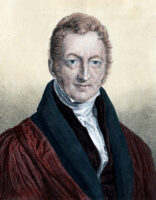 While reading An Essay on the Principle of Population, written by Thomas Robert Malthus (pictured left), an English political economist, Darwin explains a reason why nature drives the ‘transmutation of species’ in his Autobiography –
“In October 1838 … I happened to read for amusement Malthus’ On Population, and being well prepared to appreciate the struggle for existence which everywhere goes on from long-continued observation of the habits of animals and plants, it at once struck me that under these circumstances, favorable variations would tend to be preserved, and unfavorable ones to be destroyed. The result of this would be the formation of new species. Here, then, I had, at last, got a theory by which to work.”
This “struggle for existence” concept,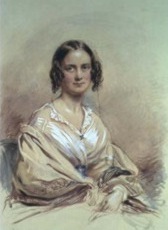 Darwin reasoned, explains why nature drives the ‘transmutation of species.’ Inspired, without ever leaving the British Isles again, Darwin completed a 230-page “brief abstract” six years later. Writing a letter to his wife, Emma (pictured right) –
“I have just finished my sketch of my species theory. If, as I believe, that my theory is true in time & be accepted by even one competent judge, it will be a considerable step in science.”
While Darwin’s theory represented a “considerable step,” it was driven by reasoning rather than empirical observation.
Rising Popularity
By the mid-nineteenth century, in the words of Darwin, interest in the mystery of life was “in the air,” even with the King and Queen. Darwin’s emerging “economy of nature” concept aligned with a range of Age of Enlightenment thinkers.
Friedrich Engels
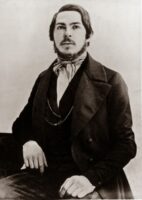 Darwin’s theory resonated throughout the political spectrum. From the socialists, Friedrich Engels (pictured left) wrote in 1883 –
“As Darwin discovered the law of evolution in organic nature, so [Karl] Marx discovered the law of evolution in human history.”
John Dewey
Weighing in on the impact of Darwin, in 1909, eminent American philosopher John Dewey (pictured right) reasoned –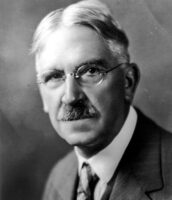
“The greatest dissolvent in contemporary thought of old questions, the greatest precipitant of new methods, new intentions, new problems, is the one affected by the scientific revolution that found its climax in The Origin of Species.”
Andrew Carnegie
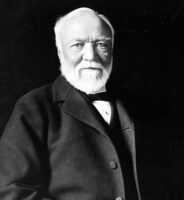 At the turn of the century, steel tycoon Andrew Carnegie (pictured left) commented on the validity of Darwin’s theory –
“There is no more possibility of defeating the operation of these laws (natural selection) than there is of thwarting the laws of nature which determine the humidity of the atmosphere or the revolution of the Earth upon its axis.”
Stephen Gould
In the words of America’s legendary late evolutionary biologist Stephen J. Gould (pictured right) of Harvard University –
“The essence of Darwinism lies in a single phrase: natural selection is the creative force of evolutionary change.”
Julian Huxley
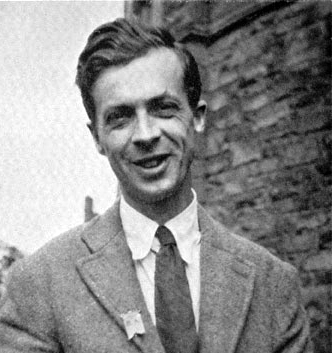 Julian Huxley (pictured left), the grandson of Darwin’s Bulldog (Thomas Huxley), in Evolution, the Modern Synthesis (1948), envisioned natural selection’s “creative force” as –
“Philosophically upside down, with Natural Selection instead of a Divine Artificer as the Deus ex machine.”
“Serious Special Difficulty”
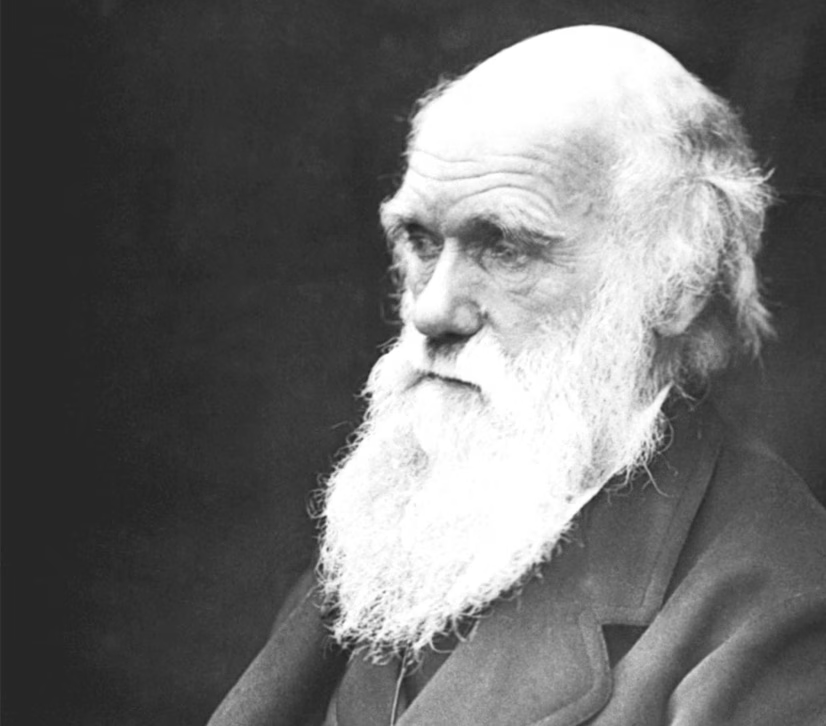 Darwin (pictured right) struggled with natural selection. After twenty years of work, while writing from his library in the village of Down, entangling natural selection into a maze of inconsistencies, Darwin surprisingly conceded –
“Natural selection … is by far the most serious special difficulty which my theory has encountered.”
Of the 224 terms included in the Glossary of the Principle Scientific Terms in The Origin of Species, the terms natural selection, natural, and selection were not included. Darwin wrote inconsistent definitions of natural selection throughout the book.
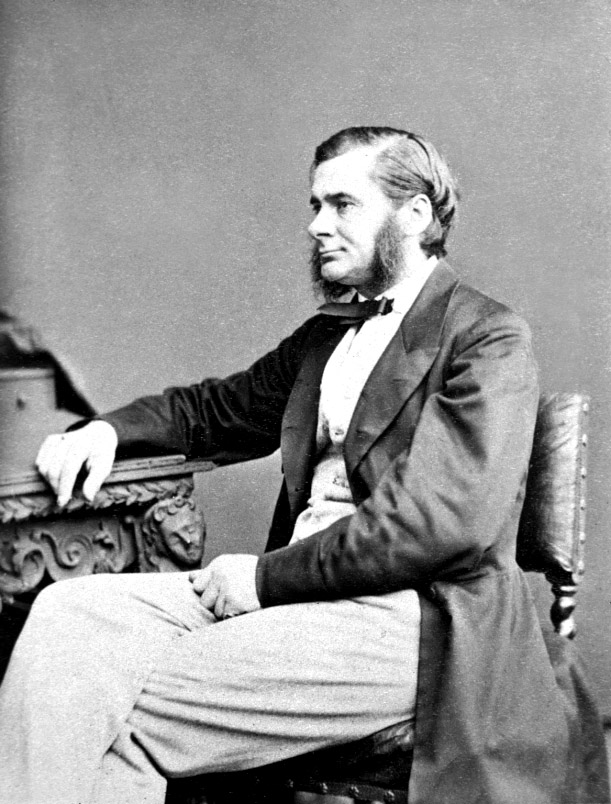 Not surprisingly, then, even in the words of Thomas Huxley (pictured left), best known as “Darwin’s Bulldog,” unlike his grandson, noted –
“[The Origin] is one of the hardest books to understand thoroughly that I know of.”
The popularity of natural selection among nineteenth-century scientists was mixed. In the subsequent editions of The Origin of Species, Darwin addresses the concerns of his contemporary naturalists. While Darwin was awarded the Royal Medal in 1853 for his achievements, the Society never again recognized any of Darwin’s works after the publication of The Origin of Species.
How could modern biology’s most recognized theory emerge from a complex past?
Testing
 The popularity of Darwin’s theory grew increasingly marginalized later in the nineteenth century, as Louis Pasteur (pictured right) conducted experiments that invalidated Darwin’s explanation for the origin of life, spontaneous generation. And Darwin could not account for a natural mechanism of inheritance to pass on acquired adaptive characteristics.
 What rescued Darwinian concepts of natural selection in the early twentieth century was the rediscovery of Gregor Mendel’s (pictured left) laws of inheritance.
Natural selection has continued as the cornerstone of modern evolutionary biology into the twenty-first century.
Modern Synthesis Theory
Mendel’s classical genetics led to the development and widespread acceptance of what would become known as the modern synthesis theory by the mid-1940s – also known as Neo-Darwinism. By the mid-1950s, identifying the double-helix molecular structure of inheritance brought scientists to the edge of a molecular mechanism for accounting for evolution.
 In 1973, Geneticist Theodosius Dobzhansky (pictured right) wrote the legendary “Nothing in Biology Makes Sense Except in the Light of Evolution” essay, espousing “evolution propelled by natural selection.”
The next wave of technological innovations in molecular genetics, beginning in the mid-1970s, launched the genomic revolution, further stretching the limits of Neo-Darwinism.
Natural Selection Challenged
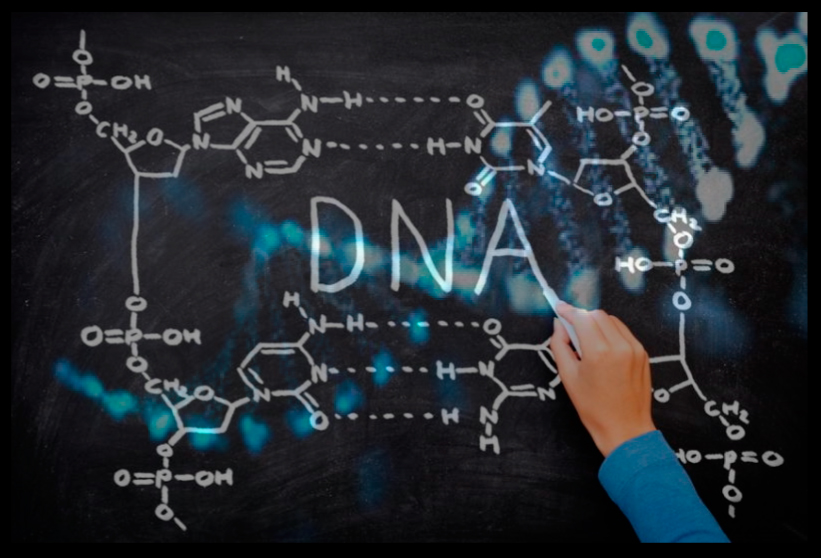 Despite remaining as the central tenet of evolutionary biology, while most scientific organizations endorse the teaching of evolution, no scientific consensus has emerged on the mechanisms of natural selection over the past 50 years.
Since the mid-twentieth century, the emerging genomic revolution has challenged the fundamentals of Darwin’s vision of natural selection.
Niles Eldridge
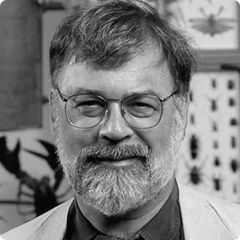 Niles Eldredge (pictured left) of Columbia University, a longtime collaborator with Gould and curator of the American Museum of Natural History, views the role of natural selection more cautiously –
“In the literal sense of the word, no doubt, natural selection is a false term.”
Fodor and Piattelli-Palmarini
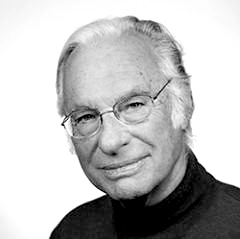 In What Darwin Got Wrong, Jerry Fodor and Massimo Piattelli-Palmarini (pictured right) deliver an exposé on natural selection. Seasoned by decades of scientific investigation, Fodor and Piattelli-Palmarini concluded –
“Darwin’s theory of natural selection is fatally flawed.”
Fodor (pictured left) and Piattelli-Palmarini are not lone critics. With over 20 pages of references, the authors demonstrate that the theory of natural selection is no more than circular reasoning: a tautology. Fodor and Piattelli-Palmarini explain –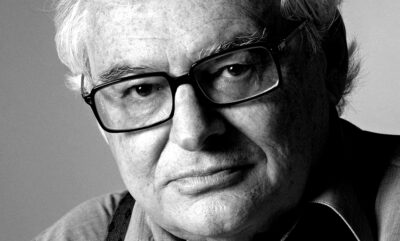
“There is at the heart of adaptation theories of evolution a confusion between (1) the claim that evolution is a process in which creatures with adaptive traits are selected and (2) the claim that evolution is a process in which creatures are selected for their adaptive traits… Darwinism is committed to inferring (2) from (1).
Twenty-first-century critics of natural selection are many, including Richard Dawkins, who wrote –
“Natural selection works because it is a cumulative one-way street to improvement. It needs some luck to get started, and the ‘billions of planets’ anthropic principle grants it that luck.”
Natural laws, by definition, are not chance events.
Principles of Natural Selection
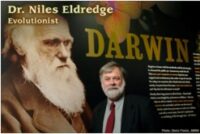 Since the mid-twentieth century, the emerging genomic revolution has increasingly challenged the fundamentals of Darwin’s vision of natural selection. Niles Eldredge developed the acronym V.I.S.T.A. for the museum’s traveling Darwin Exhibit to explain Darwin’s five principal steps of natural selection: variation, inheritance, selection, time, and adaptation from the emerging genomic perspective.
The five principles of natural selection, driving evolution, variation, inheritance, selection, time, and adaptation, flow in concert. The evidence for natural selection is the “slight successive changes” that leave “innumerable” transitional links between all life forms. As Darwin argued in The Origin of Species –
“By the theory of natural selection, all living species have been connected…, by differences not greater than we see between the natural and domestic varieties of the same species…. So that the number of intermediate and transitional links between all living and extinct species must have been inconceivably great. But assuredly, if this theory be true, such have lived upon the earth.”
Darwin expected to eventually find evidence of “intermediate and transitional” links between all species to validate his theory, Evidence he never had during his lifetime.
Darwin’s Falsification Test
Discovering evidence of transitional links between all living forms emerged as a test of natural selection falsification. In 1872, the British Parliament commissioned the HMS Challenger for a global search for Darwin’s missing evidence. However, after four years, the search ended, leaving little hope of finding transitional links in “inconceivably great” numbers as Darwin had argued.
Currently, no natural history museum has on display fossils linked to their “inconceivably great” number of ancestors. Darwin’s theory of natural selection has still not passed falsification testing.
Darwin developed his concept of natural selection from popular Age of Enlightenment beliefs, using epistemic reasoning rather than Baconian principles that launched the Scientific Revolution.
Natural Selection, a subcategory of Theory and Consensus, is a site Cornerstone.
More
Natural selection’s five principles, coined as an acronym and causal sequence, are V.I.S.T.A –
Approaching the issues surrounding Darwin’s theory of natural selection –
-
- Parallel Natural Selection Concepts. How Darwin’s theory of natural selection emerged in the context of other naturalists, specifically Alfred Russel Wallace and Patrick Matthew.
- Natural Selection Contradictions: How Darwin’s “one long argument” in the six editions over four decades emerged tangled into contradictions.
- Natural Selection Critics: How Darwin addresses the disconnect between his theory and the evidence.
- Network of Correspondents: What evolution scientists have said about the theory of natural selection by name.
- Chronology of Modern Evolution Critics: How modern scientists have viewed Darwin’s theory of natural selection chronologically.
Darwin Then and Now is an educational resource on the intersection of evolution and science, highlighting the ongoing challenges to the theory of evolution.
Move On
Explore how to understand twenty-first-century concepts of evolution further using the following links –
-
- The Understanding Evolution category showcases how varying historical study approaches to evolution have led to varying conclusions. Subcategories include –
- Studying Evolution explains how key evolution terms and concepts have changed since the 1958 publication of The Origin of Species.
- What is Science explains Charles Darwin’s approach to science and how modern science approaches can be applied for different investigative purposes.
- Evolution and Science feature study articles on how scientific evidence influences the current understanding of evolution.
- Theory and Consensus feature articles on the historical timelines of the theory and Natural Selection.
- The Biography of Charles Darwin category showcases relevant aspects of his life.
- The Glossary defines terms used in studying the theory of biological evolution.
- The Understanding Evolution category showcases how varying historical study approaches to evolution have led to varying conclusions. Subcategories include –